Außenhandel Export Lithium-Batterie Gabelstapler, Zertifizierung und Anpassung im Zusammenhang mit Einführung

2026-06-25

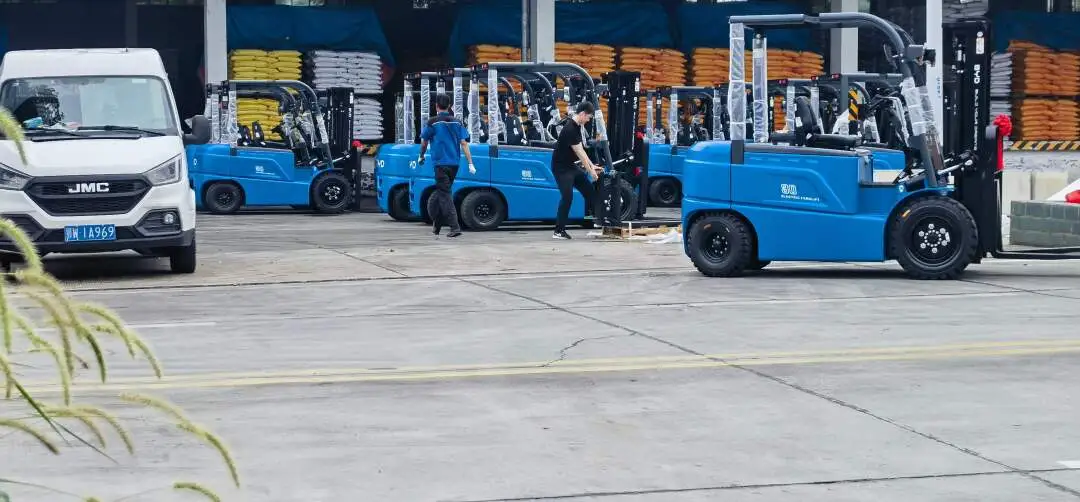
Außenhandel Export Lithium-Batterie Gabelstapler, Zertifizierung und Anpassung im Zusammenhang mit Einführung(Figur1)

Mit der grünen Modernisierung des globalen Logistik- und Lagerbereichs ist die Nachfrage nach elektrischen Geräten stetig gestiegen, und der Außenhandelsexport von Lithium-Ionen-Gabelstaplern ist zur Geschäftsrichtung vieler Ausrüstungslieferanten geworden. Bei der Durchführung entsprechender Geschäfte ist die Exportzertifizierung eine notwendige Schwelle für den Eintritt in Überseemärkte, und eine Anpassung, die den tatsächlichen Bedürfnissen vor Ort entspricht, kann die Wettbewerbsfähigkeit der Produkte verbessern.

Die Zertifizierung von Lithium-Ionen-Gabelstaplern für den Außenhandel ist das Kernstück, um die Einhaltung der Zollabfertigung, des Regals und der Verwendung zu gewährleisten. Verschiedene Länder und Regionen haben unterschiedliche Anforderungen an Industriefahrzeuge, und es ist notwendig, die obligatorische oder allgemein empfohlene Zertifizierung des Zielmarktes im Voraus zu kennen. Der europäische Markt verlangt von Industriefahrzeugen die CE-Zertifizierung, eine obligatorische Zertifizierung für Sicherheitsleistung und elektromagnetische Verträglichkeit. Die Produkte müssen die einschlägigen Richtlinien der Europäischen Union erfüllen, bevor sie in den meisten Mitgliedstaaten der Europäischen Union verkauft und verwendet werden können. Die UL- oder ANSI / CANCSA-Zertifizierung wird häufig auf dem nordamerikanischen Markt verwendet. Die UL-Zertifizierung konzentriert sich auf die elektrische Sicherheit und die strukturelle Sicherheit von Produkten. Die ANSI / CANCSA-Zertifizierung ist eine Spezifikation für die Leistung und Sicherheit von Industriefahrzeugen in den Vereinigten Staaten und Kanada. Obwohl in einigen Bereichen Zertifizierungen empfohlen werden, ist es für Produkte, die nicht zertifiziert wurden, schwierig, in die Mainstream-Lagerszene zu gelangen. Thailand verlangt auf dem südostasiatischen Markt eine obligatorische TISI-Zertifizierung, Malaysia erkennt die SIRIM-Zertifizierung als Plus an, und andere südostasiatische Länder haben ebenfalls ihre eigenen Zertifizierungssysteme oder beziehen sich auf internationale gemeinsame Standards. Australien und Neuseeland in Ozeanien verwenden das RCM-Logo einheitlich und integrieren elektromagnetische Verträglichkeit, elektrische Sicherheit und andere Anforderungen. Sie müssen die entsprechenden Tests und Zertifizierungen durchführen, bevor sie die Verwendung des Logos beantragen.

Die Anpassung von Lithium-Ionen-Gabelstaplern für den Außenhandel muss sich an den spezifischen Bedürfnissen der Kunden in Übersee orientieren und darf dabei nicht gegen die Zertifizierungsvorschriften des Zielmarktes verstoßen. Die erste ist die Feinabstimmung der Karosseriegröße und der Tragfähigkeit. Es gibt Unterschiede in den Abständen der Lagerregale, der Kanalbreite und dem regelmäßigen Gewicht der Waren für verschiedene Kunden. Die Länge, Breite und Höhe der Karosserie kann innerhalb des von der Zertifizierung erlaubten Rahmens angepasst werden, oder der Nennlastbereich kann fein abgestimmt werden, um sich an den Lagerraum und den täglichen Betrieb des Kunden anzupassen. Die zweite ist die Anpassung von Betriebsfunktionen und Anbauteilen. Zum Beispiel müssen Kunden häufig Paletten bewegen und haben nur begrenzten Platz, und Seitenschalthebel-Anbaugeräte können installiert werden. Kunden müssen das Gewicht der Waren während der Handhabung aufzeichnen und können Compliance-Wiegemodule installieren. Einige Kunden müssen sich mit bestimmten Waren befassen und können weiche Klammern, Gabelhülsen und andere häufig verwendete Anbauteile installieren. Die zweite ist die Anpassung des Erscheinungsbildes Logo, das mit der vom Kunden genehmigten Körperfarbe gesprüht werden kann, ohne das ursprüngliche Zertifizierungslogo zu bedecken, oder mit dem Sicherheitswarnlogo und den Kontaktinformationen des Unternehmens geklebt werden kann, die den Anforderungen der Landessprache entsprechen. Schließlich kann die Anpassung der Batterielebensdauer und der Spezifikationen, wie z. B. das Kundenlager, das die Mehrschicht-Produktionsindustrie implementiert, größere Kapazitätskonformitätszellen auswählen oder das Design verwenden, das einen schnellen Wechsel der Doppelbatterie unterstützt, um die Wartezeit des Betriebs zu verkürzen.

Insgesamt erfordern die Außenhandelsexporte von Lithium-Ionen-Gabelstaplern eine solide Grundlage für die Zertifizierung und dann eine angemessene Anpassung an die Kundenbedürfnisse, um die Märkte in Übersee besser erschließen zu können.

We use cookie to improve your online experience. By continuing to browse this website, you agree to our use of cookie.

Cookies

Please read our Terms and Conditions and this Policy before accessing or using our Services. If you cannot agree with this Policy or the Terms and Conditions, please do not access or use our Services. If you are located in a jurisdiction outside the European Economic Area, by using our Services, you accept the Terms and Conditions and accept our privacy practices described in this Policy.
We may modify this Policy at any time, without prior notice, and changes may apply to any Personal Information we already hold about you, as well as any new Personal Information collected after the Policy is modified. If we make changes, we will notify you by revising the date at the top of this Policy. We will provide you with advanced notice if we make any material changes to how we collect, use or disclose your Personal Information that impact your rights under this Policy. If you are located in a jurisdiction other than the European Economic Area, the United Kingdom or Switzerland (collectively “European Countries”), your continued access or use of our Services after receiving the notice of changes, constitutes your acknowledgement that you accept the updated Policy. In addition, we may provide you with real time disclosures or additional information about the Personal Information handling practices of specific parts of our Services. Such notices may supplement this Policy or provide you with additional choices about how we process your Personal Information.


Cookies

Cookies are small text files stored on your device when you access most Websites on the internet or open certain emails. Among other things, Cookies allow a Website to recognize your device and remember if you've been to the Website before. Examples of information collected by Cookies include your browser type and the address of the Website from which you arrived at our Website as well as IP address and clickstream behavior (that is the pages you view and the links you click).We use the term cookie to refer to Cookies and technologies that perform a similar function to Cookies (e.g., tags, pixels, web beacons, etc.). Cookies can be read by the originating Website on each subsequent visit and by any other Website that recognizes the cookie. The Website uses Cookies in order to make the Website easier to use, to support a better user experience, including the provision of information and functionality to you, as well as to provide us with information about how the Website is used so that we can make sure it is as up to date, relevant, and error free as we can. Cookies on the Website We use Cookies to personalize your experience when you visit the Site, uniquely identify your computer for security purposes, and enable us and our third-party service providers to serve ads on our behalf across the internet.

We classify Cookies in the following categories:
 ●  Strictly Necessary Cookies
 ●  Performance Cookies
 ●  Functional Cookies
 ●  Targeting Cookies


Cookie List
A cookie is a small piece of data (text file) that a website – when visited by a user – asks your browser to store on your device in order to remember information about you, such as your language preference or login information. Those cookies are set by us and called first-party cookies. We also use third-party cookies – which are cookies from a domain different than the domain of the website you are visiting – for our advertising and marketing efforts. More specifically, we use cookies and other tracking technologies for the following purposes:

Strictly Necessary Cookies
These cookies are necessary for the website to function and cannot be switched off in our systems. They are usually only set in response to actions made by you which amount to a request for services, such as setting your privacy preferences, logging in or filling in forms. You can set your browser to block or alert you about these cookies, but some parts of the site will not then work. These cookies do not store any personally identifiable information.

Functional Cookies
These cookies enable the website to provide enhanced functionality and personalisation. They may be set by us or by third party providers whose services we have added to our pages. If you do not allow these cookies then some or all of these services may not function properly.

Performance Cookies
These cookies allow us to count visits and traffic sources so we can measure and improve the performance of our site. They help us to know which pages are the most and least popular and see how visitors move around the site. All information these cookies collect is aggregated and therefore anonymous. If you do not allow these cookies we will not know when you have visited our site, and will not be able to monitor its performance.

Targeting Cookies
These cookies may be set through our site by our advertising partners. They may be used by those companies to build a profile of your interests and show you relevant adverts on other sites. They do not store directly personal information, but are based on uniquely identifying your browser and internet device. If you do not allow these cookies, you will experience less targeted advertising.

How To Turn Off Cookies
You can choose to restrict or block Cookies through your browser settings at any time. Please note that certain Cookies may be set as soon as you visit the Website, but you can remove them using your browser settings. However, please be aware that restricting or blocking Cookies set on the Website may impact the functionality or performance of the Website or prevent you from using certain services provided through the Website. It will also affect our ability to update the Website to cater for user preferences and improve performance. Cookies within Mobile Applications

We only use Strictly Necessary Cookies on our mobile applications. These Cookies are critical to the functionality of our applications, so if you block or delete these Cookies you may not be able to use the application. These Cookies are not shared with any other application on your mobile device. We never use the Cookies from the mobile application to store personal information about you.

If you have questions or concerns regarding any information in this Privacy Policy, please contact us by email at . You can also contact us via our customer service at our Site.