So überprüfen Sie den Ausfall des elektrischen Gabelstapleraufzugs

2026-06-29

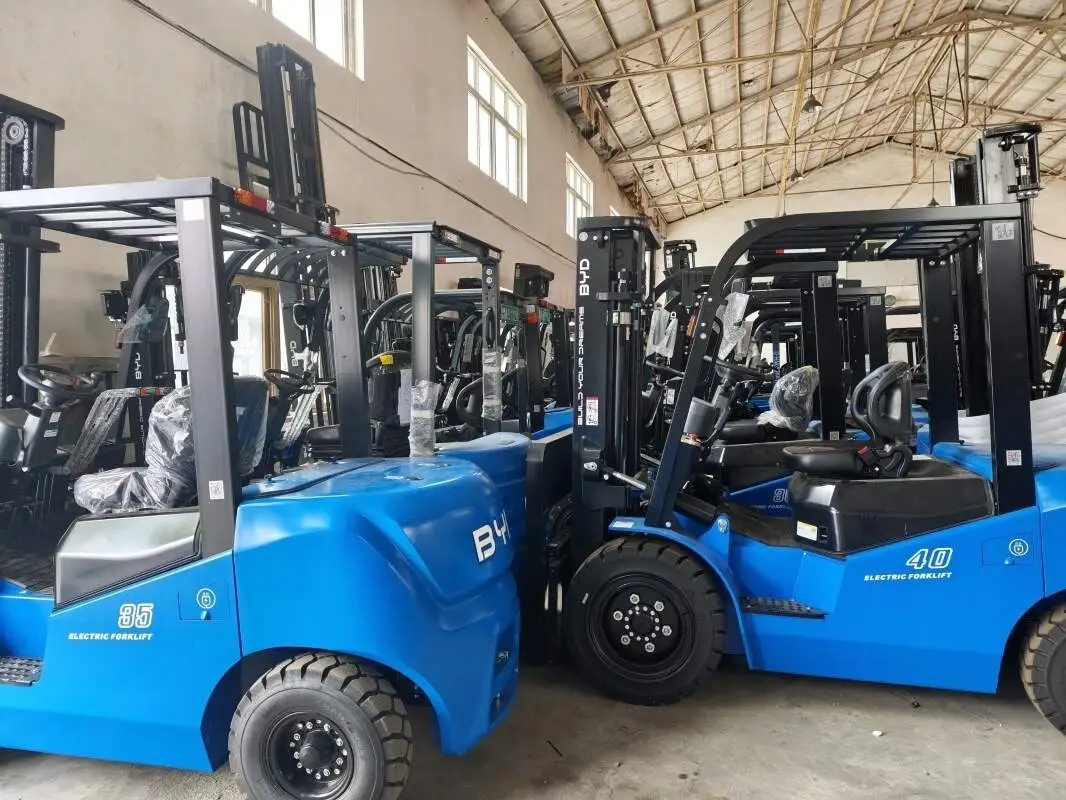
So überprüfen Sie den Ausfall des elektrischen Gabelstapleraufzugs(Figur1)

Elektrische Gabelstapler werden häufig in der Lagerhaltung, Logistik und anderen Bereichen eingesetzt. Die Hebefunktion ist eine der wichtigsten Betriebsfunktionen. Sobald ein Hebefehler auftritt, wirkt er sich direkt auf die Betriebseffizienz aus und verursacht sogar Sicherheitsrisiken. Beherrschen Sie die wissenschaftliche Untersuchungsmethode, mit der Sie das Problem schnell lokalisieren und lösen können, um den stabilen Betrieb des Gabelstaplers zu gewährleisten.

Überprüfen Sie das Stromversorgungssystem

Prüfen Sie zunächst, ob die Stromquelle genügend Energie für den Hebevorgang liefern kann. Prüfen Sie zunächst den Batteriestatus, um festzustellen, ob die verbleibende Batterieleistung ausreicht. Wenn die Leistung zu niedrig ist, ist die Leistungsabgabe des Elektrostaplers begrenzt, was zu einem schwachen Heben führt. Prüfen Sie gleichzeitig, ob die Batteriepole locker und oxidiert sind. Eine schlechte Verdrahtung führt zu einer instabilen Stromversorgung und beeinträchtigt die Stromübertragung.

Überprüfen Sie dann den Betriebszustand des Antriebsmotors, achten Sie darauf, ob der Motor während des Betriebs anormale Geräusche macht, und berühren Sie das Motorgehäuse, um zu spüren, ob die Temperatur zu hoch ist. Wenn der Motor überhitzt oder anormale Geräusche macht, kann es zu Problemen wie Schäden an der Innenwicklung und Lagerverschleiß kommen, was zu einer unzureichenden Leistungsabgabe führt, was wiederum die Hebefunktion beeinträchtigt.

Fehlerbehebung bei Ausfällen des Hydrauliksystems

Das Hydrauliksystem ist der zentrale Ausführungsmechanismus der Hebefunktion des Elektrostaplers, und die meisten Fehler sind darauf zurückzuführen. Überprüfen Sie zunächst den Zustand des Hydrauliköls, um festzustellen, ob der Flüssigkeitsstand des Hydrauliköls innerhalb des angegebenen Bereichs liegt. Wenn der Flüssigkeitsstand zu niedrig ist, führt dies dazu, dass die Hydraulikpumpe leer wird und nicht genügend Druck aufbauen kann. Achten Sie gleichzeitig auf die Farbe und Sauberkeit des Hydrauliköls. Wenn das Öl schwarz ist und Verunreinigungen aufweist, bedeutet dies, dass sich das Öl verschlechtert hat, was den normalen Betrieb der Hydraulikkomponenten beeinträchtigt und rechtzeitig ersetzt werden muss.

Prüfen Sie dann die Glätte des Ölkreislaufs, prüfen Sie, ob das hydraulische YouTube verbogen oder beschädigt ist und ob an verschiedenen Ventilen und Verbindungen Öl austritt. Wenn der Ölkreislauf blockiert oder undicht ist, führt dies zu einem hydraulischen Druckverlust und zu einem schwachen Heben. Außerdem können Sie prüfen, ob das Hydraulikfilterelement blockiert ist, was den Ölfluss behindert und den Systemdruck verringert.

Überprüfen Sie abschließend die Funktion der Hydraulikpumpe, betätigen Sie die Hebevorrichtung nach dem Starten des Gabelstaplers und prüfen Sie, ob das Betriebsgeräusch der Hydraulikpumpe stabil ist. Wenn die Hydraulikpumpe anormale Geräusche oder eine unzureichende Druckabgabe aufweist, kann es sein, dass der innere Verschleiß schwerwiegend ist und das Hebesystem nicht ausreichend mit Strom versorgen kann.

Kontroll- und Sensorkomponenten prüfen

Der Ausfall der Steuerkomponenten kann auch zu schwachem Heben führen. Prüfen Sie zuerst das Hebesteuerventil. Achten Sie beim Betätigen des Hebegriffs darauf, ob sich das Ventil normal öffnen und schließen lässt. Wenn das Ventil feststeckt oder verschlissen ist, beeinträchtigt dies den Hydraulikölfluss und die Druckeinstellung, was zu einer unzureichenden Hubkraft führt.

Überprüfen Sie den Drucksensor erneut. Der Sensor ist für die Überwachung des Drucks des Hydrauliksystems zuständig. Wenn der Sensor ausfällt und das Drucksignal nicht genau zurückgeführt werden kann, kann das Steuersystem die Leistungsabgabe nicht anpassen, was zu einem schwachen Heben führt. Professionelle Geräte können erkennen, ob das Signal des Sensors normal ist, um festzustellen, ob er normal funktionieren kann.

Überprüfen Sie die mechanische Übertragungsstruktur

Der Verschleiß mechanischer Komponenten kann sich ebenfalls auf den Hebeeffekt auswirken. Prüfen Sie, ob die Hebekette länglich, abgenutzt, gebrochen usw. ist. Schwerer Verschleiß der Kette führt zu einer Verringerung der Übertragungseffizienz und kann die Gabel nicht effektiv zum Heben bringen. Prüfen Sie gleichzeitig, ob die Riemenscheibe, die Führungsschiene und andere Komponenten festsitzen und verschlissen sind. Probleme mit diesen Komponenten erhöhen den Hebewiderstand und führen zu Schwächen. Prüfen Sie außerdem, ob es eine interne Leckage des Hydraulikzylinders gibt. Die interne Leckage des Hydraulikzylinders führt zu Druckverlust und beeinträchtigt die Hubkraft.

Die Fehlersuche bei elektrischen Gabelstaplerausfällen sollte schrittweise von leicht bis schwer, von außen nach innen erfolgen, und mögliche Fehlerstellen sollten nach und nach beseitigt werden. Im täglichen Betrieb kann eine regelmäßige Wartung von Gabelstaplern das Auftreten solcher Ausfälle wirksam reduzieren und die Lebensdauer von Gabelstaplern verlängern.

We use cookie to improve your online experience. By continuing to browse this website, you agree to our use of cookie.

Cookies

Please read our Terms and Conditions and this Policy before accessing or using our Services. If you cannot agree with this Policy or the Terms and Conditions, please do not access or use our Services. If you are located in a jurisdiction outside the European Economic Area, by using our Services, you accept the Terms and Conditions and accept our privacy practices described in this Policy.
We may modify this Policy at any time, without prior notice, and changes may apply to any Personal Information we already hold about you, as well as any new Personal Information collected after the Policy is modified. If we make changes, we will notify you by revising the date at the top of this Policy. We will provide you with advanced notice if we make any material changes to how we collect, use or disclose your Personal Information that impact your rights under this Policy. If you are located in a jurisdiction other than the European Economic Area, the United Kingdom or Switzerland (collectively “European Countries”), your continued access or use of our Services after receiving the notice of changes, constitutes your acknowledgement that you accept the updated Policy. In addition, we may provide you with real time disclosures or additional information about the Personal Information handling practices of specific parts of our Services. Such notices may supplement this Policy or provide you with additional choices about how we process your Personal Information.


Cookies

Cookies are small text files stored on your device when you access most Websites on the internet or open certain emails. Among other things, Cookies allow a Website to recognize your device and remember if you've been to the Website before. Examples of information collected by Cookies include your browser type and the address of the Website from which you arrived at our Website as well as IP address and clickstream behavior (that is the pages you view and the links you click).We use the term cookie to refer to Cookies and technologies that perform a similar function to Cookies (e.g., tags, pixels, web beacons, etc.). Cookies can be read by the originating Website on each subsequent visit and by any other Website that recognizes the cookie. The Website uses Cookies in order to make the Website easier to use, to support a better user experience, including the provision of information and functionality to you, as well as to provide us with information about how the Website is used so that we can make sure it is as up to date, relevant, and error free as we can. Cookies on the Website We use Cookies to personalize your experience when you visit the Site, uniquely identify your computer for security purposes, and enable us and our third-party service providers to serve ads on our behalf across the internet.

We classify Cookies in the following categories:
 ●  Strictly Necessary Cookies
 ●  Performance Cookies
 ●  Functional Cookies
 ●  Targeting Cookies


Cookie List
A cookie is a small piece of data (text file) that a website – when visited by a user – asks your browser to store on your device in order to remember information about you, such as your language preference or login information. Those cookies are set by us and called first-party cookies. We also use third-party cookies – which are cookies from a domain different than the domain of the website you are visiting – for our advertising and marketing efforts. More specifically, we use cookies and other tracking technologies for the following purposes:

Strictly Necessary Cookies
These cookies are necessary for the website to function and cannot be switched off in our systems. They are usually only set in response to actions made by you which amount to a request for services, such as setting your privacy preferences, logging in or filling in forms. You can set your browser to block or alert you about these cookies, but some parts of the site will not then work. These cookies do not store any personally identifiable information.

Functional Cookies
These cookies enable the website to provide enhanced functionality and personalisation. They may be set by us or by third party providers whose services we have added to our pages. If you do not allow these cookies then some or all of these services may not function properly.

Performance Cookies
These cookies allow us to count visits and traffic sources so we can measure and improve the performance of our site. They help us to know which pages are the most and least popular and see how visitors move around the site. All information these cookies collect is aggregated and therefore anonymous. If you do not allow these cookies we will not know when you have visited our site, and will not be able to monitor its performance.

Targeting Cookies
These cookies may be set through our site by our advertising partners. They may be used by those companies to build a profile of your interests and show you relevant adverts on other sites. They do not store directly personal information, but are based on uniquely identifying your browser and internet device. If you do not allow these cookies, you will experience less targeted advertising.

How To Turn Off Cookies
You can choose to restrict or block Cookies through your browser settings at any time. Please note that certain Cookies may be set as soon as you visit the Website, but you can remove them using your browser settings. However, please be aware that restricting or blocking Cookies set on the Website may impact the functionality or performance of the Website or prevent you from using certain services provided through the Website. It will also affect our ability to update the Website to cater for user preferences and improve performance. Cookies within Mobile Applications

We only use Strictly Necessary Cookies on our mobile applications. These Cookies are critical to the functionality of our applications, so if you block or delete these Cookies you may not be able to use the application. These Cookies are not shared with any other application on your mobile device. We never use the Cookies from the mobile application to store personal information about you.

If you have questions or concerns regarding any information in this Privacy Policy, please contact us by email at . You can also contact us via our customer service at our Site.