
 简体中文
简体中文 繁体中文
繁体中文 Deutsch
 日本語
日本語 한국어
한국어 Tiếng Việt
 Русский
 ไทย
ไทย Bahasa Indonesia
 Bahasa Melayu
 Filipino
 لالعربية
 Français

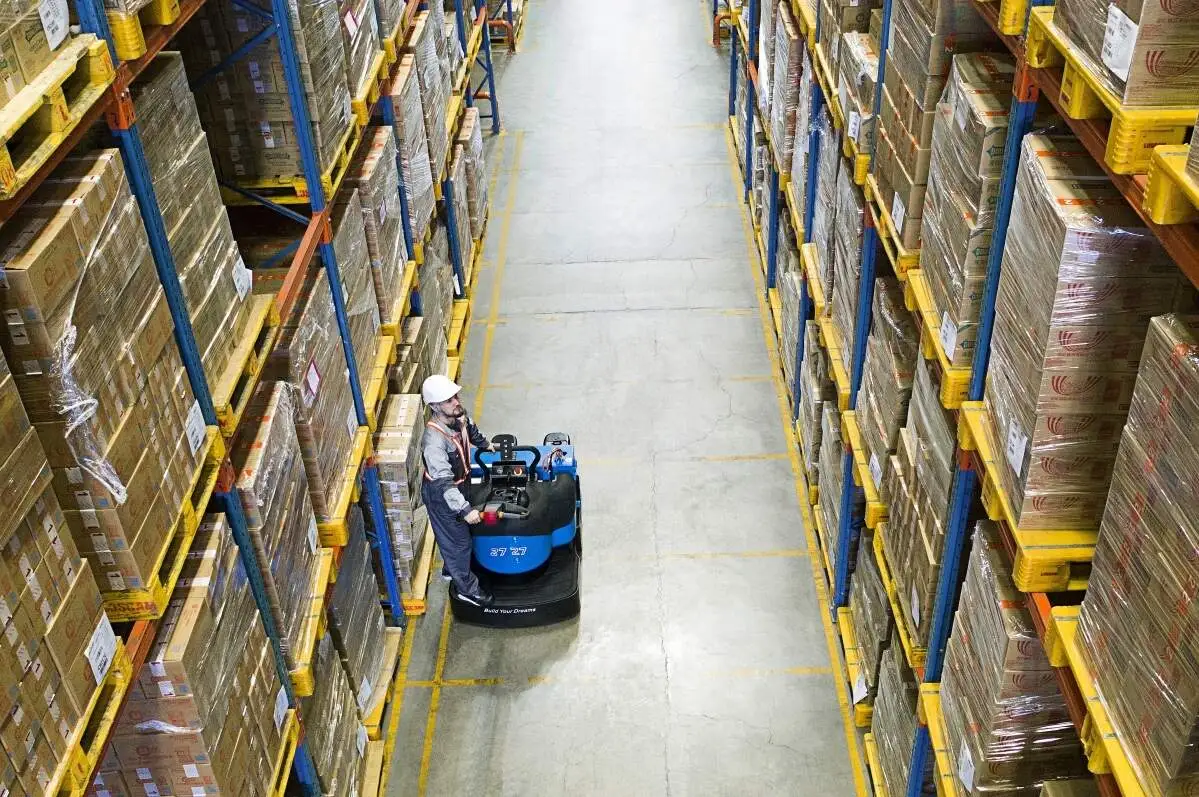
With the development of the warehousing industry towards high-density storage, high-level stacking operations have become the core way to improve the utilization rate of warehousing space. Electric three-way stackers have become common equipment for high-level warehousing scenarios in narrow lanes due to their flexible steering capabilities and high-level operation adaptability. Its door frame specifications and battery life are directly related to the efficiency and sustainability of high-level stacking operations. The following analysis is carried out from these two aspects to provide reference for warehousing operation configuration.
Door frame specifications adapt to high stacking requirements
Lifting height matches shelf level
The door frame lift degree of the electric three-way stacker can cover a variety of high-level storage needs, and the common lifting height range can be adapted to different levels of high-level shelf operations. The door frame adopts a segmented structure design, taking into account the lifting height and operation stability. In the narrow lane environment, the shelf position can be accurately aligned to complete the storage operation. For the height setting of different storage shelves, the door frame configuration corresponding to the lifting height can be selected to meet the needs of various types of high-level storage scenarios, ensuring maximum utilization of storage vertical space in limited space.
The gantry structure guarantees the stability of the operation
The structural design of the gantry pays attention to the stability of high-level operation. It is made of high-strength steel, and with a reasonable force distribution, it can effectively reduce the shaking during the operation. The guide device equipped with the gantry can maintain stability during the lifting and lowering process, avoid the deviation or drop of goods, and ensure the safety of high-level stacking operations. At the same time, the compact design of the gantry is suitable for the narrow roadway environment, and there is no need to reserve too much operating space to further improve the utilization rate of storage space.
Battery life specifications support continuous operation requirements
Battery capacity adaptation working time
The battery life specifications of the electric three-way stacker are configured around the time requirements of storage operations, and the battery capacity can meet the power requirements of multi-shift operations. The battery life after a single charge can cover more than 8 hours of continuous operation. For storage scenarios with long daily operation times, spare batteries or fast charging systems can also be equipped to reduce downtime and ensure the continuity of operations.
Battery life influencing factors and optimization suggestions
The actual battery life will be affected by factors such as the operating load, ambient temperature, and operating habits. In high-level stacking operations, frequent lifting and lowering operations will increase power consumption. Therefore, rational planning of the operation process to avoid unnecessary load lifting can effectively extend the battery life. At the same time, keeping the battery in a suitable temperature environment and regular battery maintenance can also maintain stable battery life.
In summary, the gantry specification and battery life of the electric three-way stacker are the core indicators for adapting to high-level storage operations. By reasonably selecting the gantry lifting height and battery life configuration, the efficiency and stability of high-level storage operations can be effectively improved, providing reliable equipment support for high-density storage scenarios.


