
 简体中文
简体中文 繁体中文
繁体中文 Deutsch
 日本語
日本語 한국어
한국어 Tiếng Việt
 Русский
 ไทย
ไทย Bahasa Indonesia
 Bahasa Melayu
 Filipino
 لالعربية
 Français

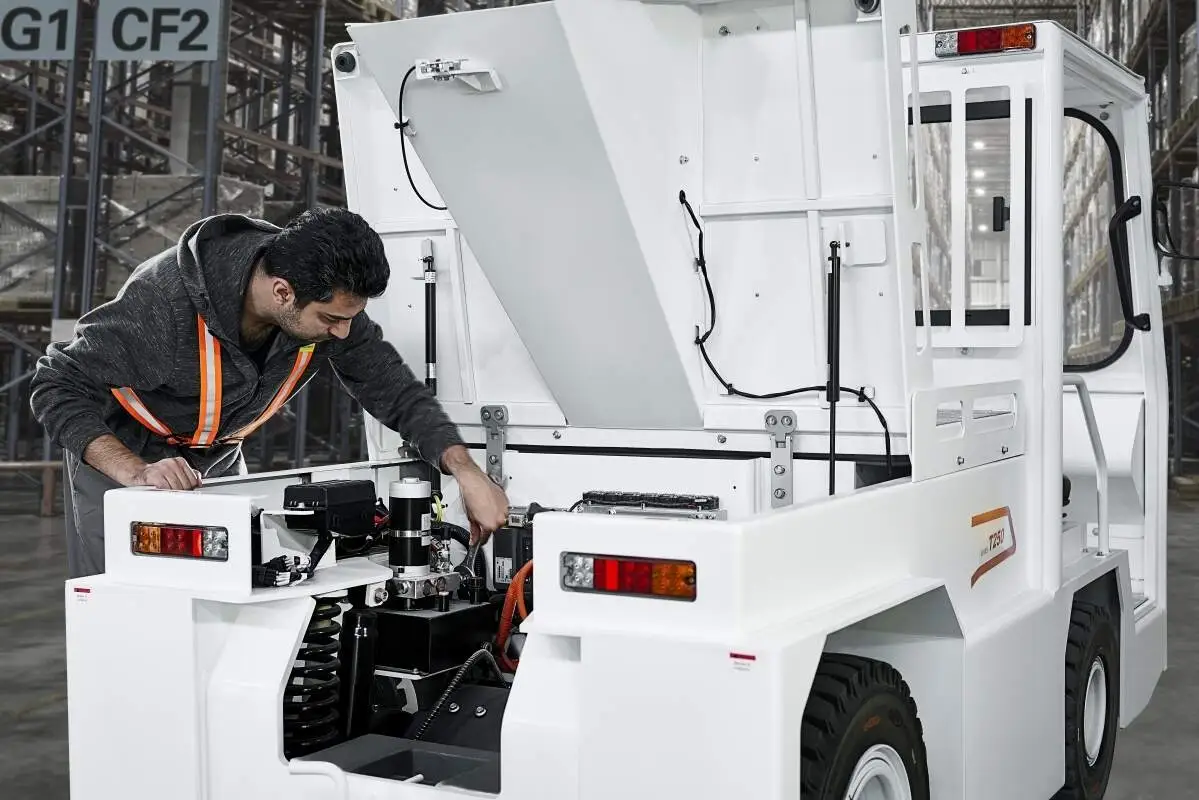
Many logistics and warehousing practitioners are concerned about whether the compact electric forklift can enter the container for loading and unloading operations. In fact, whether it can enter depends on the adaptation of multiple actual operating conditions. The following is a Q & A analysis of the specific scenario.
Core fit requirements for container operations
Size adaptation is the basic threshold
The internal width of a standard container is usually about 2.3 meters, the depth is about 12 meters or 6 meters, and the internal clear height is generally more than 2.3 meters. To enter the container operation, the body width of the compact electric forklift needs to be controlled within a reasonable range to ensure that enough cargo loading and unloading space is reserved in the box. At the same time, the body height should be lower than the internal clear height of the container to avoid scratches when entering or operating. In addition, the turning radius of the forklift is also key. In narrow containers, the forklift needs to have a small turning radius in order to complete the steering and stacking operation of the goods.
Operational flexibility and space utilization
The internal space of the container is relatively closed and narrow, and the forklift needs to adjust its position frequently during operation, which requires the forklift to have good operational flexibility. For example, when handling pallet goods, the lifting height of the forklift's gantry should be adapted to the number of stacked layers in the container, and the response speed of the operating rod should be smooth, which is convenient for the operator to precisely control in the limited space. In addition, some containers may have prominent internal structures, and the body design of the forklift needs to avoid interference with these structures to ensure smooth operation.
Battery life and power adaptation
Container loading and unloading operations are usually continuous, and the handling of multi-load goods needs to be completed in a short time, which puts forward requirements for the endurance of electric forklifts. Compact electric forklifts equipped with large-capacity lithium batteries can meet the endurance requirements of single container operations without charging halfway. At the same time, the power output of the forklift should be stable, and it can smoothly complete the starting, driving and lifting operations when carrying goods to avoid affecting the operation efficiency due to insufficient power.
Safety protection and operation specifications
Even if the forklift meets the above conditions, safety regulations must be followed when entering the container operation. Operators need to have relevant qualifications, and check the ventilation inside the container before operation to avoid affecting health due to battery volatiles in the closed space. In addition, forklifts should be equipped with anti-collision devices, which can give timely warning when operating in narrow spaces to avoid colliding with the inner wall of the container or the goods.
In summary, as long as the compact electric forklift meets the requirements of container operations in terms of size, flexibility, and endurance, and strictly follows safety regulations, it can smoothly enter the container for loading and unloading operations. In the selection and operation, it is necessary to adjust it according to the actual working conditions to ensure the efficiency and safety of the operation.


