
 简体中文
简体中文 繁体中文
繁体中文 Deutsch
 日本語
日本語 한국어
한국어 Tiếng Việt
 Русский
 ไทย
ไทย Bahasa Indonesia
 Bahasa Melayu
 Filipino
 لالعربية
 Français

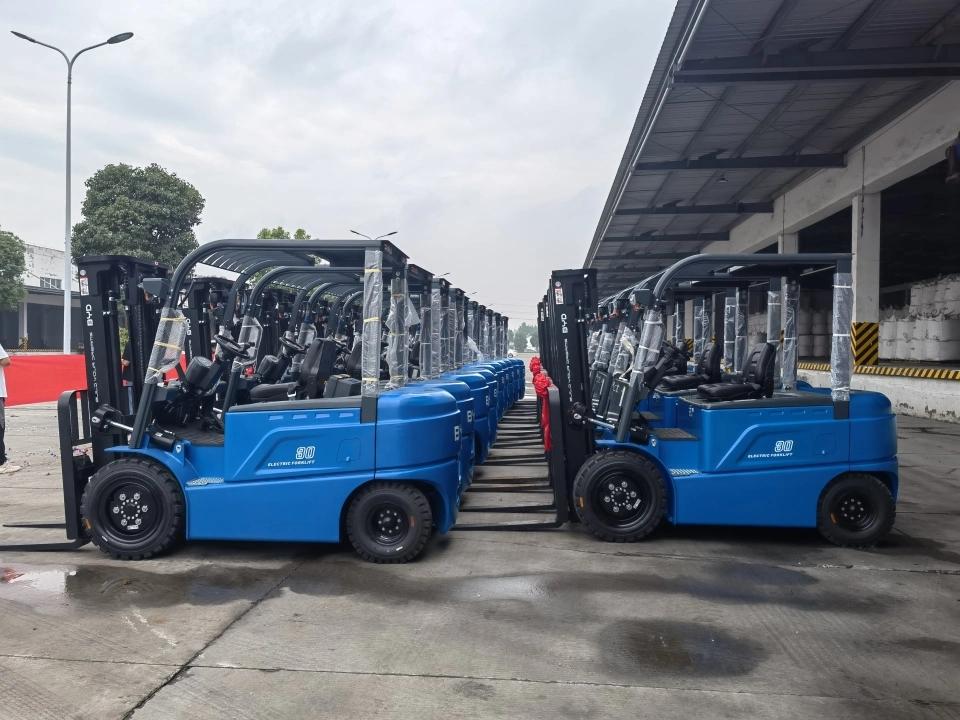
In various warehousing and small-scale manufacturing scenarios, 2-ton electric forklifts have become high-frequency handling tools due to their moderate load capacity and clean and environmentally friendly characteristics. Many enterprise users will be caught in the dilemma of leasing and purchasing when introducing equipment. Today, the characteristics of the two methods are objectively analyzed from multiple dimensions.
Cost is one of the core factors in corporate decision-making. The initial financial pressure of leasing a 2-ton electric forklift is relatively small. Usually, only a certain amount of deposit (some service providers can negotiate to reduce the deposit ratio) and the first month's rent can be put into use immediately. There is no need to spend a large amount of purchase money at one time. This part of the funds can be flexibly allocated to more urgent links such as production and research and development. However, in the long run, if the equipment is used frequently and for more than a certain period of time, the total amount of rent paid may exceed the purchase price of the equipment. The purchase of a 2-ton electric forklift requires a large one-time expenditure, but after the purchase is completed, the equipment will become a fixed asset of the enterprise, which can be depreciated and amortized financially according to regulations. The long-term accumulated cost during the service life is relatively controllable, and the equipment disposal may also obtain a certain residual value income.
Maintenance and service are also important parts to consider. Most regular forklift rental services will provide services including daily maintenance, fault repair, and replacement of wearing parts (the specific scope is subject to the contract). When there is a problem with the equipment, the service provider can arrange technicians to deal with it within the agreed time, which will not have too much impact on daily production operations. The company does not need to be equipped with additional professional forklift maintenance personnel, which saves labor costs. After purchasing a 2-ton electric forklift, most of the daily maintenance, fault investigation and other work needs to be taken care of by the company. If the company does not have a professional maintenance team, it needs to find an additional third-party service agency, which may incur additional costs, and the response speed may not be as stable as the rental service provider.
Flexibility of equipment to adapt to different business needs. Leasing a 2-ton electric forklift has higher flexibility. Enterprises can adjust the lease duration according to changes in business volume. For example, temporarily increase the lease period or the number of rental units in peak season, and can refund or reduce the number of units in advance in off-season to avoid the problem of idle equipment. At the same time, if the business scenario changes and different models of equipment need to be replaced, they can also negotiate with the rental service provider. After purchasing a 2-ton electric forklift, the disposal of equipment is relatively difficult. If the business volume decreases or the scenario changes, the equipment may be idle for a long time, occupying storage space and funds.
Enterprises can choose the approach that suits them based on their own business cycle, capital situation, and usage frequency.


