
 简体中文
简体中文 繁体中文
繁体中文 Deutsch
 日本語
日本語 한국어
한국어 Tiếng Việt
 Русский
 ไทย
ไทย Bahasa Indonesia
 Bahasa Melayu
 Filipino
 لالعربية
 Français

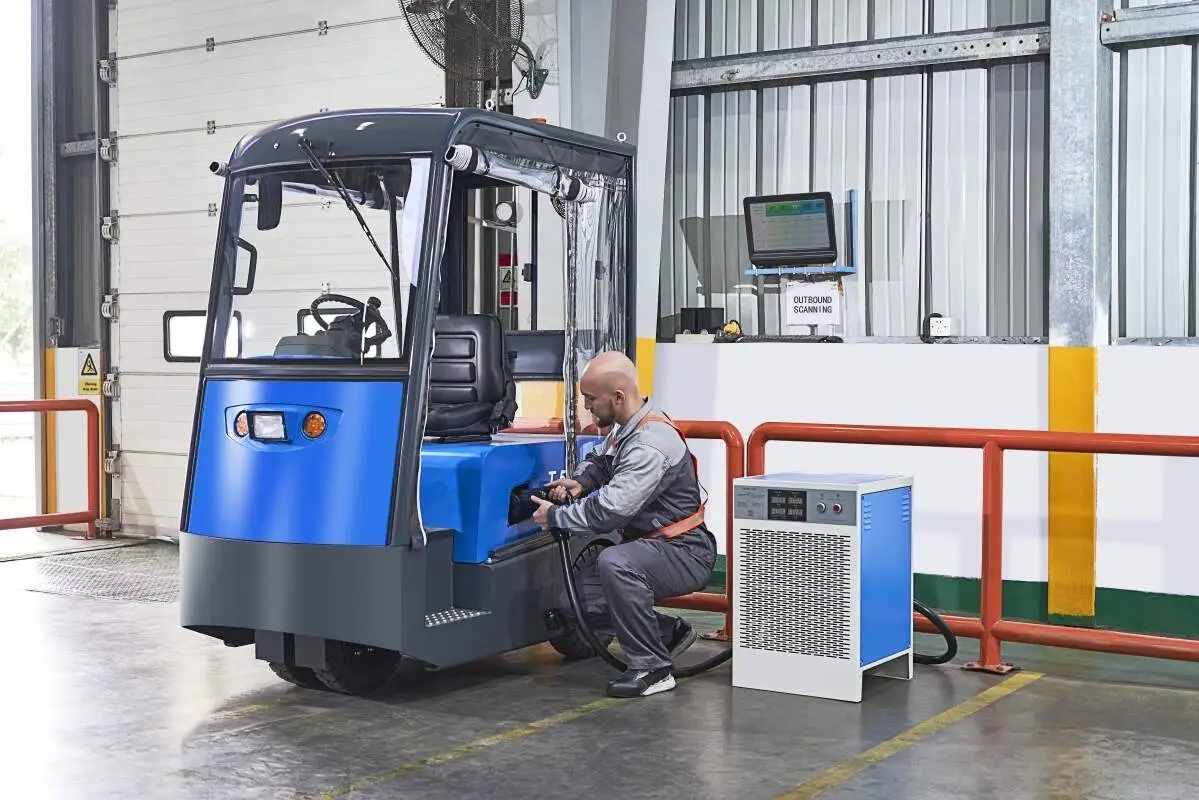
As a 4.5-ton counterweight electric handling equipment, BYD ECB45 forklifts are widely used in scenarios such as warehousing turnover, factory material transfer, and port short barges. Many users pay close attention to the actual battery life and charging characteristics of vehicles during the selection and daily use stages.
Battery life performance in actual scenarios
Conventional operating conditions battery life reference
Under normal temperature conditions, the vehicle operates according to the rated load and standard operation rhythm, and the continuous operation time can cover the operation requirements of most conventional single shifts, adapting to the single-day handling intensity of most ordinary warehouses. If you encounter special working conditions of high-load continuous operation and long-distance high-frequency transfer, the actual battery life will fluctuate within a reasonable range. Users can plan the replenishment node in advance according to their past operation intensity data to avoid affecting the normal operation progress.
Common factors affecting battery life
The battery life performance in daily use will be affected by multiple factors, the first is the ambient temperature. In the low temperature environment in winter, the battery activity will be reduced, and the battery life performance will decrease slightly, which belongs to the normal physical characteristics category. In addition, the average load weight of daily operations, the frequency of high-frequency lifting and lowering of the gantry, and the opening time of on-board auxiliary equipment will also have different degrees of impact on the overall battery life performance.
Detailed explanation of charging characteristics
Conventional slow charge adaptation scenario
In the slow charging mode, the vehicle can complete the complete replenishment process from low power to full power within the corresponding time, and adapt to the night after the operation. During the entire charging process, the temperature control system installed in the vehicle will adjust the working state of the battery throughout the process to maintain the battery in a suitable temperature range. Long-term use is more conducive to ensuring the health of the battery and reducing subsequent operation and maintenance costs.
Precautions for using fast charging
In special scenarios where power needs to be replenished temporarily, the fast charging mode supported by the vehicle can replenish enough power to support several hours of operation in a short period of time, adapt to the short-term rest replenishment requirements of dual-shift connection, and can effectively cope with sudden operation needs during peak hours. It is not recommended to rely on the fast charging mode for high frequency in daily use. Reasonable matching of the use rhythm of fast and slow charging can prolong the overall service life of the battery.
During daily use, users can refer to the operation and maintenance guidelines provided by the official, regularly conduct regular vehicle state inspections, and flexibly adjust the charging strategy in combination with their own operation schedules, so as to give full play to the performance advantages of the vehicle and smoothly meet various daily handling needs.


