
 简体中文
简体中文 繁体中文
繁体中文 Deutsch
 日本語
日本語 한국어
한국어 Tiếng Việt
 Русский
 ไทย
ไทย Bahasa Indonesia
 Bahasa Melayu
 Filipino
 لالعربية
 Français

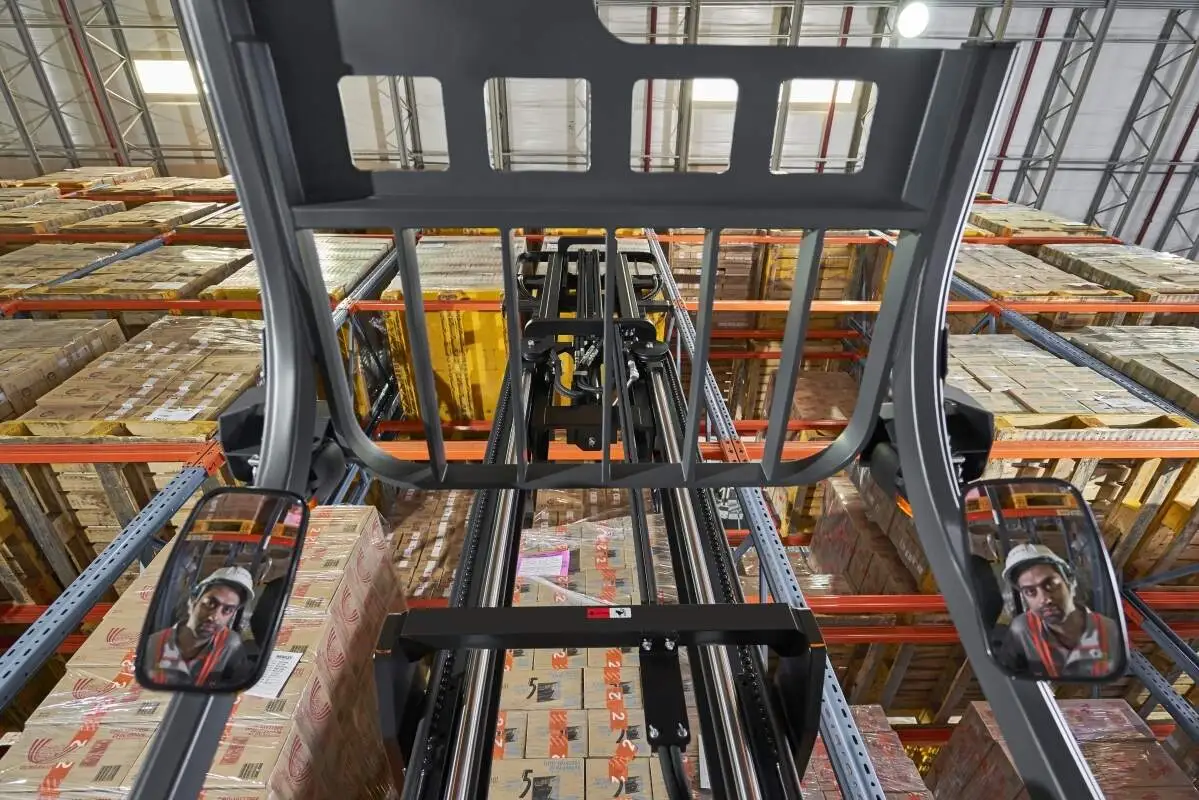
In warehousing and logistics operations, stackers are the key equipment to improve the efficiency of cargo storage and turnover. Different types of stackers are suitable for different operational needs. Among them, walking and standing stackers are two common types in the market, while S14JW and S20JW stackers are also different in application scenarios due to different design characteristics.
The core differences between walking and standing stackers
Differences in operating methods and job comfort
When working on a walking stacker, the operator needs to follow the vehicle on foot and complete driving, lifting, and other operations by controlling the handle with both hands. This method is suitable for short-distance and small-batch cargo handling operations. The station-driven stacker is equipped with a special standing operation platform, allowing the operator to stand on the equipment and move synchronously with the vehicle, without frequent walking during operation. It is more suitable for long-distance and continuous operation scenarios, which can effectively reduce personnel physical exertion.
Workspace fit differences
The walking stacker is relatively small in size and has a smaller turning radius. It can shuttle flexibly in narrow passages or dense shelf areas, requiring lower storage space. It is suitable for small warehouses or convenience store storage areas with limited space. Due to its console structure, the overall size is slightly larger, and it is more suitable for large storage environments with spacious passages and large cargo turnover. It can achieve higher operating efficiency in open spaces.
Load and job efficiency differences
The rated load of the walking stacker is usually low, and the operation rhythm is relatively flat. It is mainly used for light-duty and low-frequency cargo stacking or finishing. The standing stacker has a stronger load capacity and faster operation speed, which can meet the needs of heavy-duty and high-frequency cargo handling. It is suitable for logistics distribution centers with large cargo throughput.
Differentiation between the use requirements of S14JW and S20JW stacker trucks
load demand matching
The rated load of the S14JW stacker is relatively moderate, suitable for handling lighter weight goods, such as the stacking and handling of small boxed goods and scattered parts, and can meet the daily replenishment and tally needs of small warehouses; the rated load of the S20JW stacker is higher, which can cope with the stacking of heavier pallet goods and whole boxes of large goods, and is suitable for warehousing scenarios where goods are heavier.
work intensity adaptation
If the operation scenario is dominated by short-distance and intermittent operations, such as sorting goods at community distribution points and picking orders in small e-commerce warehouses, the operation mode of the S14JW stacker is more suitable for such needs; if it is a long-term continuous operation, such as the turnover of goods in large logistics warehouses and batch outbound warehousing, the design of the S20JW stacker can reduce the labor intensity of the operator and improve the continuous operation ability.
scene space adaptation
The S14JW stacker has better flexibility and convenient steering operation, making it suitable for small storage spaces with narrow passages and compact shelf layouts. The S20JW stacker is more efficient in spacious working passages and is suitable for large logistics warehouses, industrial park storage centers, and other open operating environments. It can quickly complete long-distance handling and stacking of goods.
In summary, whether you choose a walking or standing stacker, or choose between S14JW and S20JW, you need to consider factors such as the size of your storage space, cargo load, and operation intensity in order to choose the appropriate equipment and help improve the overall storage operation efficiency.


