
 简体中文
简体中文 繁体中文
繁体中文 Deutsch
 日本語
日本語 한국어
한국어 Tiếng Việt
 Русский
 ไทย
ไทย Bahasa Indonesia
 Bahasa Melayu
 Filipino
 لالعربية
 Français

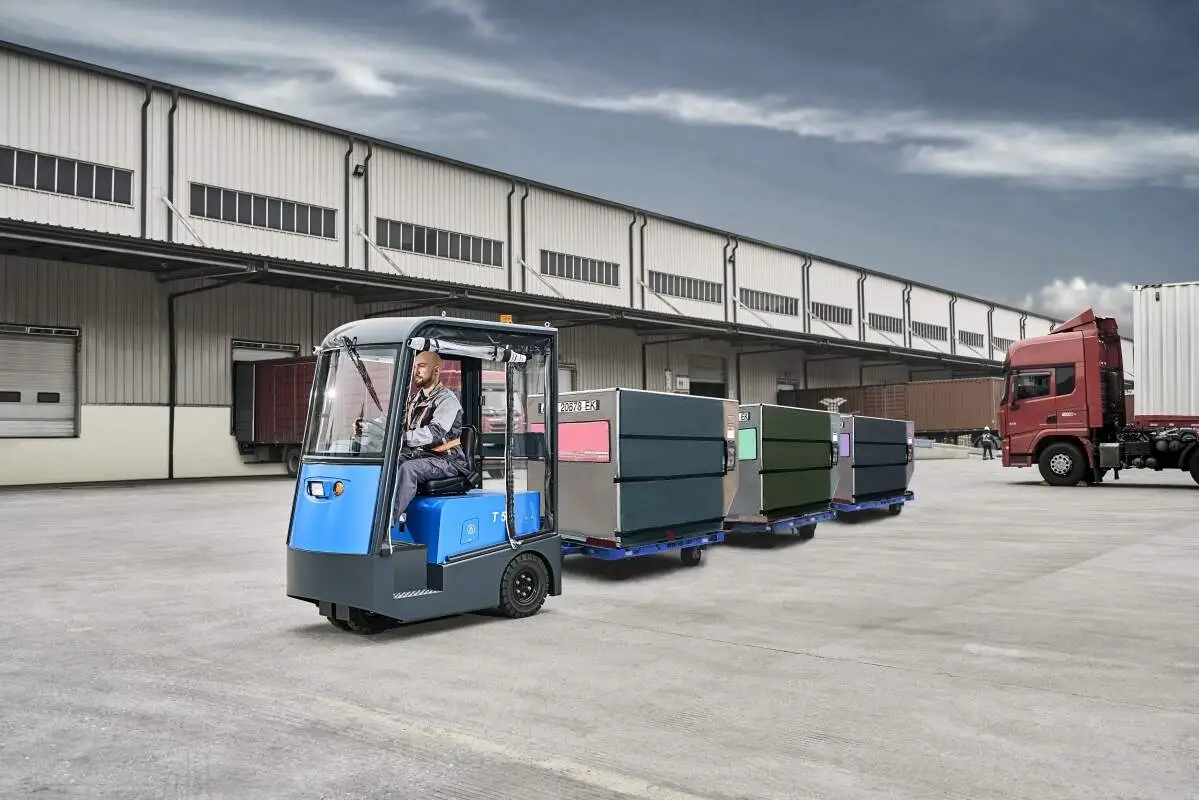
In recent years, the e-commerce industry has developed rapidly. Warehouses face large fluctuations in daily orders, frequent loading and unloading operations during peak hours, and in order to improve the utilization rate of storage space, most warehouses will set up relatively narrow cargo channels, which places higher requirements on the efficiency and flexibility of operating vehicles. As one of the equipment suitable for modern warehousing, ride-on lithium-ion forklifts are gradually being applied in e-commerce warehouses.
The performance of operation efficiency adaptation is more outstanding. The ride-on lithium forklift uses lithium batteries as a power source, which does not need to be preheated for a long time like traditional power vehicles. After starting, it can enter a stable operation state, which can better cope with the sudden increase in orders in the early, middle and evening of e-commerce or during the big promotion. In addition, the lithium battery supports the fast charging and replenishment mode. Generally, it can be replenished for dozens of minutes during the operation gap or short pause, which can support long-term high-frequency operations. There is no need to replace the entire group of batteries like lead-acid batteries, reducing the time loss caused by equipment switching. Some models also have different operation modes, which can be flexibly adjusted according to the weight of the goods and the handling distance, and improve the turnover efficiency under the premise of ensuring the safety of the operation.
The flexibility of the operation can also be better adapted to the space layout of the e-commerce warehouse. Most of the ride-on lithium forklifts have a relatively small steering radius, which can complete steering, U-turn and other operations in a relatively narrow cargo channel, without reserving too wide traffic space, indirectly helping the warehouse to increase storage capacity. The operation interface is usually designed to be relatively simple, and the core operation is concentrated on one or two operation rods or buttons. New operators can master the basic operation methods after short-term professional training, reducing the time cost of personnel training. At the same time, the ride-on design allows the operator to maintain a relatively comfortable sitting position, and it is not easy to cause excessive fatigue during long-term operation, which can maintain a stable working state.
The optimization of comprehensive operating costs is also one of its characteristics. The daily maintenance of lithium batteries is relatively simple, mainly to clean the electrode parts regularly and check whether the connection is firm. There is no need for complex operations such as adding water and acid, and there is no need for special battery maintenance areas or equipment, which saves maintenance space and maintenance costs. From the perspective of energy consumption, the energy conversion efficiency of lithium batteries is relatively high, and the power consumption per unit of operation is less. Long-term use can reduce energy costs.


