
 简体中文
简体中文 繁体中文
繁体中文 Deutsch
 日本語
日本語 한국어
한국어 Tiếng Việt
 Русский
 ไทย
ไทย Bahasa Indonesia
 Bahasa Melayu
 Filipino
 لالعربية
 Français

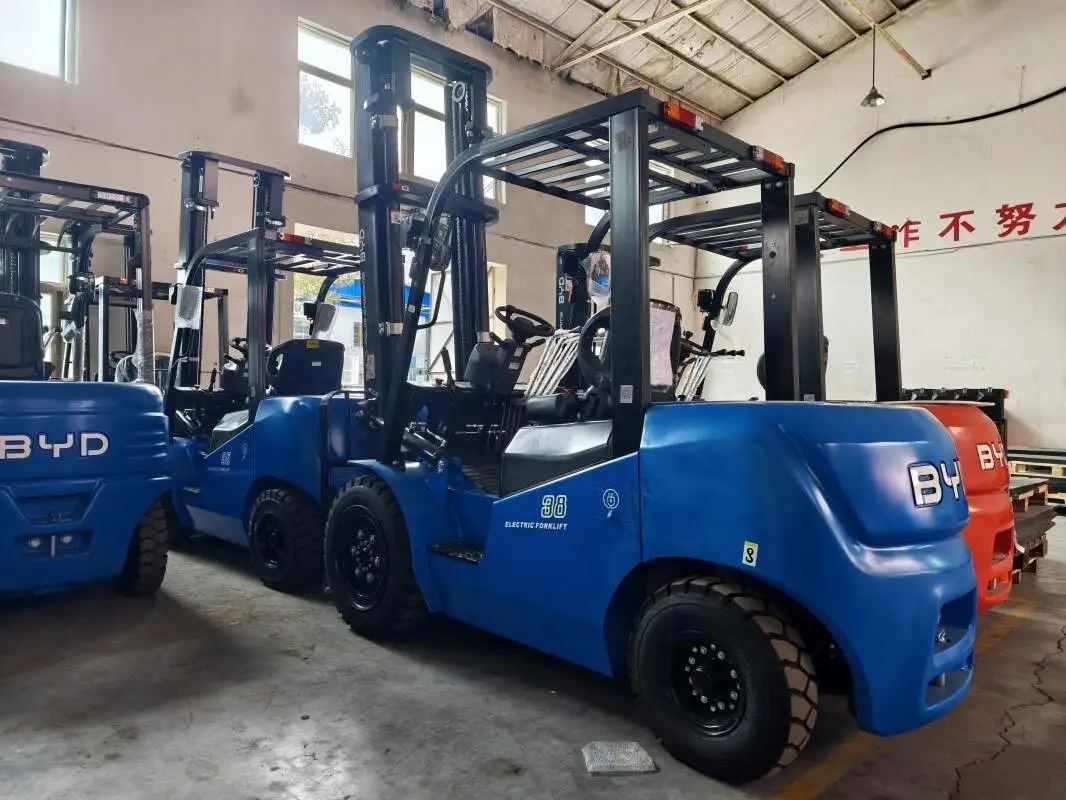
With the rapid development of the logistics and warehousing industry, electric forklifts have become the main equipment for handling operations due to their advantages of environmental protection and low noise. Daily maintenance is a key link to ensure the stable operation of electric forklifts. The complex internal structure of traditional electric forklifts, staggered pipelines and scattered components have caused many troubles to maintenance work. Today, by optimizing the internal structure design, the maintenance process of electric forklifts can be simplified, reducing the difficulty of operators.
Simplified Direction of Internal Structure of Electric Forklift
Integrated design of core components
In order to reduce the occupancy of internal space and the complexity of pipelines, many electric forklifts integrate circuit control systems, hydraulic power systems and other core components into an integrated design. Integrating the original scattered controllers, sensors, hydraulic valves and other components into a compact unit not only reduces the internal layout space, but also reduces redundant wiring and pipelines, making the internal structure clearer.
Modular layout of key components
In addition to integration, modular layout is also an important direction for structural simplification. The key components of the forklift, such as the battery pack, drive system, and steering system, are designed into independent modules, each module has an independent installation interface and protective shell. This design reduces the degree of correlation between components, and there is no need to involve other unrelated components when disassembling.
Daily maintenance convenience with simplified structure
Core component inspection is faster
In the past, when inspecting core components, operators had to disassemble multiple covers and comb staggered pipelines to access the target components, which was time-consuming and laborious. On electric forklifts with simplified structures, integrated units are usually equipped with convenient maintenance doors, which can be opened to directly check the operating status of controllers and sensors; modular battery packs and drive systems can be quickly removed for appearance inspection and performance testing by simply releasing the fixed buckles.
Regular maintenance steps are easier
Routine operations such as filter element replacement and battery replenishment in daily maintenance become simpler on a forklift with a simplified structure. For example, the hydraulic filter element is integrated into the integrated unit, and there is no need to disassemble the surrounding pipelines when replacing, just unscrew the filter element cover to complete the replacement; the water replenishment port of the battery pack is centrally arranged on the side of the module, and the operator does not need to open the battery cover one by one to complete the replenishment operation, which effectively shortens the maintenance time.
Troubleshooting efficiency improvement
When an electric forklift malfunctions, the modular design can help the operator quickly locate the problem. Each module has an independent fault indicator light. Once a module is abnormal, the corresponding indicator light will light up. The operator does not need to check the scattered parts one by one, but only needs to detect and replace the abnormal module, which can effectively solve the problem and reduce the downtime of the forklift.
The simplification of the internal structure of the electric forklift not only optimizes the maintenance process, but also reduces the operational risks during the maintenance process, allowing operators to complete maintenance work more efficiently, ensuring the stable operation of the forklift, and providing more reliable equipment support for logistics handling operations.


