
 简体中文
简体中文 繁体中文
繁体中文 Deutsch
 日本語
日本語 한국어
한국어 Tiếng Việt
 Русский
 ไทย
ไทย Bahasa Indonesia
 Bahasa Melayu
 Filipino
 لالعربية
 Français

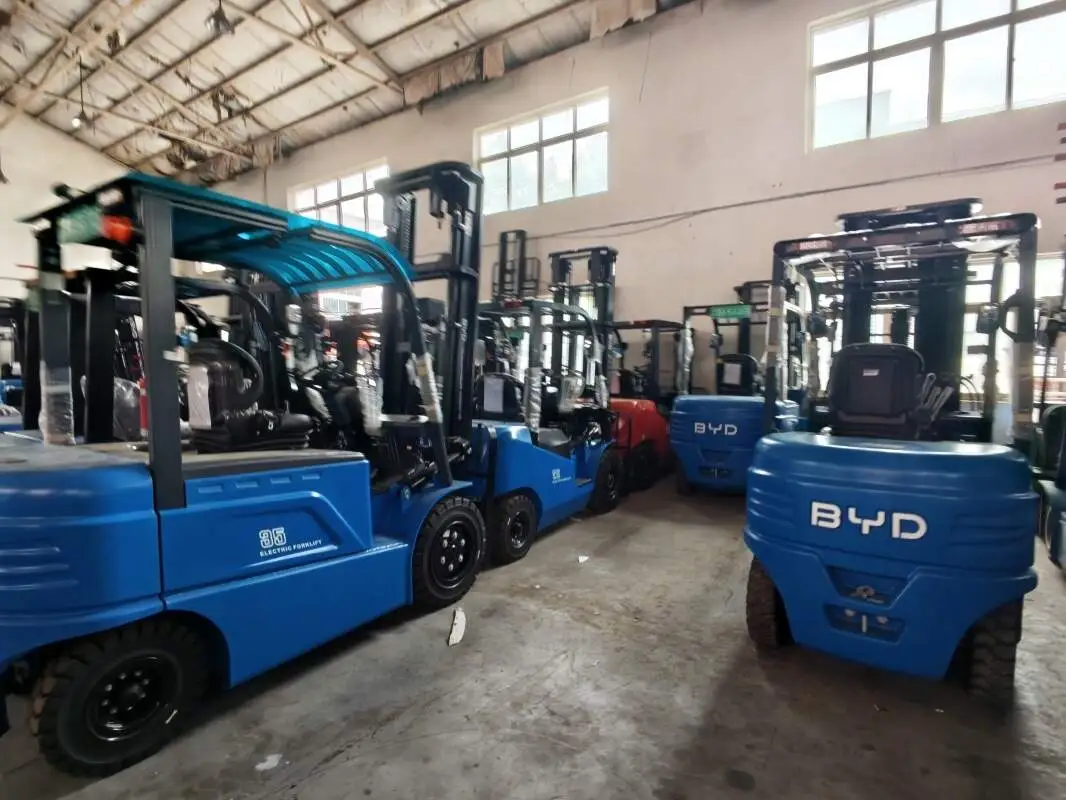
Basic battery life of an electric forklift on a single charge
At present, the single-charge battery life of mainstream electric forklifts on the market will vary depending on the battery type. Electric forklifts using lead-acid batteries usually last between 4 and 8 hours after a single full charge under normal operating conditions; while electric forklifts equipped with lithium batteries have relatively stronger battery life, generally maintaining 6 to 12 hours of operation after a single charge. However, this is only the basic range, and the actual battery life will be affected by a variety of external factors.
Key factors affecting the battery life of electric forklifts
Load and work intensity
The battery life of an electric forklift is directly related to the load weight. When the cargo weight carried by the forklift approaches the upper limit of the rated load, the battery energy consumption will increase significantly and the battery life will be shortened accordingly. In addition, frequent high-intensity operations such as lifting, descending, and steering will also accelerate the consumption of battery power, resulting in a reduction of 20% to 30% in actual operation time compared with no-load.
Operating environment conditions
The operating environment also has a significant impact on the battery life of the electric forklift. In a low temperature environment, the battery activity will decrease, the power release efficiency will decrease, and the battery life may be reduced by 15% to 25%. In a high temperature environment, the battery heat dissipation pressure increases, and long-term operation will also accelerate the power consumption. At the same time, the flatness of the working site will also affect the battery life. The bumpy road will increase the driving resistance of the forklift, further consuming power.
Operation and usage habits
Operator's operating habits will also affect battery life. Frequent rapid acceleration and sudden braking will cause the battery to release a large amount of power in a short period of time, reducing battery life efficiency. Maintaining a constant speed and properly planning the lifting and steering movements can effectively reduce unnecessary energy consumption and prolong the working time.
Differences in battery life performance under different operating scenarios
In relatively stable operating scenarios such as indoor warehouses, electric forklifts are mostly responsible for light loads and high-frequency handling tasks. If the operation is standardized, lead-acid battery forklifts can usually maintain 6 to 8 hours of operation, while lithium battery forklifts can reach 10 to 12 hours. In outdoor construction sites, ports and other scenarios, forklifts need to cope with heavy loads and complex road conditions. The battery life of lead-acid battery forklifts may be shortened to 4 to 6 hours, and lithium battery forklifts will also be reduced to 6 to 9 hours.
Practical Methods for Improving the Battery Life of Electric Forklift
Rational planning of the operation route
Planning the handling route in advance can reduce unnecessary steering and round-trip driving, which can effectively reduce energy consumption. At the same time, try to centralize the handling of similar handling tasks, reduce the number of frequent starts and stops, and help prolong the battery life.
Maintain the battery regularly
Periodic inspection and maintenance of the battery, including cleaning the battery terminals, ensuring sufficient electrolyte (for lead-acid batteries), and avoiding overcharging and discharging, can maintain the good performance of the battery and maintain a stable battery life.
Match the appropriate battery type
Select the corresponding battery type according to the operation scenario, such as long-term continuous operation scenarios, prioritize lithium batteries; short-cycle, intermittent operation scenarios, lead-acid batteries can also meet demand, and reasonable selection can maximize battery life efficiency.


