
 简体中文
简体中文 繁体中文
繁体中文 Deutsch
 日本語
日本語 한국어
한국어 Tiếng Việt
 Русский
 ไทย
ไทย Bahasa Indonesia
 Bahasa Melayu
 Filipino
 لالعربية
 Français

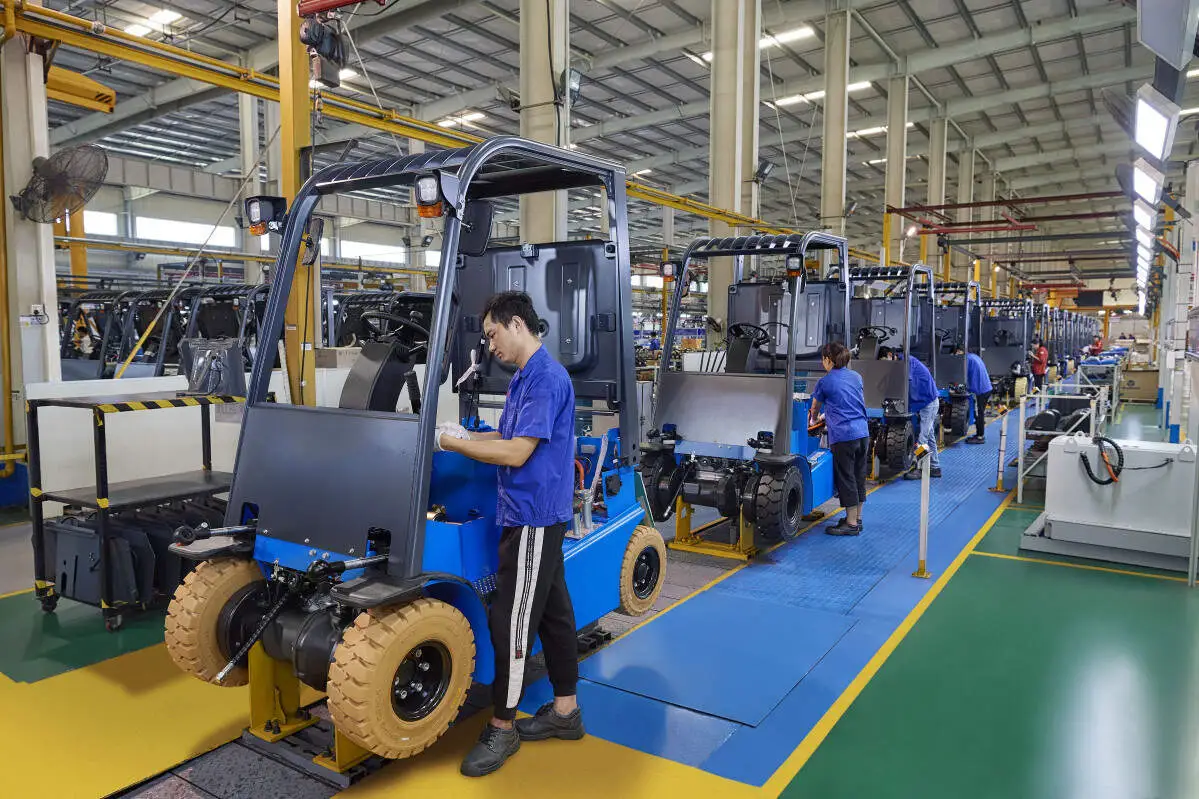
For small and medium-sized warehouses, storage lithium forklifts are the core equipment to improve operational efficiency, but due to limited warehouse space and relatively tight budgets, selecting suitable equipment is particularly critical. Choosing the right lithium forklift can not only meet daily loading, unloading and stacking needs, but also avoid resource waste and control operating costs.
Identify your core job requirements
Matching load and operating frequency
The goods in small and medium-sized warehouses are mostly small and medium-sized, and the load demand is usually concentrated in the range of 1 to 3 tons. When selecting, you need to combine the maximum weight of the daily handling goods to avoid blindly choosing high-load models that cause cost waste, and do not affect the operation due to insufficient load. At the same time, adjust the configuration according to the operation frequency: if it is only intermittent operation, there is no need to choose a high-endurance and high-power model, and the basic model can meet the demand; if the daily operation time exceeds 6 hours, you need to give priority to equipment with stronger endurance.
Adapt to warehouse space conditions
Small and medium-sized warehouses generally have the characteristics of narrow passages and compact shelf layout. The size and flexibility of lithium-ion forklifts directly affect the smoothness of the operation. Preference is given to models with a small turning radius to ensure flexible steering and U-turns in narrow passages. At the same time, according to the maximum stacking height of the warehouse shelves, choose the forklift with the corresponding raised capacity to ensure that the goods can be smoothly transported to the target position, so as to avoid the inability to adapt the shelf height due to insufficient elevation.
Consider battery life and maintenance costs
The battery life of a lithium-ion forklift needs to match the daily operating hours. Generally speaking, for warehouses with an average daily operation of 4 to 6 hours, you can choose a model with a battery life of about 8 hours. There is no need to pursue long battery life to increase costs. In terms of maintenance, lithium-ion forklifts do not need to change oil and filter elements regularly like fuel forklifts. Daily maintenance only needs to pay attention to battery status and tire wear. In the long run, it can effectively reduce maintenance expenses and is more suitable for small and medium-sized warehouses with limited budgets.
Focus on ease of operation
Operators in small and medium-sized warehouses may lack professional training, and ease of operation is an important consideration. Preference is given to models with compact bodies and user-friendly operating handles. This type of forklift is difficult to use and can be operated skillfully by beginners after simple training, which can reduce personnel adaptation costs. At the same time, models with low-speed driving, one-click lifting and other functions can further improve operational safety and reduce the risk of cargo collisions.
By selecting suitable storage lithium-ion forklifts based on the above dimensions, small and medium-sized warehouses can effectively improve the efficiency of warehousing operations and provide reliable support for daily operations while controlling costs.


