
 简体中文
简体中文 繁体中文
繁体中文 Deutsch
 日本語
日本語 한국어
한국어 Tiếng Việt
 Русский
 ไทย
ไทย Bahasa Indonesia
 Bahasa Melayu
 Filipino
 لالعربية
 Français

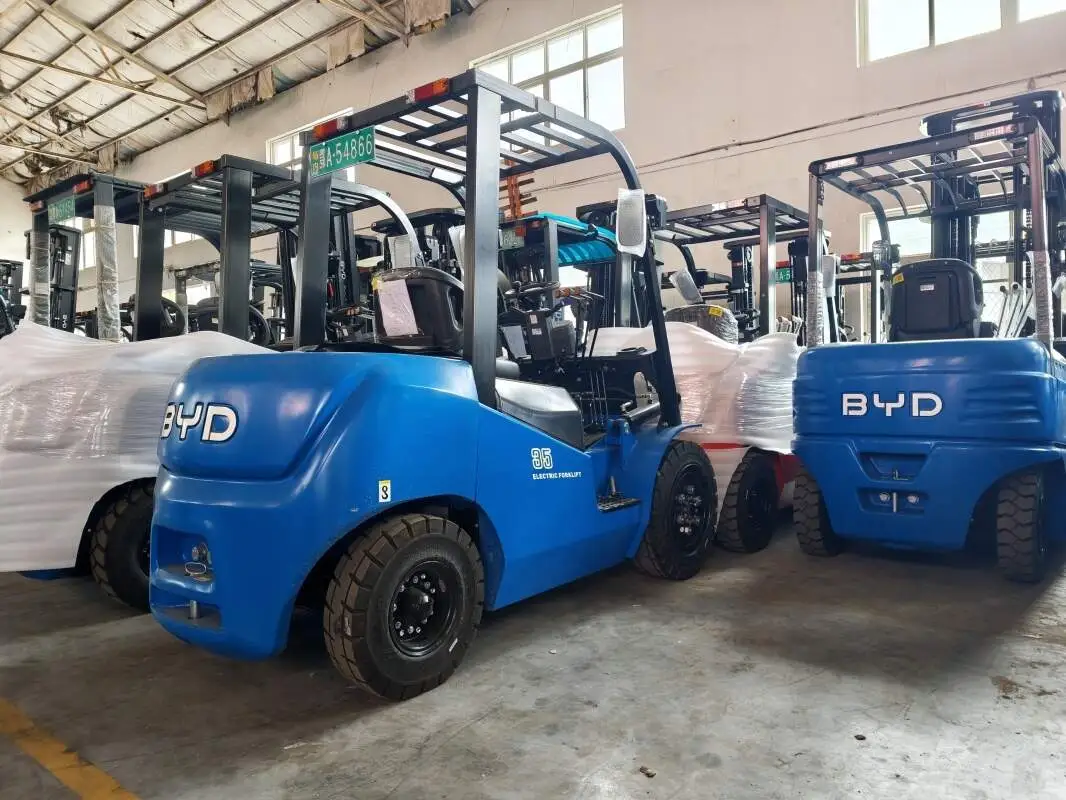
In the handling scene of modern production workshops, narrow passages, confined spaces and environmental compliance requirements put forward higher standards for material handling equipment. Traditional fuel forklifts not only have exhaust emissions that affect indoor air quality, but also have difficulty operating flexibly in narrow passages. Narrow-channel lithium-electric forklifts can just solve these pain points and become an ideal choice for indoor exhaust-free handling.
Adaptability of indoor exhaust-free operations
Indoor workshops are usually relatively confined spaces with dense personnel and limited air circulation. Exhaust emissions not only harm the health of the workers, but also may not meet environmental management standards. Narrow-channel lithium-ion forklifts are powered by electric energy, and no exhaust gas is generated during operation, which avoids air pollution problems from the source and can meet the environmental protection and health requirements of the indoor environment. At the same time, there is no need to set up additional exhaust gas treatment devices, which reduces the operation and maintenance costs of the workshop.
The advantages of flexible operation in narrow channel scenarios
In order to improve space utilization, most production workshops will plan more narrow channel storage areas. Traditional forklifts have large body widths and turning radii, which are prone to scratches when entering such channels, and even cannot pass smoothly. Narrow-channel lithium-ion forklifts adopt a compact body design with a smaller turning radius, which can flexibly turn and turn around in narrow channels, and easily complete material storage and handling operations, effectively improving the utilization rate of workshop space and reducing obstacles in the material handling process.
Long-term operation and maintenance characteristics of lithium battery power
The lithium-ion power system provides a stable battery life support for the narrow-channel forklift, and a single charge can meet the handling needs of the workshop throughout the day, without frequent downtime for refueling. At the same time, the maintenance process of the lithium battery is relatively simple, and there is no need to replace the oil, filter element and other components regularly, which reduces the maintenance cost and downtime of the equipment. In addition, the power response of the lithium-ion forklift is fast, and the start and acceleration are smooth, which can adapt to the frequent start and stop handling operation rhythm in the workshop and improve the overall handling efficiency.
In the indoor workshop handling scenario, narrow-channel lithium-ion forklifts have become an efficient solution to the pain points of traditional handling equipment by virtue of their advantages of no exhaust emissions, flexible operation in narrow channels, and long-term operation and maintenance, providing reliable support for enterprises to achieve green and efficient workshop material handling.


