
 简体中文
简体中文 繁体中文
繁体中文 Deutsch
 日本語
日本語 한국어
한국어 Tiếng Việt
 Русский
 ไทย
ไทย Bahasa Indonesia
 Bahasa Melayu
 Filipino
 لالعربية
 Français

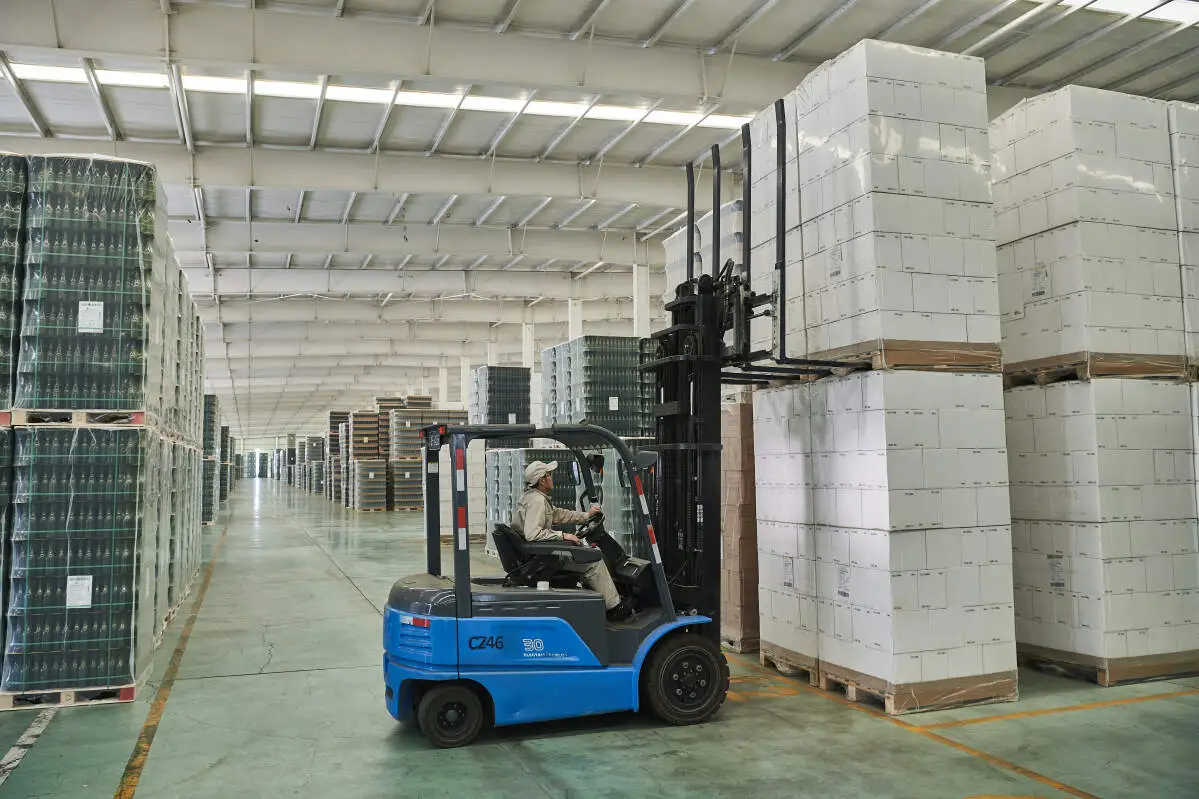
The domestic electric forklift production industry has shown a steady development trend in recent years. Production enterprises are mainly concentrated in industrial-intensive areas such as the Yangtze River Delta and the Pearl River Delta. Most of these enterprises have mature production systems and can provide a variety of specifications from micro to heavy for different application scenarios such as warehousing, logistics, and manufacturing. Many companies focus on the actual needs of users, and continue to optimize in terms of battery life, ease of operation, and lightweight body, etc., and the product performance gradually fits the diverse use scenarios of the domestic market.
When manufacturers directly purchase electric forklifts, they must first verify the qualifications of the enterprise. Users need to confirm whether the enterprise has a legal production license, check the relevant qualification documents, avoid choosing small workshop products without formal qualifications, and ensure the compliance and quality of the products from the source.
Secondly, do not blindly pursue low prices. Some products may seem inexpensive, but there may be shrinkage in the quality of core accessories and production process standards, which is prone to failure after long-term use and increases subsequent maintenance costs. When purchasing, you should comprehensively consider the matching degree of product performance, material quality and price, and give priority to products with balanced cost performance.
Furthermore, if conditions permit, it is recommended to inspect the capacity on the spot. You can go to the enterprise factory to check the advanced level of production equipment, the standardization of the process and the perfection of the quality control system, intuitively understand the production strength of the enterprise, and ensure the stability and reliability of product quality.
At the same time, it is necessary to clarify the after-sales guarantee terms. When communicating with the manufacturer, it is necessary to agree on the after-sales maintenance response timeliness, parts supply cycle, quality assurance scope, etc., to avoid failures in later use that cannot be solved in time and affect the progress of production operations.
Finally, be sure to conduct on-site test drive verification. Before purchasing the target product, check the actual performance such as operation flexibility, power output smoothness, braking sensitivity, etc., to ensure that the product meets the needs of its own operating scenarios and avoid wasting resources due to adaptability issues.


