
 简体中文
简体中文 繁体中文
繁体中文 Deutsch
 日本語
日本語 한국어
한국어 Tiếng Việt
 Русский
 ไทย
ไทย Bahasa Indonesia
 Bahasa Melayu
 Filipino
 لالعربية
 Français

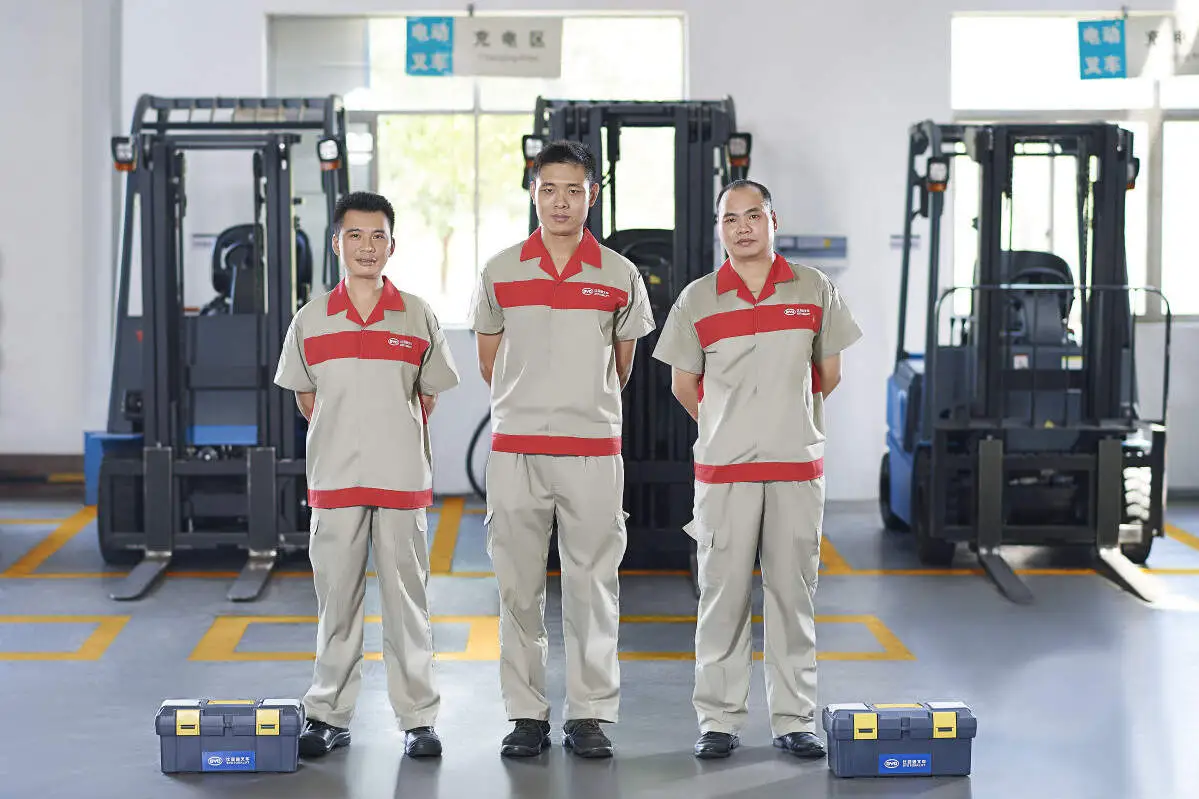
Daily routine maintenance
Routine maintenance is the foundation for ensuring the daily smooth operation of the stacker, which needs to be completed before and after daily operations.
Appearance and basic parts inspection
Focus on checking whether the appearance of the car body is bumped and deformed, and whether the carrying parts such as forks and chains are worn or loose. Clean up the sundries and oil stains on the car body and forks to ensure a clear vision of the operation.
Power system preliminary investigation
Check the power or fuel balance of the power unit, confirm that there is no leakage or damage to the charging port or fuel interface, and check whether the external pipelines of the power system are aging or cracking.
Operating parts functional verification
Test the sensitivity of the steering wheel, joystick, brake, lift button and other operating components to ensure that each component responds promptly and functions normally. If a card or abnormality is found, the operation should be stopped immediately and checked.
monthly in-depth maintenance
Monthly in-depth maintenance needs to be carried out at a fixed time each month to provide targeted maintenance for the core components of the stacker.
Power core component inspection
Clean the inside of the power unit, check the status of the battery plate or fuel filter, clean the surface dust or impurities, and ensure the stability of the power output. At the same time, check whether the terminals of the power system are loose, oxidized, and tighten or deal with them in time.
Hydraulic system maintenance
Check the level and quality of the hydraulic oil. If the level is lower than the standard value, the hydraulic oil of the same specification should be replenished in time. If the oil is turbid or deteriorated, it needs to be replaced. At the same time, check the hydraulic pipeline and joints for leakage, and tighten the loose joints.
Walking system inspection
Check the wear degree and air pressure of the tires, replace or adjust in time when the wear is serious or the air pressure is abnormal. Check the running status of the walking motor and reducer, listen for abnormal sounds, and add lubricating oil if necessary.
Quarterly comprehensive maintenance
Quarterly comprehensive maintenance requires multi-system special project investigation of the stacker to eliminate potential failure hazards.
Electrical system special project investigation
Check the insulation performance of the whole vehicle circuit, test the working status of various sensors and indicator lights, and replace failed fuses or indicator lights. Clean the controller, display screen and other electronic components to avoid dust accumulation affecting operation.
Bearing structure maintenance
Carry out detailed inspections of load-bearing structures such as fork racks and door frames to check for cracks and deformation. If minor cracks are found, they need to be repaired in time to ensure that the load-bearing capacity meets the standards.
Safety device calibration
Calibrate and test safety components such as limit switches, emergency braking devices, and overload protection devices to ensure that they can start in time under triggering conditions and ensure the safety of operators and equipment.
Annual comprehensive maintenance
The annual comprehensive maintenance is a comprehensive physical examination and maintenance of the stacking truck, which requires professional operation.
Disassembly and maintenance of core components
Disassemble the power unit, hydraulic pump, travel motor and other core components, conduct internal cleaning and wear testing, and replace severely worn parts to restore component performance.
overall performance testing
After completing the maintenance of the components, full performance tests such as driving, lifting, and steering under no-load and heavy-load conditions are carried out to verify the stability of the coordinated operation of each system and adjust the parameters that do not meet the standards.
Maintenance record archive
The annual maintenance content, replacement parts information, test data, etc. are recorded and archived in detail to provide reference for subsequent maintenance and troubleshooting.


