
 简体中文
简体中文 繁体中文
繁体中文 Deutsch
 日本語
日本語 한국어
한국어 Tiếng Việt
 Русский
 ไทย
ไทย Bahasa Indonesia
 Bahasa Melayu
 Filipino
 لالعربية
 Français

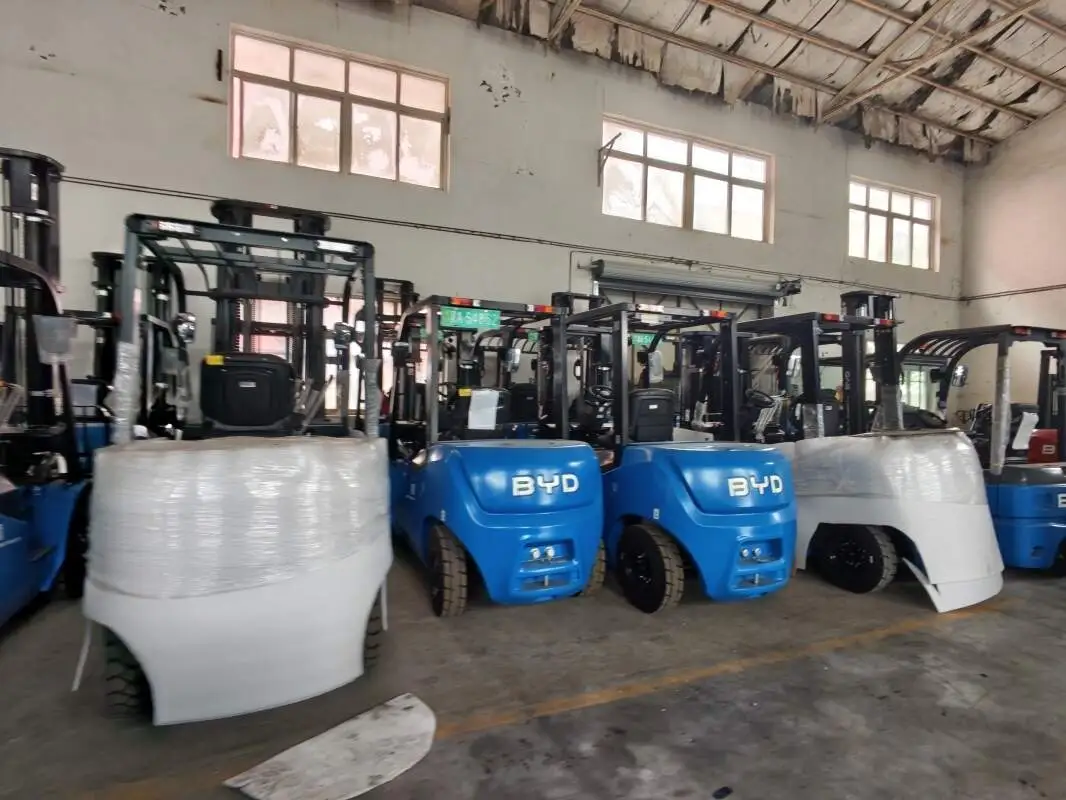
Low-temperature warehouses have high requirements for cold resistance and stability of forklift equipment due to their special storage environment. Lithium-ion forklifts have gradually become the best choice for such scenarios due to their environmentally friendly and efficient characteristics. To help enterprises complete procurement scientifically, the following provides a complete reference plan.
Suitability assessment before purchase
First of all, it is necessary to clarify the minimum temperature range of the warehouse. Different low temperature grades have different requirements for the cold resistance of forklift batteries and parts. It is necessary to ensure that the forklift can continue to operate stably in the target low temperature environment to avoid problems such as power drop and component freezing damage. At the same time, it is necessary to combine the shelf height, channel width, cargo weight and other parameters of the warehouse to determine the basic parameters such as the lifting height, turning radius, and rated load of the forklift to ensure that the forklift can smoothly complete loading, unloading, and handling operations.
Core performance metric considerations
The low temperature performance of the battery is the key. It is necessary to pay attention to the capacity retention rate and charging efficiency of the battery in the low temperature environment, and choose a lithium battery configuration that can maintain a high discharge efficiency at low temperature to avoid significant shrinkage of battery life due to low temperature. The hydraulic system and control system of the forklift need to use cold-resistant materials and sealing processes to prevent the solidification of hydraulic oil and line failure at low temperature. At the same time, the body parts need to have the ability to resist low temperature embrittlement and prolong the service life of the equipment. In addition, the operator's line of sight is easily affected in the low temperature environment. The forklift needs to be equipped with a clear lighting system, anti-skid braking device, and a low temperature early warning function to
Cost and operation and maintenance considerations
When purchasing, it is necessary to comprehensively compare the prices of forklifts of different configurations, combined with their own budget and operational needs, to avoid cost waste caused by blind pursuit of high configuration, and not to choose equipment that does not meet low temperature requirements due to low prices. At the same time, attention should be paid to long-term operation and maintenance costs, and priority should be given to equipment with long battery life, low replacement cost of parts, convenient operation and maintenance, and easy access to cold-resistant accessories to reduce maintenance investment in long-term use.
Post-procurement acceptance points
After arrival, it is necessary to conduct a trial operation in a simulated low temperature environment to test the power output, lifting capacity, braking performance and other core indicators of the forklift to confirm that it meets the procurement requirements. At the same time, it is necessary to carefully check whether the cold-resistant parts of the equipment are in good condition, and keep detailed acceptance records to provide the basis for subsequent operation and maintenance and after-sales guarantee.


