
 简体中文
简体中文 繁体中文
繁体中文 Deutsch
 日本語
日本語 한국어
한국어 Tiếng Việt
 Русский
 ไทย
ไทย Bahasa Indonesia
 Bahasa Melayu
 Filipino
 لالعربية
 Français

Comprehensive preparation before storage
Battery status check
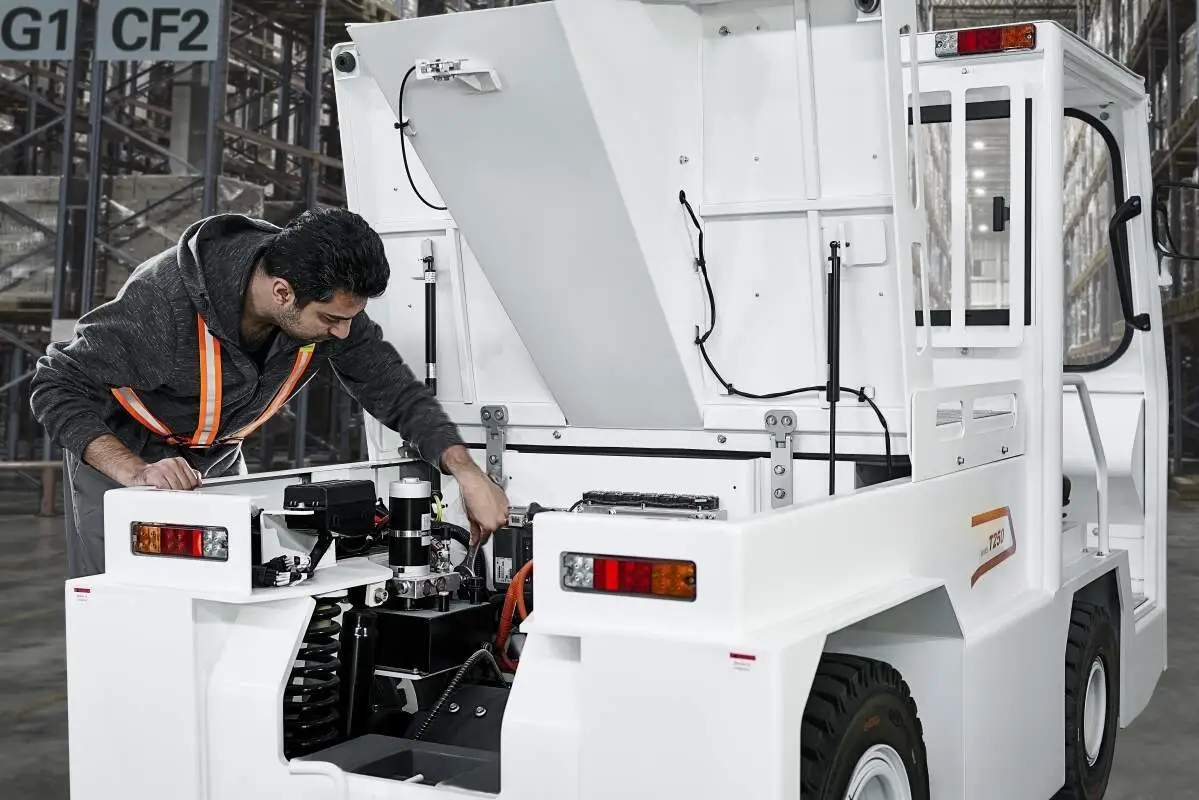
Before storage, it is necessary to conduct a comprehensive inspection of the battery of the lithium battery storage forklift to confirm that the remaining power is within a reasonable range and avoid storage that is too high or too low. At the same time, check whether the appearance of the battery has abnormalities such as bulging and leakage. If there is any problem, it needs to be dealt with before storage.
Vehicle cleaning
Thoroughly clean the forklift body, fork, chassis and other parts to remove dust, oil and sundries to prevent stains from corroding parts during long-term storage. After cleaning, simple anti-rust treatment can be done on metal parts to reduce the risk of rust.
Scientific control of storage environment
Temperature and humidity control
Choose a storage environment with suitable temperature and humidity to avoid placing the forklift in high temperature, high humidity or low temperature areas. Excessive temperature will accelerate battery aging, high humidity can easily cause circuit short circuit, and low temperature may affect battery activity. It is recommended that the ambient temperature be maintained between 5 ° C and 30 ° C, and the relative humidity be controlled below 60%.
Ventilation and protection
The storage area should have good ventilation conditions to avoid the accumulation of harmful gases in the confined space. At the same time, take good protection to prevent the forklift from being exposed to direct sunlight, rain splashing or extrusion of heavy objects. You can use a dust cover to cover the forklift to reduce the impact of the external environment.
Periodic maintenance during storage
Regular battery replenishment
When a lithium battery storage forklift is stored for a long time, it is necessary to recharge the battery regularly, usually every 1 to 2 months, to maintain the power level between 50% and 70% to avoid battery performance degradation or damage due to power loss.
Key components inspection
Every once in a while, inspect the key components of the forklift, including tires, braking systems, steering systems, etc., to check whether the tire pressure is normal, whether the braking is sensitive, and whether the steering is smooth. If any parts are found to be loose or abnormal, adjust and maintain them in a timely manner.
Pre-activation troubleshooting after storage
Battery performance testing
Check the battery voltage and capacity before enabling, and then booster charge after confirming that the state is normal. If the battery is stored for a long time, a complete charge and discharge cycle can be carried out to restore battery activity.
Vehicle functional testing
Carry out comprehensive tests on various functions such as forklift walking, lifting, braking, etc., to ensure that each system is running normally. At the same time, check the status of the whole vehicle parts again to confirm that there is no rust, damage, etc., before it can be put into use.


