
 简体中文
简体中文 繁体中文
繁体中文 Deutsch
 日本語
日本語 한국어
한국어 Tiếng Việt
 Русский
 ไทย
ไทย Bahasa Indonesia
 Bahasa Melayu
 Filipino
 لالعربية
 Français

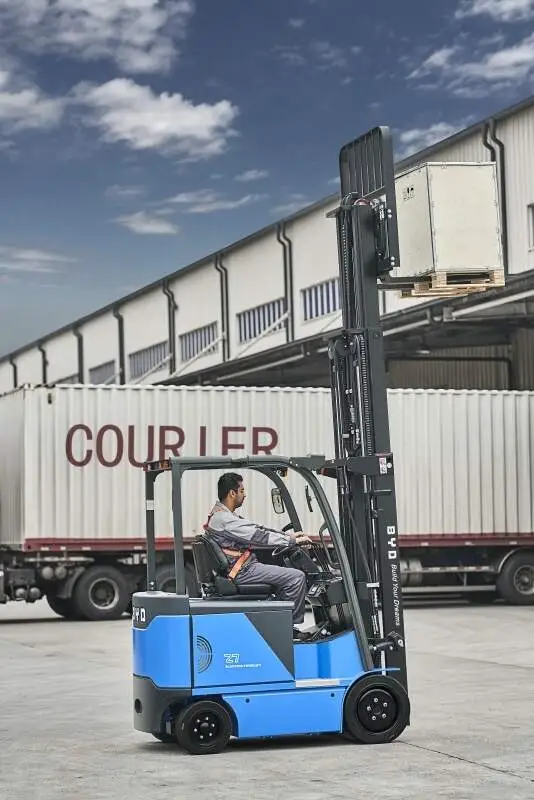
In recent years, with its stable heavy-duty performance and lower operation and maintenance costs, 4-ton lithium-ion forklifts have gradually covered multiple mainstream on-site handling scenarios. The functional adaptation details in different scenarios directly affect the actual use experience and operation efficiency of the equipment.
Industrial manufacturing plant operation scene
Heavy-duty raw material transfer adaptation
Many manufacturing plants require frequent transfer of heavy-duty raw materials such as steel and prefabricated components. The rated load-bearing capacity of a 4-ton lithium-ion forklift can cover the vast majority of conventional heavy-duty handling needs. The body counterweight has been optimized and adjusted to ensure a smooth and non-slippery ride. It is suitable for different road conditions such as rough cement pavements and temporarily laid gravel sections in the factory area, and there will be no problems such as rolling and insufficient power.
Factory indoor and outdoor universal adaptation
The lithium-ion power system has no exhaust emissions and does not generate harmful exhaust gases in the closed production workshop. At the same time, the standard waterproof and dustproof structure can cope with outdoor light rain and dusty weather, and can cover the handling needs of the whole plant area without frequent replacement of equipment, reducing the comprehensive cost of equipment procurement.
Operation scene of bulk commodity logistics park
Whole cargo turnover adaptation
The logistics park needs to handle various types of goods such as household appliances, daily chemicals, and fast-moving consumer goods on a daily basis. The driving speed and lifting height parameters of the 4-ton lithium-ion forklift match the conventional turnover requirements, and the steering radius is moderate. It can be passed through flexibly in the container loading and unloading area and truck gap channels of the logistics park, adapting to short-distance transshipment operations of different categories of goods.
Long-term continuous operation adaptation
The lithium battery supports fast charging and replenishment, and a short replenishment during the operation gap can support the next few hours of operation. There is no need to reserve a long charging waiting period, and it adapts to the operation rhythm of the shift during the peak operation period of the logistics park, effectively improving the cargo throughput efficiency during peak hours.
Operation Scenario of Large Warehouse Distribution Center
High frequency stacking pick and place adaptation
The daily handling frequency of large storage centers is extremely high, the hydraulic response speed of 4-ton lithium-ion forklifts is smooth, the operation of stacking and picking up goods has a high fault tolerance rate, and it is suitable for the storage and storage needs of whole goods in high-shelf areas. The power output under long-term high-frequency operations remains stable, and there will be no power attenuation affecting the rhythm of operations.
Low-interference operating environment adaptation
The operating noise of the whole vehicle is much lower than that of traditional internal combustion equipment, and it will not interfere with the communication of personnel in the storage center, the surrounding office area, and there will be no oil drip pollution of the packaging of goods. It is suitable for warehousing scenarios where the cleanliness of the working environment is required. Overall, the adaptation boundary of 4-ton lithium-ion forklifts covers most of the mainstream on-site handling needs. Users in different industries can choose the corresponding equipment to match the needs according to the specific details of their own operations.


