
 简体中文
简体中文 繁体中文
繁体中文 Deutsch
 日本語
日本語 한국어
한국어 Tiếng Việt
 Русский
 ไทย
ไทย Bahasa Indonesia
 Bahasa Melayu
 Filipino
 لالعربية
 Français

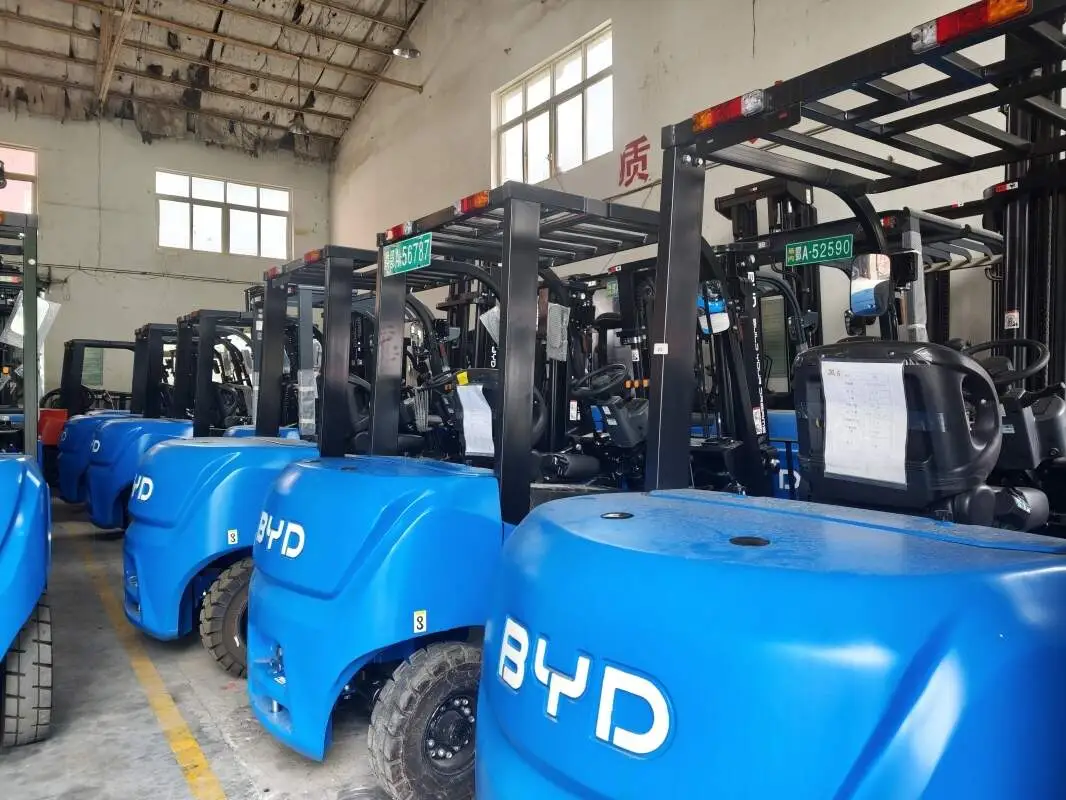
The multi-shift operation in the logistics park is usually accompanied by continuous cargo loading and unloading, transshipment demand, long operation cycle and large fluctuation of throughput, which puts forward higher requirements for the endurance and reliability of the forklift. With the characteristics of zero emission, stable battery life and easy maintenance, the balanced heavy lithium-ion forklift has become the suitable choice for such scenarios, and the formulation of scientific use plans can further exert its effectiveness.
Reasonable scheduling and staffing
Combined with the peak and trough periods of the operation in the park, the three-shift or four-shift rotation mode can be used to avoid the loss of forklifts due to long-term continuous operation. At the same time, fixed forklift operators are arranged to carry out regular operation specification training, familiarize themselves with the characteristics and emergency operation procedures of the balance heavy lithium-ion forklift, and reduce the failure and efficiency loss caused by improper operation.
Charging and battery life management
In response to the battery life requirements of multi-shift operations, the power exchange mode is preferred, which can quickly complete the battery replacement during the operation gap to ensure the continuous operation of the forklift. If the charging mode is adopted, a dedicated charging area needs to be planned and charged during the low period at night, which not only reduces the cost of electricity, but also avoids the power shortage during peak hours from affecting the operation. Daily attention should be paid to the battery power status, establish a power monitoring mechanism, and make replenishment arrangements in advance.
Routine maintenance and failure prevention
Establish a pre-shift and post-shift inspection mechanism. Operators check the tires, braking systems, battery connection components and other key parts of the forklift before and after each shift to detect abnormalities in a timely manner. Regularly arrange professionals to conduct in-depth maintenance, including battery performance testing, hydraulic system investigation, etc., to carry out targeted maintenance for the characteristics of lithium-ion forklifts and prolong the service life of the equipment.
Job efficiency optimization
Combined with the storage layout of the park and the circulation route of goods, the working area of the forklift is rationally planned to reduce the invalid driving path. At the same time, according to the weight and type of goods, the balance weight lithium battery forklift of the appropriate tonnage is matched to avoid overcapacity or overload operation and improve the operation efficiency of a single forklift.


