
 简体中文
简体中文 繁体中文
繁体中文 Deutsch
 日本語
日本語 한국어
한국어 Tiếng Việt
 Русский
 ไทย
ไทย Bahasa Indonesia
 Bahasa Melayu
 Filipino
 لالعربية
 Français

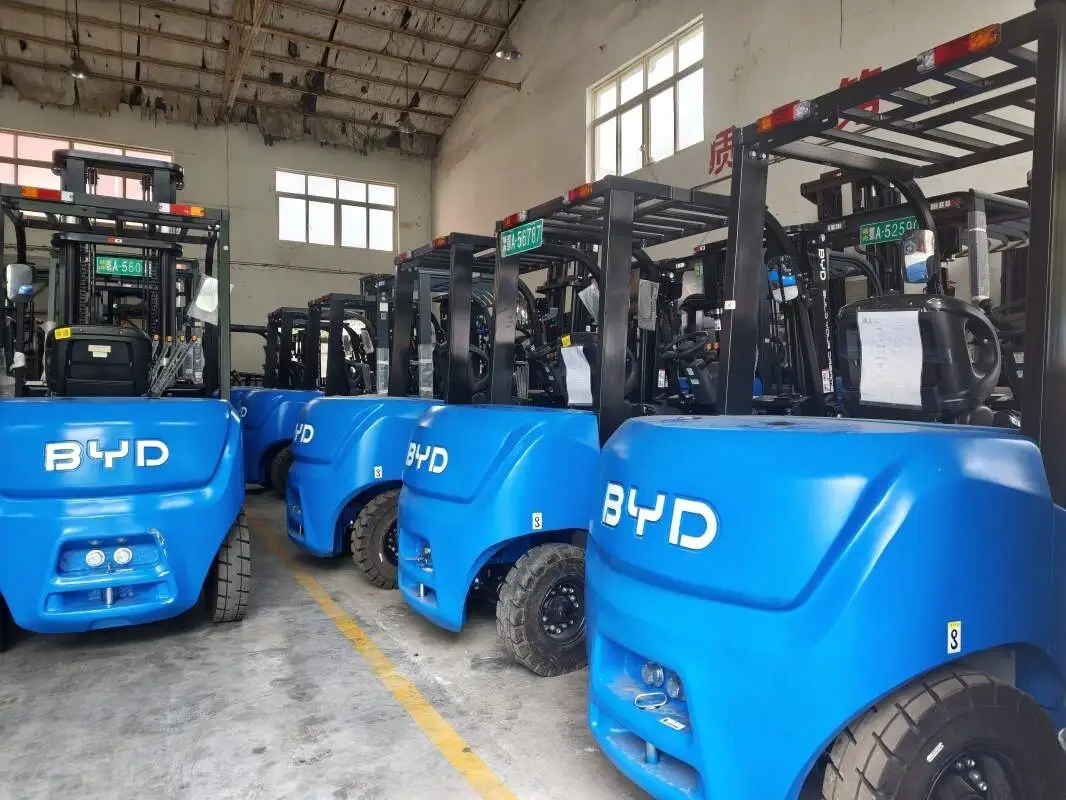
Core requirements for improving warehouse operation efficiency
In modern warehousing and logistics scenarios, operation efficiency is directly related to the overall operating cost and service quality. With the growth of cargo throughput, warehouses have put forward higher requirements for the continuity and stability of handling equipment. Traditional forklifts often cause operation interruptions and wasted capacity due to problems such as long charging time and insufficient stability of heavy-duty operations, making it difficult to adapt to the rhythm of high-density warehousing operations.
Guarantee of Continuity of Forklift Operation by Side Power Exchange Technology
Quick power change to reduce downtime waiting
The side power exchange mode breaks the time limit of traditional charging, and it only takes a few minutes to complete the battery replacement, which greatly shortens the waiting time for the forklift to stop. Compared with the charging process that takes several hours at every turn, the power exchange operation will not interrupt the established handling process, ensuring the continuous progress of goods transfer and stacking in the warehouse, and effectively improving the daily operation volume.
The power exchange mode is flexibly adapted to the warehouse scene
The operation of side power exchange does not need to occupy the core operation area of the warehouse, and the power exchange station can be set in the corner or idle space of the warehouse, which will not affect the storage and circulation path of goods. Whether it is a small e-commerce warehouse or a large industrial storage center, it can flexibly plan the power exchange location according to its own layout to adapt to the needs of different scales of operations.
Counterweight design enhances forklift operation capability
Improve the stability of heavy-duty operations
The counterweight structure provides a stronger counterweight support for the lithium-ion forklift, enabling it to maintain body balance and avoid the risk of tilting or rollover when handling heavy cargo. This design allows the forklift to safely and efficiently complete the loading, unloading and handling of large cargoes, and adapt to the diverse cargo types in the warehouse.
Adapt to multi-scenario operation requirements
The lithium-ion forklift with counterweight design can not only operate stably on flat storage ground, but also maintain good handling and stability in the face of gentle slope areas or uneven road surfaces in the warehouse, ensuring the safety and smoothness of the cargo transfer process and reducing the delay caused by road conditions.
Comprehensive efficiency improvement helps warehouse operation optimization
Side-swapping counterbalanced heavy lithium-ion forklifts help warehouse operation efficiency optimization from multiple dimensions by improving operation continuity and stability. On the one hand, the continuous operation rhythm reduces the complexity of manpower scheduling and reduces labor cost investment; on the other hand, the long life and low maintenance characteristics of lithium-ion batteries also reduce the later operation and maintenance costs of equipment. In the long run, such forklifts can help warehouses build a more efficient and stable logistics operation system to adapt to the growing storage demand.


