
 简体中文
简体中文 繁体中文
繁体中文 Deutsch
 日本語
日本語 한국어
한국어 Tiếng Việt
 Русский
 ไทย
ไทย Bahasa Indonesia
 Bahasa Melayu
 Filipino
 لالعربية
 Français

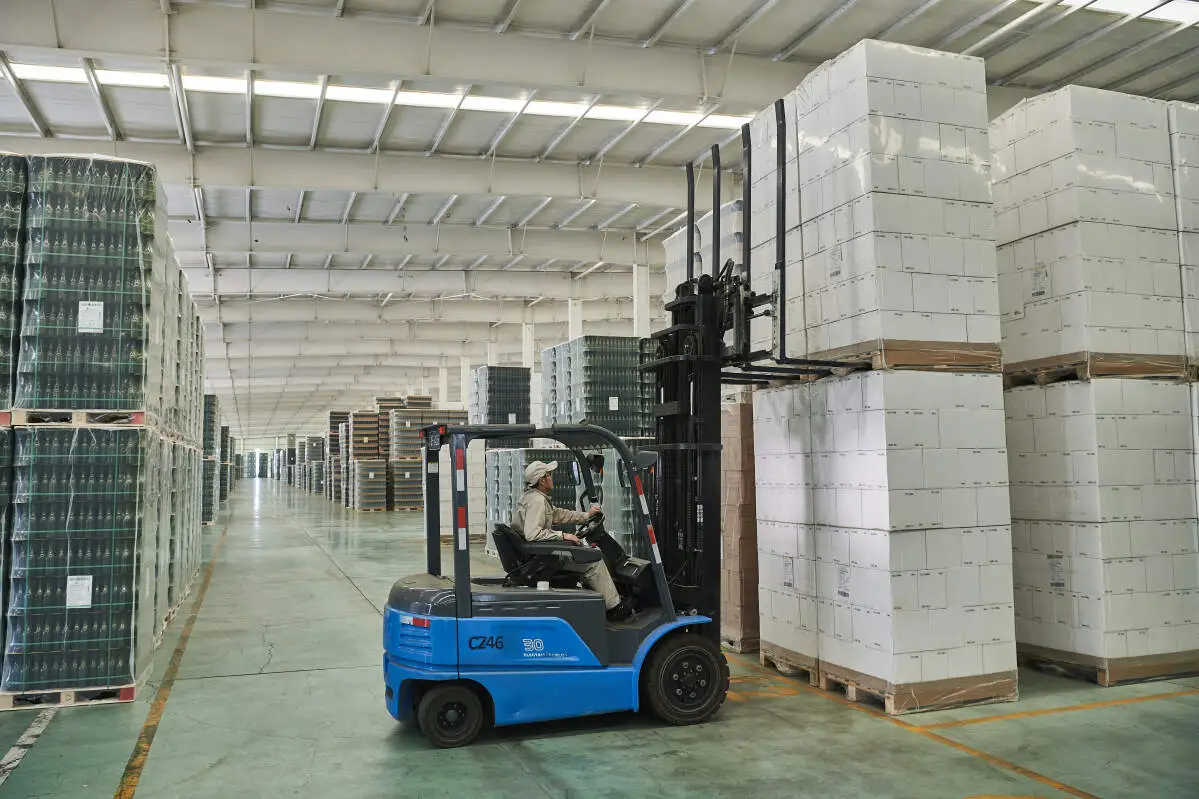
In the production and operation of small and medium-sized processing plants, the cost control of logistics handling often directly affects the overall profit. In the face of practical problems such as fuel price fluctuations and environmental protection requirements, more and more small and medium-sized processing plants are considering replacing electric forklifts. Its core advantage lies in cost controllability, which can help enterprises plan their operating budgets more accurately.
Controllable planning for procurement and initial investment
Flexibly adaptable input layer
The initial investment of electric forklifts is not generalized. There are a variety of specifications and configurations available in the market. Small and medium-sized processing plants can choose the appropriate model according to their actual needs such as daily handling volume and operation scenarios to avoid unnecessary excess investment. At the same time, some regions have relevant support policies for the purchase of new energy equipment, which can further reduce the pressure on initial expenditure and make the procurement budget of enterprises more controllable.
The cost of the use phase is stable and controllable
Accurate budget for energy consumption costs
Unlike fuel forklifts that rely on refined oil, electric forklifts rely on electricity as their power source. At present, civilian electricity prices are relatively stable. Enterprises can accurately calculate monthly energy consumption costs based on the daily operating hours of forklifts, battery capacity and other data, and will not disrupt the operating budget due to large fluctuations in fuel prices. In contrast, the use cost of fuel forklifts is greatly affected by factors such as international oil prices and local oil fee adjustments, making it difficult to accurately estimate in the long run.
Predictable management of maintenance costs
The structure of the electric forklift is relatively simple. There are no complicated fuel engines, transmissions and other components, and the number of wearing parts is smaller. Daily maintenance is mainly concentrated in basic links such as battery maintenance and tire inspection. The maintenance cycle is longer and the single maintenance cost is lower. Enterprises can formulate a fixed maintenance plan according to the equipment manual, reserve maintenance budget in advance, and avoid sudden high maintenance expenses.
Effective Control of Hidden Costs
Environmental compliance cost avoidance
With the increasingly stringent environmental regulations, the exhaust emissions of fuel forklifts may bring compliance risks. If they do not meet the emission standards, companies may face rectification or fines. Electric forklifts have zero exhaust emissions and do not need to invest in additional exhaust treatment equipment. They can also avoid related compliance costs and make companies' environmental protection spending more controllable.
Indirect cost savings from efficiency gains
Electric forklifts are easier to operate, lower in noise, and do not cause too much disturbance to production workers when operating in the workshop, which can maintain the stability of the production rhythm. At the same time, electric forklifts have a fast start-up speed and higher handling efficiency, which can reduce the waiting time for cargo handling and indirectly reduce the cost of production stagnation caused by logistics lag.
For small and medium-sized processing plants pursuing refined cost management, the controllable cost advantage of electric forklifts can help enterprises plan their logistics expenditures more clearly and reduce budget fluctuations caused by uncertainties. Combined with their own production needs, electric forklifts will become an important tool for small and medium-sized processing plants to optimize operating costs and enhance competitiveness.


