
 简体中文
简体中文 繁体中文
繁体中文 Deutsch
 日本語
日本語 한국어
한국어 Tiếng Việt
 Русский
 ไทย
ไทย Bahasa Indonesia
 Bahasa Melayu
 Filipino
 لالعربية
 Français

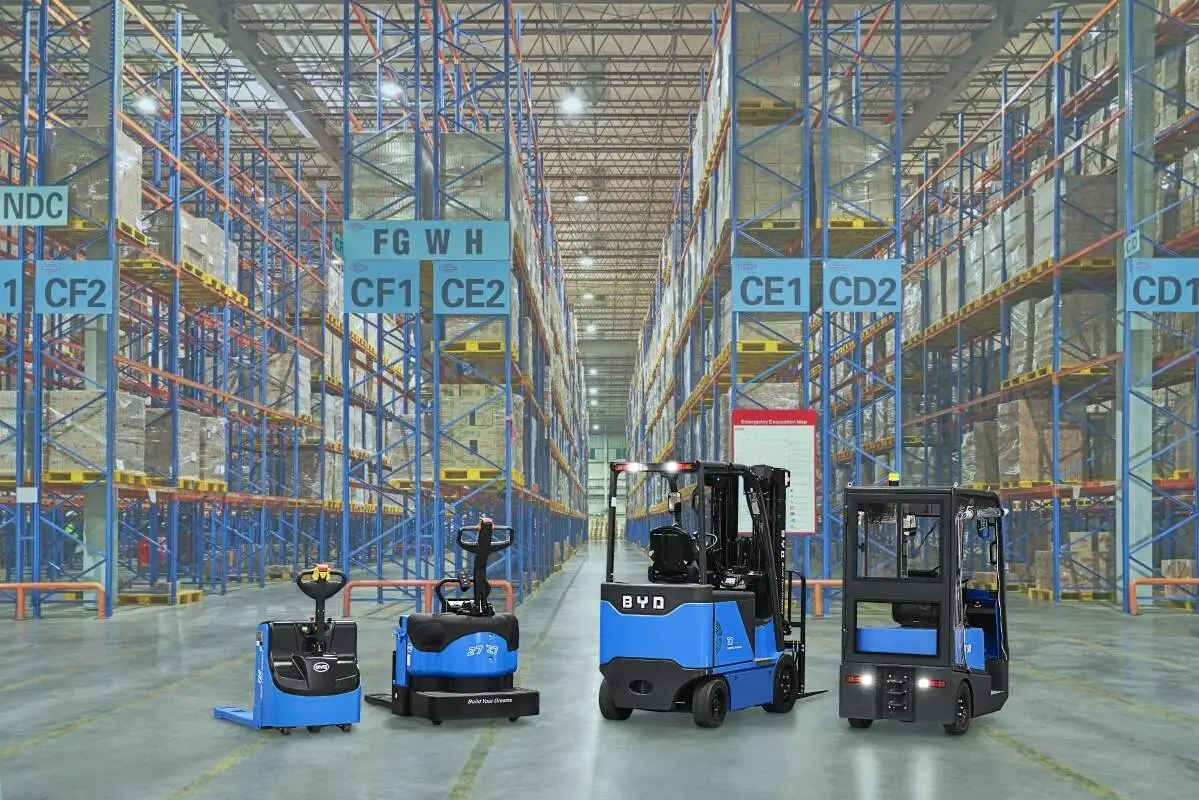
In small warehousing scenarios, narrow-aisle operations are a common requirement. Balanced heavy-duty lithium-ion forklifts have become an important option for operating equipment due to their zero-emission and high flexibility, but the purchase needs to be considered in combination with actual operating requirements.
Size parameters for narrow channels
Pay attention to the width of the body and the turning radius: When purchasing, measure the actual width of the storage channel to ensure that the width of the forklift body is less than the working space reserved for the channel. At the same time, focus on the minimum turning radius parameters to ensure that the forklift can complete steering and U-turn operations in the narrow channel to avoid scratching the shelves or goods. In addition, pay attention to the expansion and contraction length of the fork to ensure that the goods can be accessed smoothly in a limited space.
Performance adaptation of lithium battery systems
Battery life and charging efficiency: Select the lithium battery of the corresponding capacity according to the single-day operation time. If the average daily operation is about 8 hours, you can choose a battery configuration that supports continuous operation for 8 to 10 hours. At the same time, pay attention to the charging speed, and give priority to the model that supports fast charging to adapt to the charging needs of the storage gap and reduce the downtime waiting time. In addition, check the protection level of the battery to ensure that it adapts to dust, slight humidity, etc. in the storage environment.
Battery safety: Choose a lithium battery system with overcharge, overdischarge, and short-circuit protection functions to avoid potential safety hazards due to battery failure. At the same time, pay attention to the service life of the battery, and choose products that meet industry standards to reduce long-term use costs.
Handling and stability
Flexible control design: Narrow channel operation requires high control flexibility. You can choose a forklift equipped with a power steering system to reduce the steering force of the operator and improve the operation efficiency. At the same time, check the adjustment function of the seat to ensure that the operator can maintain a comfortable operating posture and reduce fatigue.
Balance weight and stability: The stability of a counterbalance forklift directly affects the safety of the operation. It is necessary to pay attention to the design of the center of gravity of the whole machine to ensure that it is not easy to roll over when operating in heavy loads or narrow spaces. In addition, check the anti-skid performance of the tires, adapt to the material of the storage floor, and improve the grip during operation.
Maintenance convenience: The maintenance cost of lithium-ion forklifts is relatively low, but it is still necessary to pay attention to the vulnerability and replaceability of components, prioritize the purchase of easy-to-use models, and understand the scope of after-sales maintenance services to ensure that equipment problems can be promptly supported.
After considering the above points, a balanced lithium-ion forklift suitable for small-scale warehousing operations can be selected, effectively enhancing the efficiency and safety of warehousing operations.


