
 简体中文
简体中文 繁体中文
繁体中文 Deutsch
 日本語
日本語 한국어
한국어 Tiếng Việt
 Русский
 ไทย
ไทย Bahasa Indonesia
 Bahasa Melayu
 Filipino
 لالعربية
 Français

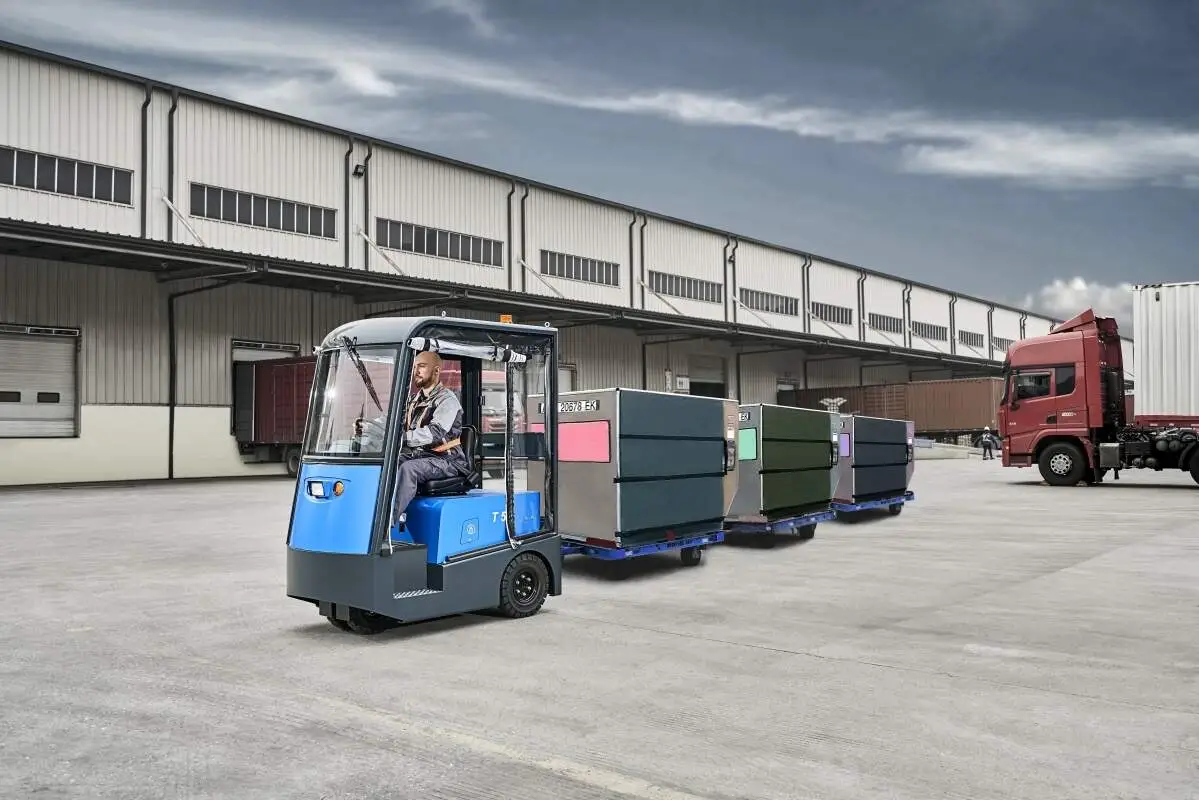
The 3.5-ton lithium-ion forklift truck with a free lifting gantry is one of the most widely used container handling equipment in recent years. It is suitable for handling and stacking goods in and around standard containers, and can also be used in warehouses with similar height restrictions.
From the perspective of application scenarios, the core adaptation range of this equipment mainly revolves around containers. For international standard containers of 20 feet and 40 feet, especially closed containers with limited internal headroom, the door frame of an ordinary forklift will be lifted as a whole when it is lifted, making it difficult to go deep into the interior to complete the stacking or loading and unloading of goods. The design of the door frame with free lifting can solve this problem. In addition, the equipment can also be competent for temporary cargo turnover at the terminal and material handling in closed factories, etc., and has certain versatility.
In terms of core advantages, the first is the free lifting function of the gantry. This function allows the inner gantry of the gantry to be stationary first, and the fork is directly lifted to the set height. During the lifting process, the overall gantry height remains unchanged, and it can smoothly enter the interior of the container for operation. The second is the use of lithium batteries as the power source. Compared with traditional fuel forklifts, the noise is lower, there is no exhaust emission, the requirements for the working environment are relatively loose, and the maintenance cycle is also longer. The daily maintenance mainly revolves around basic items such as battery cleaning, power monitoring, and connector inspection. Furthermore, the rated lifting weight of 3.5 tons can meet the loading and unloading needs of most standard containers, and it is suitable for common palletized cargo single-piece or batch handling stacking.
In terms of performance characteristics, the equipment is usually equipped with a flexible steering system, with a small turning radius, and can move more flexibly in the limited surrounding space or narrow passages of the container. Some models may also be equipped with an intuitive operation interface to reduce the difficulty of operation and improve the user experience.


