
 简体中文
简体中文 繁体中文
繁体中文 Deutsch
 日本語
日本語 한국어
한국어 Tiếng Việt
 Русский
 ไทย
ไทย Bahasa Indonesia
 Bahasa Melayu
 Filipino
 لالعربية
 Français

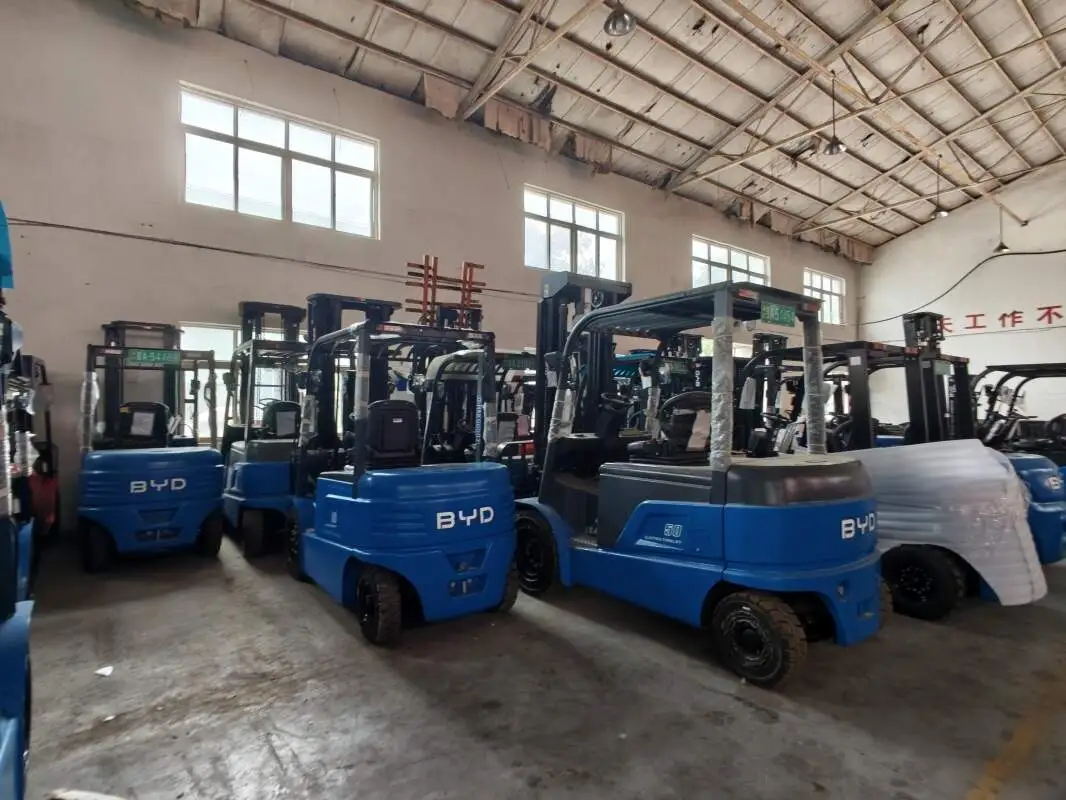
In warehousing logistics and factory transshipment scenarios, the selection of tractors directly affects operational efficiency and operating costs. Due to differences in design, the two types of tractors, station and car, have their own emphasis on applicable scenarios, which need to be comprehensively considered in combination with multi-dimensional requirements.
Station drive and car tractor selection core ideas
job space dimension
The station-drive tractor is relatively compact in size and has a smaller turning radius, making it suitable for storage environments with narrow passages and complex layouts. Operators can quickly get on and off the bus to adapt to the rhythm of frequent loading and unloading. The body size of the seat-drive tractor is slightly larger, requiring sufficient driving and traffic space, making it more suitable for open factory main roads or large logistics hubs.
Job intensity dimension
If the operation is mainly short-distance and high-frequency transfer, the station-driven tractor does not need a fixed sitting position, and the operator can flexibly adjust the posture to relieve the fatigue of long-term driving; if it involves long-distance and continuous transfer operations, the seat-driven tractor is equipped with a comfortable driver's seat and protective device, which can provide better support for the operator and reduce physical exertion.
load demand dimension
Station-mounted tractors are usually suitable for medium and above traction tonnage, which can meet the transshipment needs of heavy pallets or multi-vehicle marshalling; seat-mounted tractors are more flexible in small-tonnage light-load transshipment scenarios, with higher handling accuracy, suitable for short-distance distribution of fragmented goods.
Comparison of working conditions of two different types of tractors
Comparison of narrow storage scenarios
In the three-dimensional storage with narrow shelf spacing, the stand-driving 3-ton tractor can easily shuttle between shelves due to its compact body and flexible steering, and can still maintain smooth passage when pulling multiple groups of pallets at a single time. Due to the limited width of the body, it is more difficult to turn and turn around in a narrow passage, making it more suitable for cargo transfer in the periphery of the warehouse.
Comparison of long-distance transshipment scenarios
In the long-distance transfer operation on the main road of the factory, the comfortable driving environment of the ride-on 2-ton tractor allows the operator to continue working for a longer time, and the stable handling performance guarantees the safety of cargo transfer. Although the stand-on 3-ton tractor has stronger traction capacity, long-term standing operation can easily lead to operator fatigue, making it more suitable for short-distance high-intensity transfer.
High frequency operation scene comparison
In high-frequency loading and unloading scenarios such as express sorting centers, the station-driven 3-ton tractor supports operators to get on and off quickly, and cooperates with the efficient connection of loading and unloading links to greatly improve the operation turnover efficiency; the seat-driven 2-ton tractor is relatively cumbersome due to the on and off process, and the rhythm is slightly slower in high-frequency operations, but it has more advantages in accurate positioning and docking.
In summary, enterprises need to combine the operating space, strength, load and scene characteristics when selecting models, and match the advantages of standing or driving tractors in order to achieve the optimal balance between operating efficiency and cost.


