
 简体中文
简体中文 繁体中文
繁体中文 Deutsch
 日本語
日本語 한국어
한국어 Tiếng Việt
 Русский
 ไทย
ไทย Bahasa Indonesia
 Bahasa Melayu
 Filipino
 لالعربية
 Français

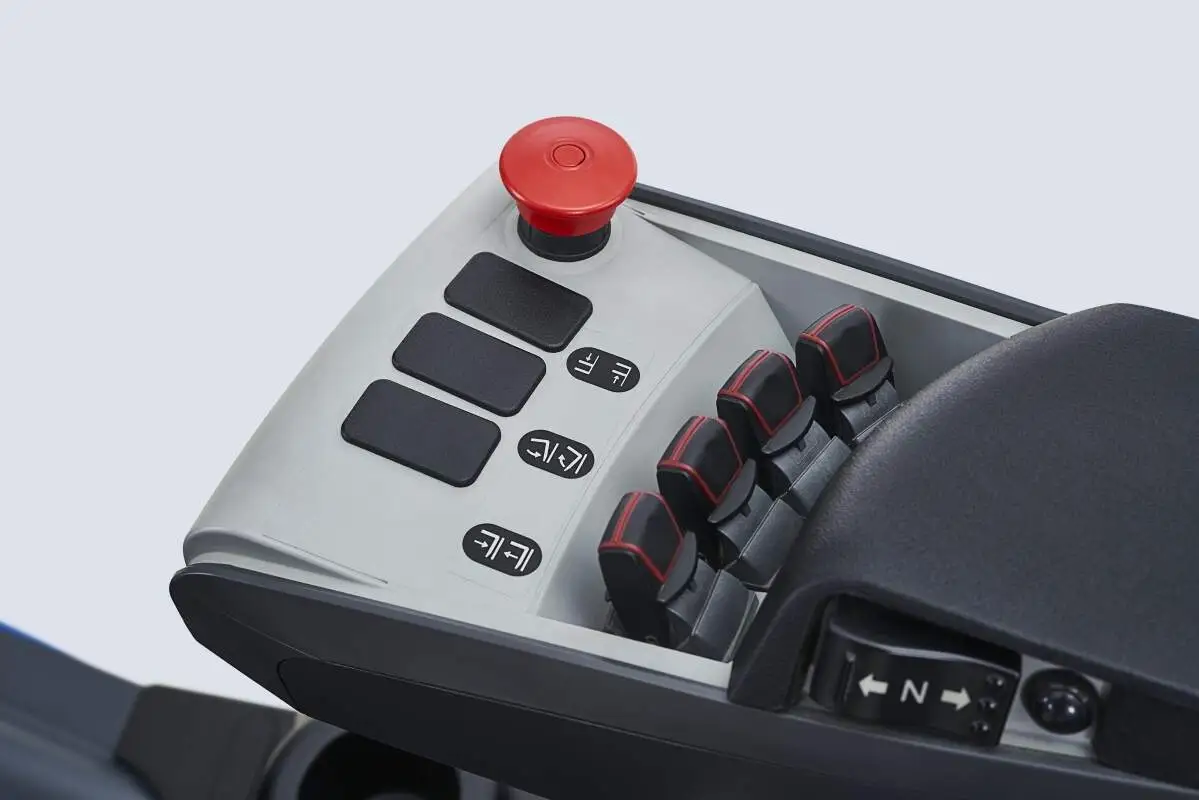
In warehousing operations, electric forklifts are the core equipment to improve handling efficiency. Blind procurement can easily lead to waste of resources or insufficient job adaptability. Only by mastering the interpretation method of core parameters and purchasing in combination with practical operation scenarios can we choose the equipment that suits the needs.
In-depth interpretation of core parameters
Power type parameters: The power type of electric forklift is mainly divided into two categories: lead-acid batteries and lithium-ion batteries. Lead-acid batteries have low cost, but long charging time and need regular maintenance and hydration, which is suitable for scenarios with relatively stable operation frequency and limited budget. Lithium-ion batteries have fast charging speed, long cycle life and easy maintenance, and are more suitable for warehousing scenarios with high operation intensity and efficient operation and maintenance.
Load capacity parameters: The load parameters need to match the maximum weight of the daily handling of goods, and at the same time consider the dynamic load in the operation, such as the additional force when handling stacked goods. If the warehouse is mainly handling standard pallet goods, the load requirements need to be determined in combination with the pallet weight and the total weight of the goods to avoid overloading operations affecting the life of the equipment.
Lifting height parameters: The lifting height needs to correspond to the actual floor height of the warehouse shelves, and a safety margin of about 30 cm should be reserved to ensure that the goods can be placed smoothly in the designated position of the shelves. If multi-layer shelf operations are involved, the highest shelf height needs to be accurately measured to avoid being unable to complete the operation due to insufficient lifting height.
Mobility parameters: Mainly focus on the turning radius and body size, and need to adapt to the width of the warehouse channel. Warehouses with narrow channel operations should choose models with small turning radius and compact body to avoid the situation that the shelves cannot be turned or scratched in the channel; wide channels can choose models with moderate body size according to the needs of operation efficiency.
Practical operation and purchase points
Combined with the operation scenario to verify the parameters: before purchasing, the daily operation process can be simulated to test the flexibility of the forklift in the warehouse channel and the stability of the cargo lifting to ensure that the parameters match the actual scene.
Consider operation and maintenance costs: In addition to procurement costs, it is also necessary to pay attention to post-maintenance costs, such as battery replacement cycles, parts vulnerability, and choose models with operation and maintenance costs within a controllable range.
Experience the sense of operation: actually operate the forklift, feel the smoothness of steering, lifting, descending and other operations, ensure smooth operation, and reduce employee fatigue.


