
 简体中文
简体中文 繁体中文
繁体中文 Deutsch
 日本語
日本語 한국어
한국어 Tiếng Việt
 Русский
 ไทย
ไทย Bahasa Indonesia
 Bahasa Melayu
 Filipino
 لالعربية
 Français

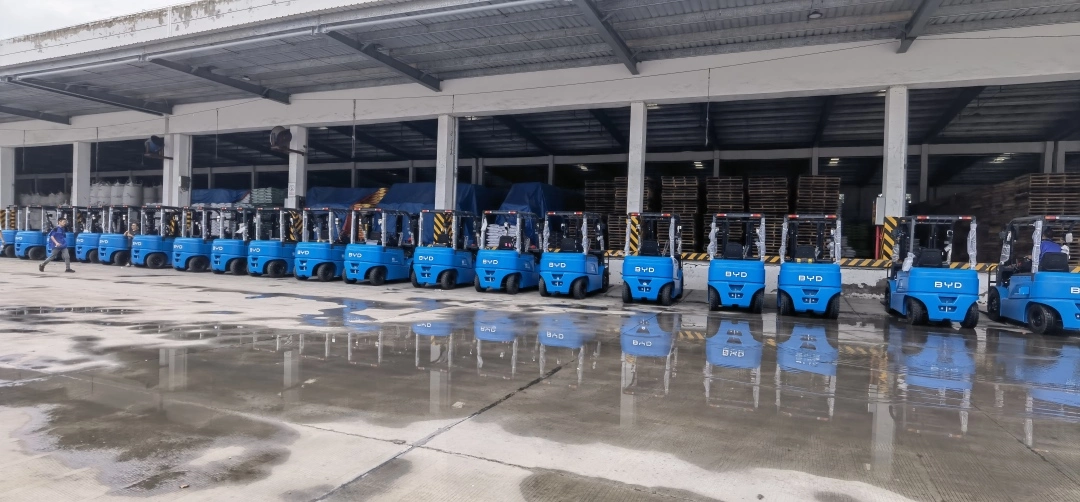
In the supermarket storage scenario, the turnover efficiency of goods directly affects the operation rhythm of the store, and the limited space and frequent small batch handling requirements put forward higher adaptation requirements for handling equipment. A chain supermarket recently introduced a small BYD lithium-electric truck. After months of actual use, it showed significant advantages in the adaptation scenario.
Flexible operation of the adaptor's super storage space
The internal passages of supermarket warehouses are usually narrow, and the shelf layout is compact, making it difficult for traditional handling equipment to shuttle flexibly. This small lithium battery truck is small in size and has a small turning radius, allowing it to easily complete steering, U-turn and other operations in narrow passages, adapting to the needs of cargo handling in different areas. Whether it is the transshipment of goods on the bottom of the shelf or the replenishment operations around the checkout page, it can be completed efficiently, effectively avoiding the problem of space congestion caused by the large size of the equipment.
Stable battery life supports daily efficient operation
The operation period of supermarket warehousing usually covers the whole day, and the battery life of the handling equipment directly affects the continuity of the operation. The lithium battery truck is powered by lithium electricity, which can support high-frequency and small batch handling operations throughout the day after a single charge, without the need for midway charging, avoiding the interruption of the operation caused by power failure. At the same time, the lithium battery charging speed is fast, and the short-term charging during the non-operation period can restore the full power state, which meets the operation needs of the next day and ensures the smooth operation of the warehousing logistics.
Low operation and maintenance costs enhance long-term use value
Compared with traditional fuel or lead-acid battery handling equipment, the maintenance cost of this lithium battery truck is lower. The lithium battery does not need to add water or maintain the electrolyte regularly. It only needs to do a good job of fuselage cleaning and simple circuit inspection every day, which reduces the time and labor cost of operation and maintenance. At the same time, the lithium battery has a long service life. Under the condition of reasonable use and maintenance, it can perform stably for a long time, reduce the frequency of equipment replacement, and save long-term operation investment for supermarkets.
After several months of practical application, the chain supermarket's storage and handling efficiency has been significantly improved, and the labor intensity of the operators has also been reduced. This small BYD lithium battery truck has become a practical choice for efficient handling in supermarket warehousing scenarios due to its characteristics of space adaptation, battery life stability and low operation and maintenance costs, providing strong support for the fine operation of supermarket logistics.


