
 简体中文
简体中文 繁体中文
繁体中文 Deutsch
 日本語
日本語 한국어
한국어 Tiếng Việt
 Русский
 ไทย
ไทย Bahasa Indonesia
 Bahasa Melayu
 Filipino
 لالعربية
 Français

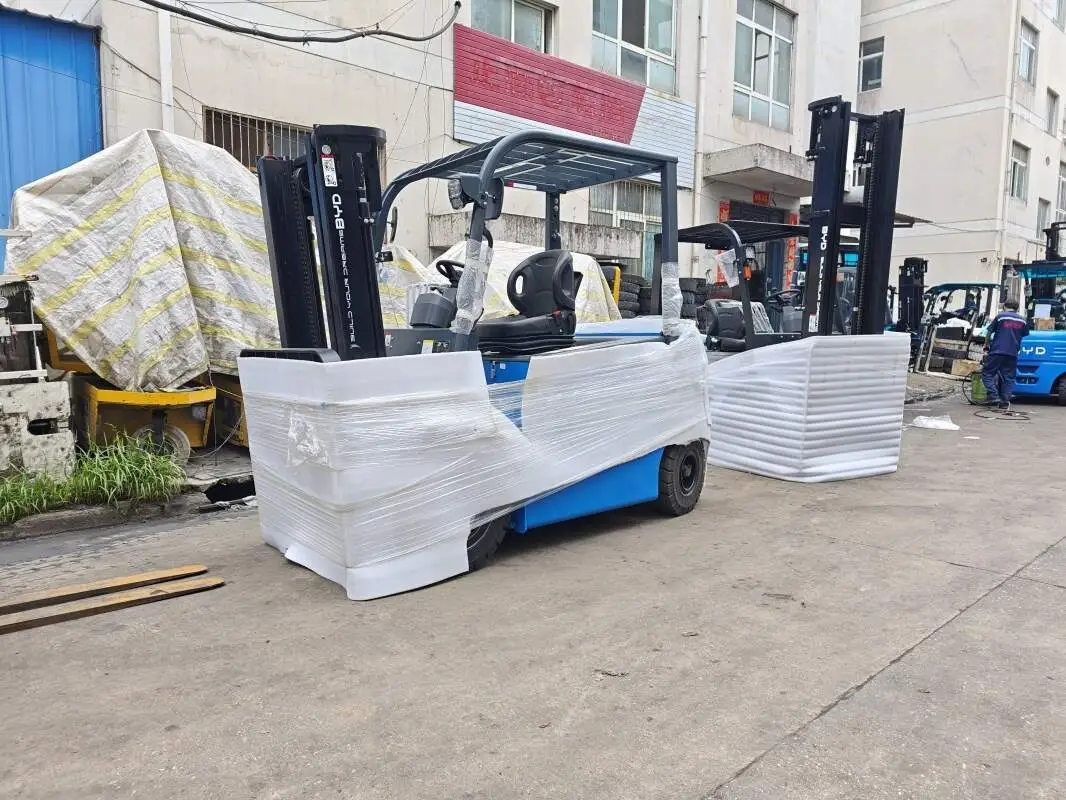
At a time when storage space is becoming increasingly tight, narrow-aisle lithium-ion forklifts have become an important equipment for improving warehouse space utilization due to their compact size and efficient performance. When purchasing such forklifts, if the core parameters are ignored, the problem of mismatch between equipment and operation scenarios may easily occur, which affects operational efficiency. Therefore, the following types of core parameters need to be paid attention to.
Channel adaptation related parameters
First of all, it is necessary to verify the minimum turning radius and the width of the body. The channel width of the narrow channel warehouse is usually limited, and the minimum turning radius of the forklift directly determines whether it can complete the steering and U-turn operation in a narrow space. At the same time, the width of the body needs to be adapted to the channel width and shelf gap to avoid scratching the shelves or being impassable. It is recommended to compare the actual passage space required by the forklift in combination with the size of the existing channel in the warehouse to ensure that the equipment can shuttle smoothly to each working area.
Battery life and charging parameters
The battery life of a lithium-ion forklift is the key to ensuring continuous operation. It is necessary to verify the rated capacity and actual battery life of the battery, and combine the operation frequency and average daily operation volume of the warehouse to determine whether the battery life can meet the daily needs. In addition, the charging time is also an important indicator. If the warehouse adopts a multi-shift production industry, it is necessary to pay attention to the fast charging capacity of the forklift to ensure that enough power is replenished in a short time and reduce the waiting time for downtime. At the same time, the cycle life of the battery can be understood and the long-term use cost can be evaluated.
Load and lift parameters
The rated load needs to match the weight of the daily handling goods. If the load capacity is insufficient, it is easy to cause the equipment to overload and shorten the service life; if the load is too large, it will cause waste of resources. Lifting height is also critical, and it is necessary to combine the floor height of the warehouse shelf to ensure that the forklift can accurately deliver the goods to the designated location. In addition, the lifting stability under full load cannot be ignored, which is directly related to the safety of the operation process. It is necessary to verify the relevant parameters to ensure that the equipment is not easy to shake when lifting under heavy load.
Operational flexibility parameters
In narrow channel operations, operation flexibility directly affects operation efficiency. Attention needs to be paid to the steering accuracy of the forklift. Precise steering can reduce operation errors and improve operation fluency. At the same time, the convenience of the control system is also very important. The user-friendly control design can reduce driver fatigue and improve operation efficiency. In addition, the driver's field of vision is also a consideration. A good field of vision can help the driver avoid obstacles in time and avoid collisions.
Overall, before purchasing a narrow-channel lithium-ion forklift, fully verifying the above core parameters can effectively ensure that the equipment is suitable for warehouse operation scenarios, improve storage operation efficiency, and reduce maintenance and adjustment costs in later use.


