
 简体中文
简体中文 繁体中文
繁体中文 Deutsch
 日本語
日本語 한국어
한국어 Tiếng Việt
 Русский
 ไทย
ไทย Bahasa Indonesia
 Bahasa Melayu
 Filipino
 لالعربية
 Français

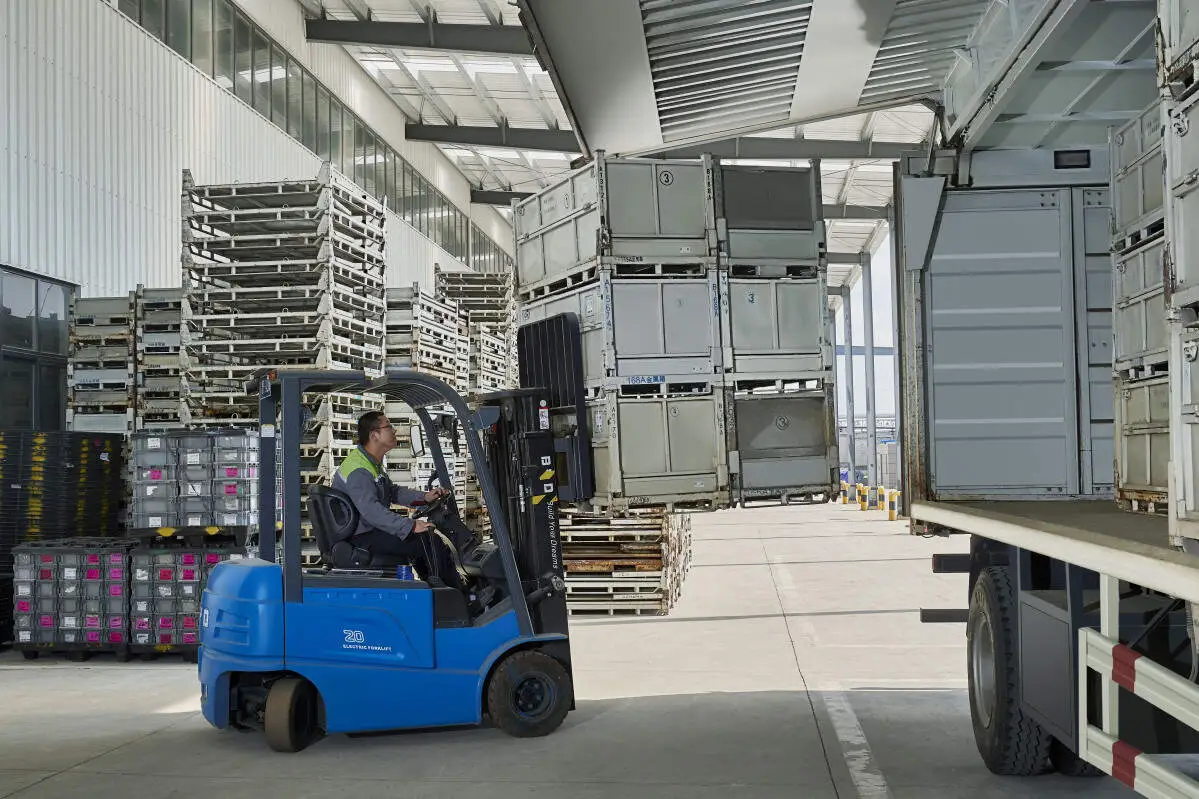
In warehousing operations, electric forklifts are the core equipment to improve the efficiency of cargo handling. Choosing the right electric forklift can greatly reduce operating costs and optimize operation processes. When purchasing electric forklifts in warehouses, you should not blindly follow the trend. You need to combine your own warehousing scenarios and operation requirements, and focus on the following core parameters.
One of the core parameter references: carrying capacity
Bearing capacity is the most basic parameter of an electric forklift, which directly determines the upper limit of the weight that the forklift can carry. When purchasing, you need to first count the average weight and peak weight of the daily handling goods in the warehouse. If the average daily handling of goods is 1-2 tons, you can choose the forklift of the corresponding load class; if there is an occasional demand for overweight cargo handling, you can reserve 10% -20% of the load capacity, but avoid excessive selection and waste of resources.
Core parameter reference 2: battery life
Electric forklifts rely on battery power, and the battery life directly affects the single-day operation time. It needs to be selected according to the operation shift and charging conditions of the warehouse. If it is a warehouse with multi-shift continuous operation, the model with the battery life covering the full operation cycle or supporting fast charging is preferred; at the same time, pay attention to the cycle life of the battery, which will directly affect the replacement cost in long-term use.
Core Parameter Reference No. 3: Steering and Passing
The passage in the warehouse is usually narrow, and the goods are densely placed. The steering flexibility and passability of the forklift are crucial. Forklifts with a small turning radius are more suitable for turning and transshipment operations in tight spaces, which can effectively improve the operation efficiency. In addition, it is also necessary to pay attention to the minimum ground clearance of the forklift to ensure that it can smoothly pass through the ramps, speed bumps and other facilities in the warehouse to avoid scratching the goods or the forklift itself.
Core Parameter Reference No. 4: Lifting Height
There are differences in the height of the shelves in different warehouses, and the lifting height of the forklift should be selected according to the maximum height of the shelf. If the highest level of the shelf is about 5 meters, you need to choose a model that suits the lifting height, and pay attention to the lifting stability of the forklift under full load to avoid the risk of shaking and falling goods.
Core parameter reference 5: Charging and maintenance costs
In addition to the initial procurement costs, the long-term charging and maintenance costs of electric forklifts cannot be ignored. Preference is given to models with high charging efficiency and low energy consumption, which can reduce daily electricity bills; at the same time, understanding the convenience and cost of battery maintenance and replacement of vulnerable parts, and choosing products with more worry-free and cost-controllable follow-up maintenance can effectively reduce additional expenses in the operation process.
Combining the above core parameters with the actual operation scenarios of the warehouse, the characteristics of the goods, the operating budget and other factors, we can select a more adaptable electric forklift to help warehouse operations operate efficiently and stably.


