
 简体中文
简体中文 繁体中文
繁体中文 Deutsch
 日本語
日本語 한국어
한국어 Tiếng Việt
 Русский
 ไทย
ไทย Bahasa Indonesia
 Bahasa Melayu
 Filipino
 لالعربية
 Français

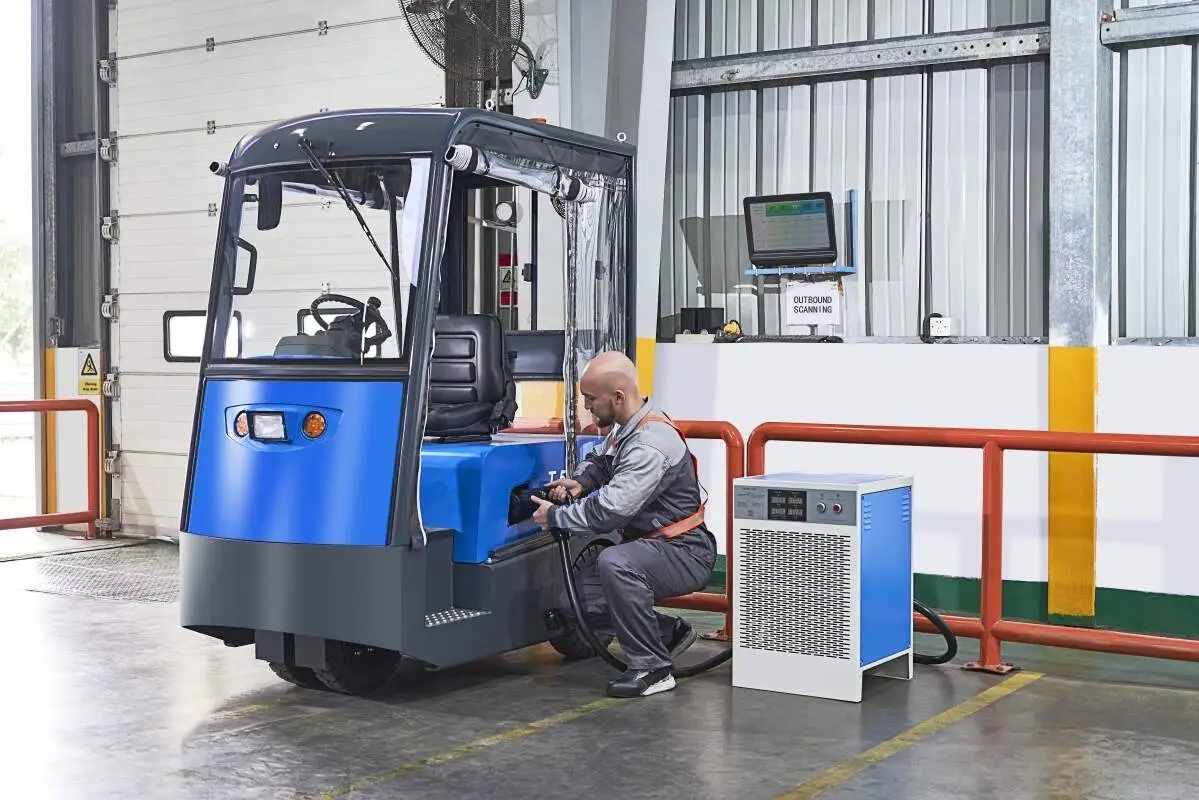
Long-term continuous operation in the workshop is the norm of manufacturing production. Such scenarios place extremely high demands on the reliability and continuity of material handling equipment. Once the equipment fails or the supply is disconnected, it is easy to disrupt the production rhythm and cause unnecessary losses. How to match such needs and ensure the stable operation of production is a key consideration in the material handling process of enterprises.
The core requirements for long-term continuous operation in the workshop
Equipment reliability is a prerequisite
Workshop production usually follows a fixed rhythm, and material handling needs to be advanced synchronously with the production line, which requires electric forklifts to have continuous and stable operation capabilities, and the process cannot be interrupted due to frequent failures, insufficient battery life, etc. At the same time, the working conditions of different workshops vary, such as narrow passages, heavy-duty handling, etc., and the equipment needs to be adapted to the operation requirements of specific scenarios.
Cost control requires long-term balance
Long-term procurement of electric forklifts will consume a lot of working capital, and equipment depreciation and later maintenance costs will also increase over time, which will bring continuous financial pressure to the enterprise. For workshops that operate continuously for a long time, there is a need for a way to obtain equipment that can achieve balanced cost allocation and avoid large one-time investments.
Operation and maintenance support needs to be professional and efficient
Electric forklifts involve professional content such as battery maintenance and mechanical parts maintenance. The establishment of an operation and maintenance team by an enterprise not only increases labor costs, but also may not deal with equipment failures in a timely manner due to insufficient professionalism, which affects the production progress. Therefore, professional and efficient operation and maintenance support is a necessary guarantee for long-term operations in the workshop.
Adaptation Advantages of Electric Forklift Annual Rental Scheme
Stable equipment supply to ensure operation continuity
The annual rental plan can provide electric forklifts suitable for the scene according to the operation needs of the workshop, and can ensure the continuous supply of equipment. If the existing equipment fails, the leasing party can provide spare equipment in time to avoid production stagnation due to equipment absence and ensure that the material handling link is synchronized with the production line.
Professional operation and maintenance support to reduce management pressure
The leasing party is usually equipped with a professional operation and maintenance team, which will regularly repair and maintain the electric forklift, check potential faults in a timely manner, and prolong the service life of the equipment. At the same time, in response to sudden failures, operation and maintenance personnel can quickly respond to handling, reducing equipment downtime, so that enterprises do not need to invest too much energy in operation and maintenance.
Balancing cost control and optimizing financial structure
The annual rent plan uses a monthly or quarterly payment model to allocate equipment costs to the long-term operating cycle, avoiding the financial pressure of one-time large-scale purchases, which helps enterprises optimize their financial structure and invest funds in more core production processes.
The annual rental plan for electric forklifts provides adaptation services from multiple dimensions such as equipment supply, operation and maintenance support, and cost control by meeting the core needs of long-term continuous operations in the workshop, providing reliable material handling solutions for enterprises to stabilize production, and helping enterprises to efficiently promote production processes. Reduce unnecessary losses and risks.


