
 简体中文
简体中文 繁体中文
繁体中文 Deutsch
 日本語
日本語 한국어
한국어 Tiếng Việt
 Русский
 ไทย
ไทย Bahasa Indonesia
 Bahasa Melayu
 Filipino
 لالعربية
 Français

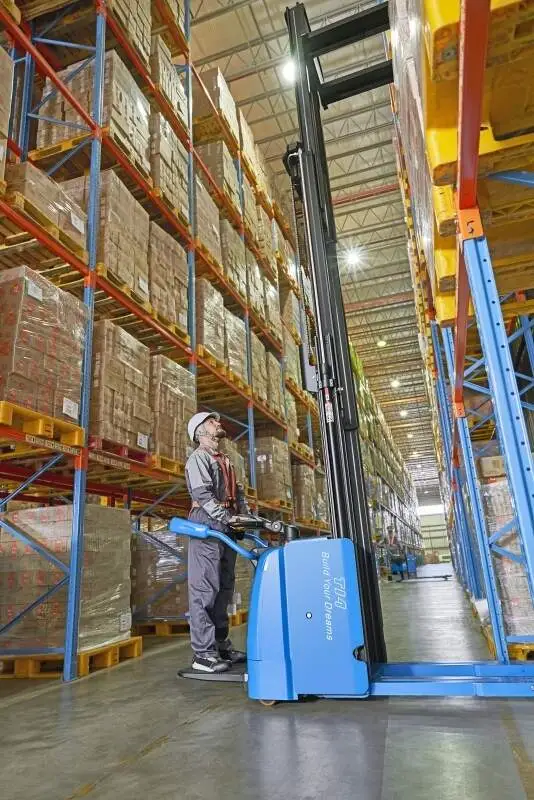
In the process of workshop production, the noise generated by traditional handling equipment often becomes one of the problems that plague enterprises and employees. Continuous high-noise environment not only affects the hearing health of employees, but also may distract attention, reduce work efficiency, and even fail to meet relevant environmental compliance standards. Therefore, formulating a reasonable workshop noise reduction and handling plan and selecting suitable equipment have become important measures for enterprises to optimize the production environment.
The core requirements of noise reduction and handling in the workshop
Health claims for employees' working environment
In a high-noise environment for a long time, employees are prone to problems such as auditory fatigue and irritability, and long-term accumulation may also lead to occupational health risks. Creating a quiet and comfortable working environment for employees is the basic requirement for enterprises to practice humanistic care and protect the rights and interests of employees. It also helps to enhance employees' sense of belonging and work enthusiasm.
Production environment compliance requirements
With the increasingly strict environmental protection supervision, the noise emission of the production site of the enterprise needs to meet the relevant standards. Excessive noise may not only face penalties, but also affect the external image of the enterprise. Therefore, controlling workshop noise through noise reduction and handling programs is a necessary measure for enterprises to meet compliance requirements and achieve sustainable development.
Low-noise lithium forklift: a key carrier for noise reduction and handling in the workshop
The technical characteristics of low-noise design
Unlike traditional fuel forklifts, lithium-ion forklifts use a motor-driven mode to avoid the high-frequency noise generated by the operation of the fuel engine. At the same time, the structural design of the equipment optimizes the shock absorption components to reduce the noise caused by mechanical collisions and friction during handling. The overall noise level is much lower than that of traditional handling equipment, which can effectively control the noise pollution in local areas of the workshop.
Multiple improvements to the workshop environment
The use of low-noise lithium-ion forklifts can significantly reduce the overall noise decibels in the workshop and create a quieter working space for employees. A quiet environment not only helps employees concentrate and reduce operational errors, but also reduces noise interference on production equipment and precision instruments, indirectly ensuring the production accuracy of products.
The balance between efficient handling and noise reduction
The low-noise lithium forklift does not sacrifice handling efficiency while achieving noise reduction. Its motor-driven power output is stable, which can meet the load requirements of cargo handling in the workshop, and the operation is flexible, suitable for operations in narrow workshop spaces. While improving handling efficiency, it takes into account the noise reduction effect, providing support for enterprises to achieve the dual goals of efficient production and environmental optimization.
In summary, the low-noise lithium-ion forklift, as the core equipment of the workshop noise reduction handling scheme, has high practical value due to its low-noise characteristics, environmental improvement effect and efficient operation ability, and is a feasible choice for enterprises to optimize the workshop handling environment and improve the level of production and operation.


