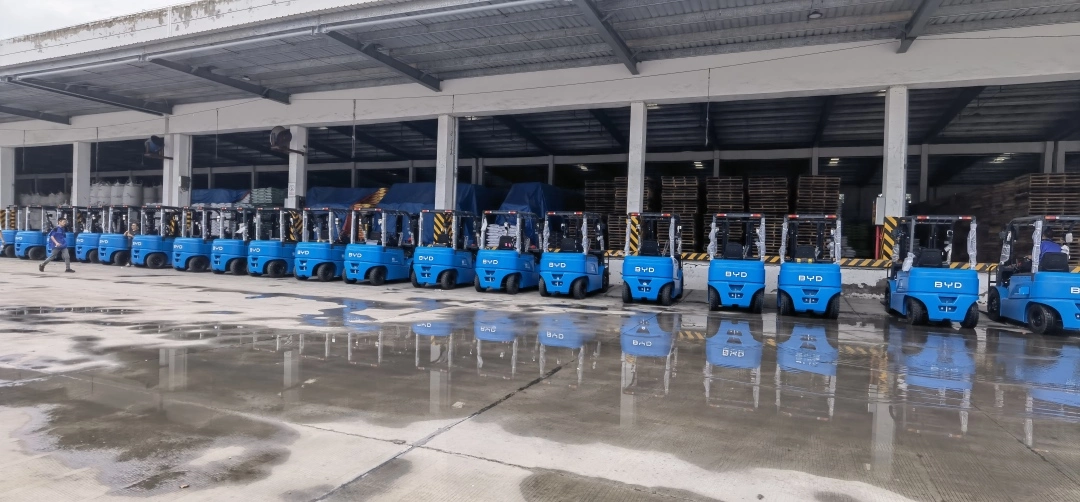
3000 lbs capacity forklifts are a staple in medium-duty material handling scenarios, from warehouse inventory management to manufacturing floor logistics. Their versatility makes them ideal for moving pallets, crates, and other loads, but improper load handling and operation can lead to serious safety hazards, equipment damage, and workflow disruptions. Mastering load calculation and adhering to operational safety protocols is therefore critical for every certified forklift operator.
Load calculation is the foundation of safe forklift operation, as exceeding the rated capacity can cause the vehicle to tip over, even if the load appears manageable. The key factor here is the load center, a standard measurement typically set at 24 inches from the forklift’s face for most models. This refers to the distance from the forks’ front edge to the load’s center of gravity. If your load’s center of gravity falls beyond this 24-inch mark, the forklift’s safe lifting capacity decreases. For instance, a 3000 lbs forklift may only safely lift 2000 lbs if the load center shifts to 36 inches. Always refer to the forklift’s data plate to confirm its rated capacity and load center specifications before lifting any load. Irregularly shaped or unbalanced loads require extra caution; secure them with straps or binders to keep the center of gravity stable, and adjust your calculation to account for any offset weight distribution.
Operational safety extends beyond load calculation, starting with pre-operation inspections. Before using a 3000 lbs forklift, conduct a thorough check of critical components: test the brakes to ensure they respond smoothly, inspect tires for wear or damage, verify hydraulic systems for leaks, and confirm that lights and horns are functioning properly. These checks help identify potential issues before they lead to accidents.
During operation, maintain a steady, controlled speed, especially when turning or navigating narrow spaces. Sudden accelerations or sharp turns can shift the load’s center of gravity, increasing the risk of tipping. Keep loads as low as possible when traveling to improve stability, and avoid raising them higher than necessary when stacking or placing items. When lifting, ensure the forks are fully inserted under the load and that the load is evenly distributed across both forks. Never stand or walk under a raised load, as even a small shift can cause it to fall.
Workplace awareness is another vital aspect of safety. Keep pathways clear of debris and obstacles, and communicate with coworkers using hand signals or radios to avoid collisions. Always follow designated traffic routes and adhere to weight limits posted in work areas. Remember that certified training is not a one-time requirement; regular refreshers on load dynamics and safety protocols help operators stay updated on best practices.
By combining accurate load calculation with strict adherence to operational safety guidelines, you can maximize the efficiency of your 3000 lbs forklift while minimizing the risk of accidents, protecting both personnel and valuable equipment in the workplace.