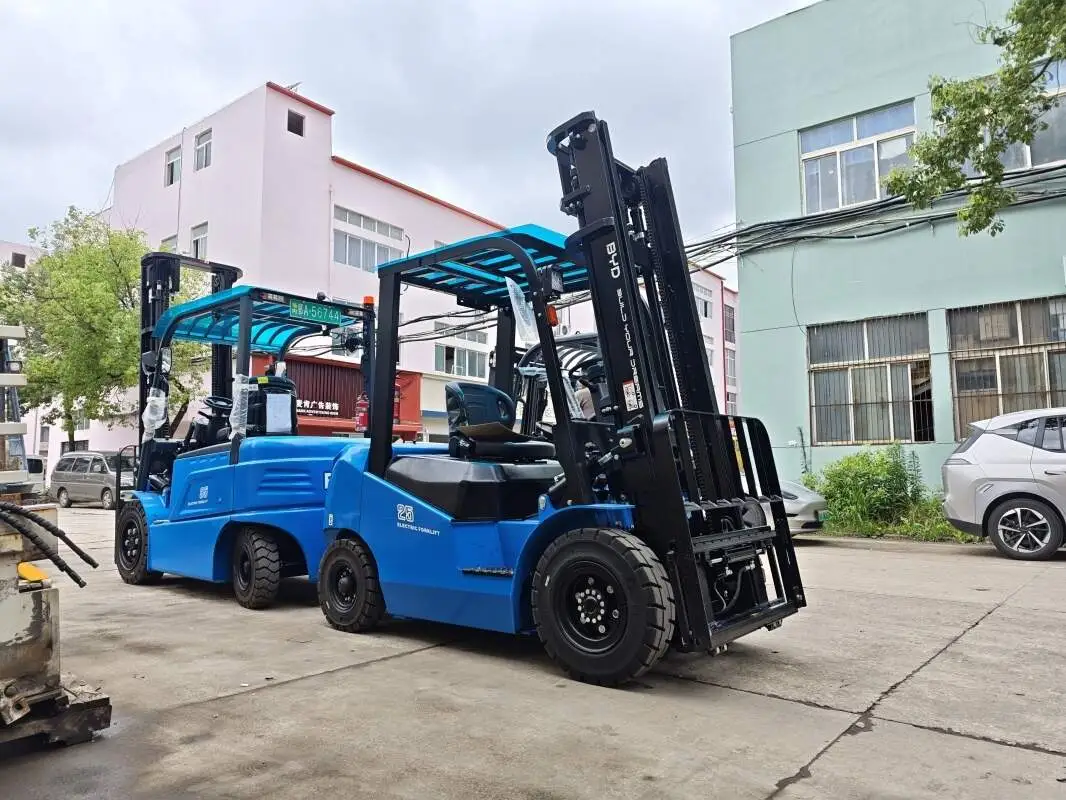
As a versatile medium-duty material handling tool, the 3000 lbs forklift strikes a balance between compact maneuverability and reliable lifting capacity, making it a go-to choice for many industrial and logistics settings. Understanding its ideal working scenarios and strict load-limitation rules is crucial to unlock its full potential while prioritizing operational safety.
One of the most fitting scenarios for the 3000 lbs forklift is indoor warehouses and retail distribution centers. With its relatively compact frame, it can navigate narrow aisles and tight turning spaces with ease, efficiently moving palletized goods, cartons, and light machinery components between storage racks and shipping docks. Unlike heavier forklifts, it causes minimal damage to indoor flooring, making it suitable for facilities with polished concrete or epoxy surfaces.
Light manufacturing facilities also benefit greatly from this forklift. It supports daily operations by transporting raw materials to production lines and moving finished products to temporary storage zones without the excess power and size that might disrupt workflow in smaller production areas. Additionally, logistics sorting hubs, where most loads fall within the 3000 lbs weight range, rely on this equipment to quickly transfer goods between sorting stations, boosting overall operational efficiency.
When it comes to load-limitation guidance, several non-negotiable practices must be followed. First, always confirm the exact weight of the load before lifting. Even if a load appears light, using a calibrated scale or referring to product weight labels is essential to avoid exceeding the 3000 lbs limit, which can lead to instability, tipping risks, and damage to both the forklift and the load.
Proper load balancing is another critical rule. The load’s center of gravity must align with the forklift’s specified load center. Unevenly distributed loads—such as heavy items shifted to one side—can compromise stability even if the total weight is under the limit, so securing loads with straps or bindings is strongly recommended to prevent shifting during transport.
Environmental factors also impact load capacity. Operating on sloped surfaces reduces the forklift’s effective lifting limit; a gentle incline may require reducing the load weight by 10-15% to maintain balance. Wet or slippery floors demand extra caution, as they can reduce traction and increase accident risks. Regular maintenance checks on the forklift’s lifting mechanism, tires, and brakes are equally vital to ensure it can safely handle the rated load capacity at all times.
By adhering to these guidelines and deploying the 3000 lbs forklift in its ideal working scenarios, operators can ensure consistent, safe, and efficient material handling across various work environments.