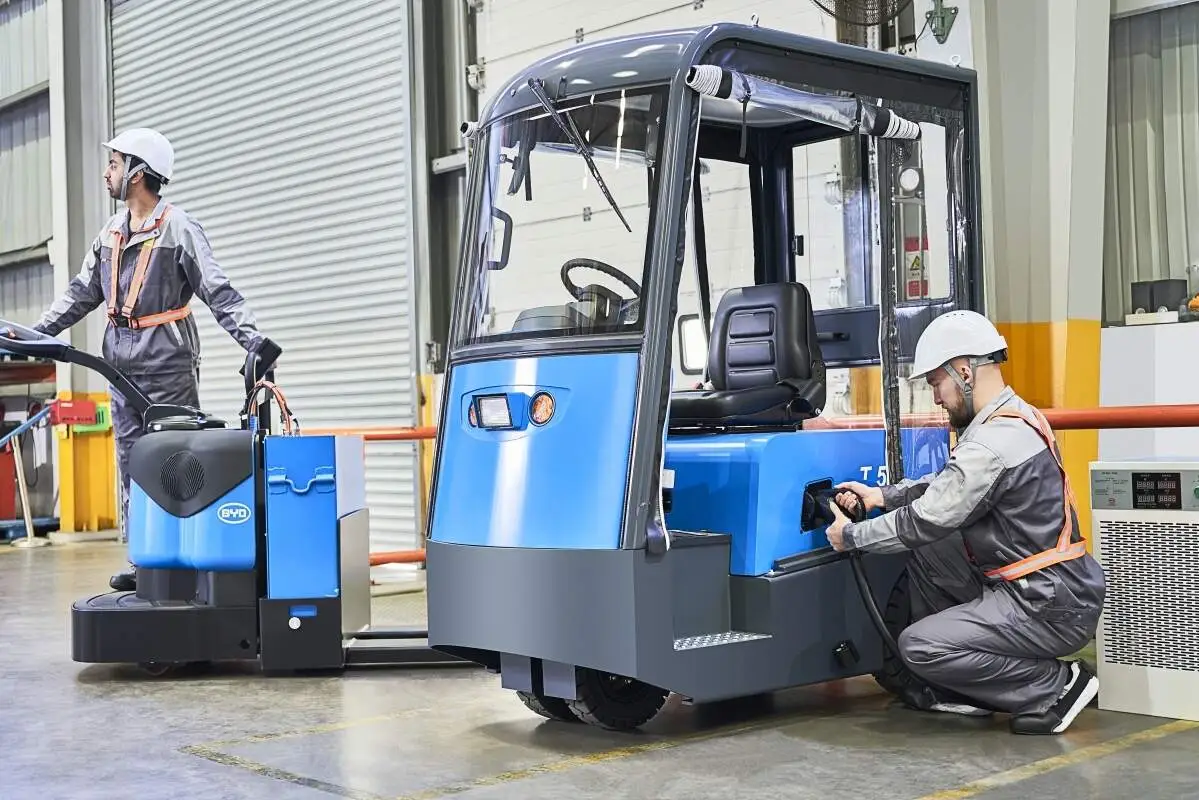
In today’s fast-paced intralogistics landscape, modern electric forklifts have emerged as cornerstone equipment for streamlining material handling operations across various industries. Unlike traditional combustion-powered forklifts, these electric alternatives offer a blend of efficiency, sustainability, and advanced functionality that aligns with the growing demand for eco-friendly and high-performance logistics solutions.
Modern e-forklift intralogistics equipment encompasses several specialized types tailored to different operational needs. Counterbalance electric forklifts are versatile workhorses, ideal for lifting and transporting heavy loads in open warehouse spaces and outdoor yards, thanks to their stable weight distribution. Reach trucks, on the other hand, are designed for narrow aisle operations, featuring extendable forks that reach deep into high storage racks, maximizing vertical space utilization. Pallet jacks, both walkie and rider models, cater to light-duty material movement, perfect for loading/unloading trucks and transporting small pallet loads over short distances. Each type is engineered to address specific logistical challenges, ensuring optimal performance in diverse settings.
Key features of modern e-forklifts set them apart from conventional equipment. Battery technology has seen significant advancements, with lithium-ion batteries offering longer runtimes, faster charging speeds, and reduced maintenance compared to lead-acid alternatives. Many models integrate intelligent systems, such as battery management systems that monitor charge levels and optimize power usage, and advanced navigation tools that assist operators in navigating tight spaces safely. Additionally, ergonomic operator cabins with adjustable seats, intuitive controls, and enhanced visibility contribute to reduced operator fatigue and improved productivity over long shifts.
The applications of modern e-forklift intralogistics equipment span across multiple sectors. In warehouse environments, they play a critical role in order picking, inventory management, and cross-docking operations, enabling quick and accurate movement of goods. Manufacturing facilities rely on these forklifts to transport raw materials to production lines and finished products to storage areas, supporting seamless workflow continuity. E-commerce distribution centers, which handle high volumes of orders daily, benefit from the agility and speed of electric forklifts to meet tight delivery deadlines.
Adopting modern e-forklifts brings numerous operational benefits. From an environmental standpoint, they produce zero tailpipe emissions, making them suitable for indoor use and contributing to a greener workplace. Operationally, they are quieter than combustion-powered models, reducing noise pollution in enclosed spaces and creating a more comfortable working environment. Over the long term, electric forklifts have lower operational costs, as electricity is generally cheaper than fossil fuels, and they require less frequent maintenance due to fewer moving parts compared to internal combustion engines. Safety is another key advantage, with features like automatic braking, stability control, and pedestrian detection systems minimizing the risk of accidents in busy logistics facilities.
When selecting modern e-forklift intralogistics equipment, it is essential to assess factors such as load capacity, operating environment, battery type, and specific operational requirements to ensure the right fit for your business. For expert guidance and tailored solutions, you can reach out to us via email at 17399989919@163.com.