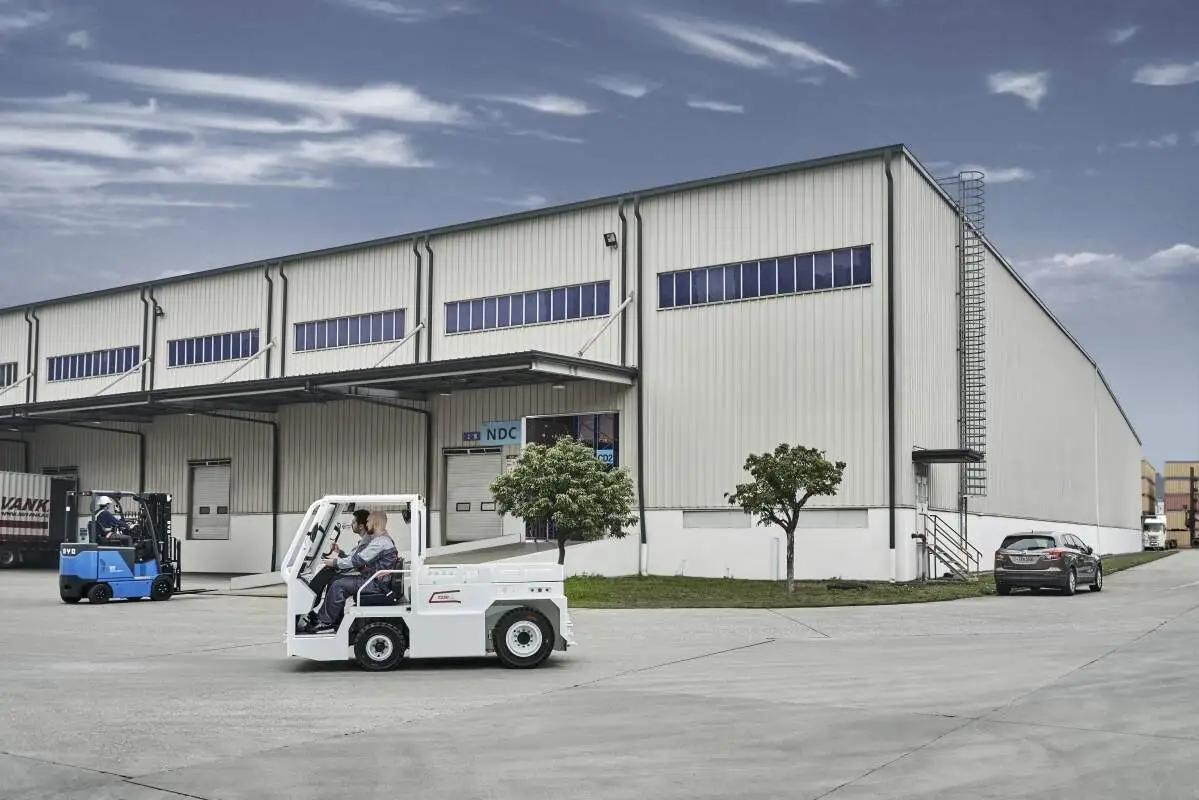
In modern warehousing and industrial logistics, the demand for material handling equipment that balances efficiency, space utilization, and adaptability continues to rise. Among specialized forklift variants, the 4 stage mast electric forklift emerges as a tailored solution to address unique lifting challenges in diverse operational environments. Unlike standard 2 or 3 stage mast models, its four-section telescopic structure enables it to reach greater heights while maintaining a compact closed mast profile, creating a versatile tool for businesses with specific storage and handling needs.
One of the primary application advantages of this equipment is its ability to support high-level storage operations. As warehouses increasingly adopt tall storage racks to maximize vertical space, the 4 stage mast electric forklift can reach lifting heights that standard models cannot typically achieve. This allows businesses to utilize upper rack levels for inventory storage, reducing the need for additional warehouse floor space and optimizing overall storage capacity. For industries like e-commerce, which often deal with seasonal inventory surges, this capability helps streamline stock management without requiring costly facility expansions.
Another key benefit is enhanced space utilization in confined or low-clearance areas. When fully retracted, the 4 stage mast maintains a relatively low height, enabling the forklift to navigate through narrow doorways, basement storage facilities, or multi-story industrial buildings with limited overhead clearance. Once in position, the mast can extend to full height to access upper storage tiers, resolving the common conflict between high lifting requirements and space constraints. This flexibility makes it ideal for urban warehouses or manufacturing facilities where available space is limited and must be used strategically.
Eco-friendly operation is also a significant advantage of the 4 stage mast electric forklift. Powered by electric batteries, it produces no tailpipe emissions, making it suitable for indoor operations such as food storage facilities, pharmaceutical warehouses, or retail distribution centers where air quality is a priority. Additionally, electric models generate less noise than their internal combustion counterparts, creating a more comfortable working environment for staff and reducing noise pollution in residential or urban areas. Over time, electric forklifts also tend to have lower operational costs, as they require less maintenance and rely on more stable energy sources compared to fossil fuel-powered equipment.
Finally, the 4 stage mast electric forklift offers improved operational safety and cargo stability. Its telescopic mast design incorporates reinforced hydraulic systems and precision controls, ensuring smooth and steady lifting even when handling heavy or fragile items. This reduces the risk of cargo damage during transport and placement, which is particularly valuable for high-value goods or sensitive materials. The electric powertrain also provides responsive acceleration and braking, allowing operators to maneuver with greater accuracy in tight spaces, further minimizing the potential for workplace accidents.
Overall, the 4 stage mast electric forklift combines specialized lifting capability, space-efficient design, eco-friendly performance, and enhanced safety features to support efficient material handling across a range of industries. As logistics and storage needs continue to evolve, this equipment remains a valuable asset for businesses seeking to optimize their operations while adhering to modern environmental and safety standards.