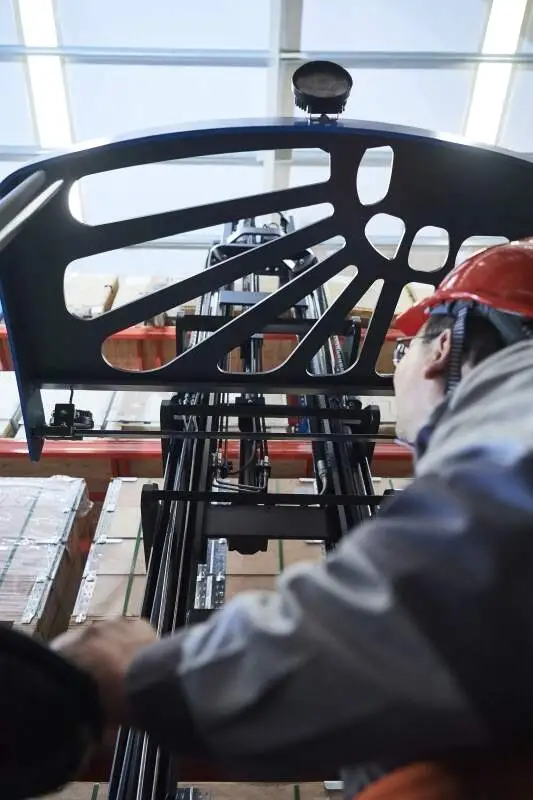
Airport logistics operates in a fast-paced environment where timely and efficient cargo handling is critical to maintaining flight schedules and ensuring passenger satisfaction. Among the essential ground support equipment, plane loader forklifts play a pivotal role in streamlining these operations, addressing the unique demands of aviation cargo management.
Plane loader forklifts are primarily used for loading and unloading loose cargo, baggage, and small freight containers onto and off aircraft. Unlike standard forklifts, their flat, extended platforms are designed to align seamlessly with aircraft cargo holds, allowing operators to move items directly into the hold without the need for additional transfer equipment. This makes them ideal for handling irregularly shaped goods or small shipments that don’t fit into large unit load devices, which are commonly used for bulk cargo. In busy airports, these forklifts are deployed across terminal aprons and cargo zones, supporting both commercial passenger flights and dedicated cargo carriers.
One of the key benefits of plane loader forklifts is their ability to enhance operational efficiency. With their maneuverable design, they can navigate tight spaces on airport tarmacs, even amid other ground support vehicles and aircraft. This agility reduces the time spent positioning the vehicle, enabling faster cargo transfer between aircraft, baggage carts, and storage facilities. For airports handling high volumes of daily flights, this efficiency translates to reduced turnaround times for aircraft, minimizing delays and improving overall logistics throughput. Additionally, their adjustable platforms can accommodate different aircraft heights, making them versatile enough to serve a wide range of aircraft models from regional jets to wide-body planes.
Safety is a top priority in airport logistics, and plane loader forklifts are engineered with features that mitigate risks. Ergonomic operator cabins provide clear visibility of the cargo and surrounding areas, reducing the likelihood of collisions or cargo damage. Many models also include stability controls to prevent tipping when lifting heavy loads, ensuring the safety of both personnel and goods. Moreover, their flexibility allows them to adapt to varying cargo types, from fragile passenger baggage to heavy industrial components. This adaptability means airports can rely on a single piece of equipment for multiple tasks, reducing the need for specialized machinery and optimizing resource allocation.
As airport logistics continues to evolve, plane loader forklifts are also integrating advanced technologies to meet growing demands. Automated guidance systems are being tested to enable remote operation, reducing the need for on-board operators and enhancing safety in high-traffic areas. Energy-efficient electric models are becoming more prevalent, aligning with airports’ sustainability goals by reducing emissions and noise pollution on tarmacs. These advancements ensure that plane loader forklifts will remain a cornerstone of airport ground support operations, adapting to new challenges and contributing to more sustainable, efficient logistics ecosystems.
In conclusion, plane loader forklifts are indispensable tools in modern airport logistics. Their unique design, efficiency, safety features, and adaptability make them essential for handling the diverse demands of aviation cargo. As airports strive to improve operational speed and sustainability, these forklifts will continue to play a central role in streamlining ground support processes, ensuring that cargo moves smoothly and reliably from origin to destination.