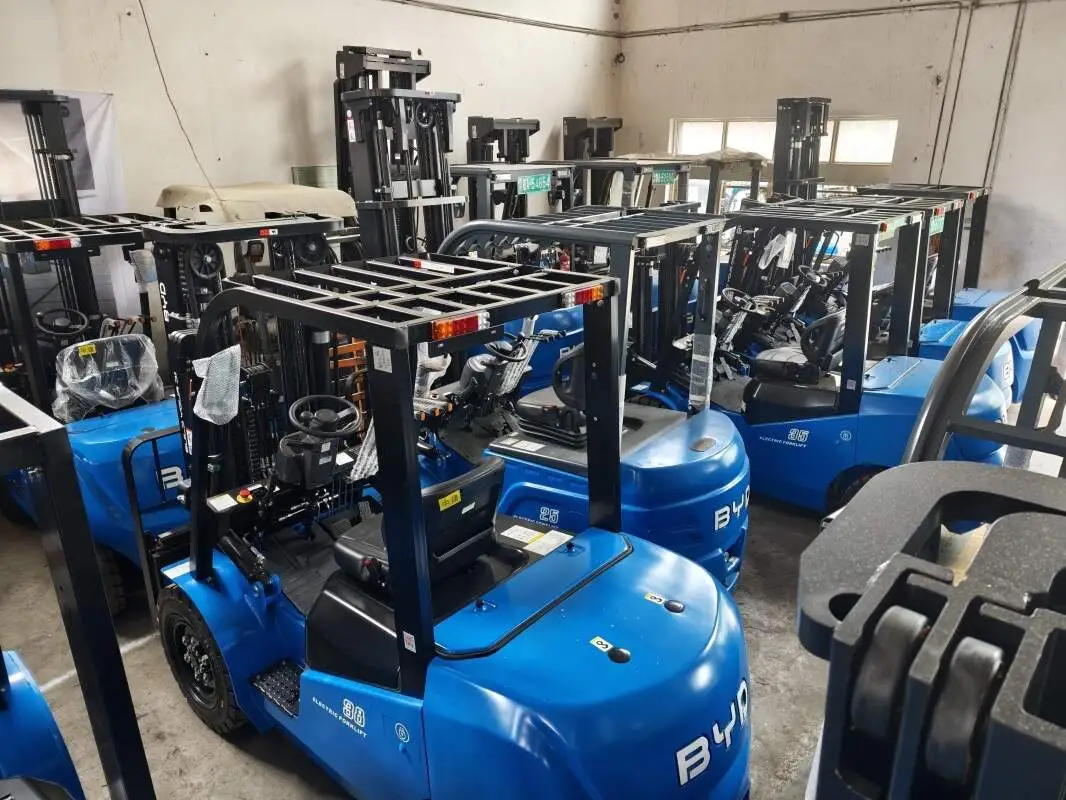
Operating electric forklifts in Australia demands strict adherence to tailored compliance and operational standards, established to safeguard workplace safety, uphold environmental responsibility, and meet legal obligations. For businesses relying on these vehicles for material handling, a deep understanding of these rules is essential to avoid penalties and ensure seamless daily operations.
The core regulatory foundation for electric forklifts in Australia is the national Work Health and Safety (WHS) Act, enforced uniformly across all states and territories. This legislation requires employers to guarantee a secure working environment, which includes verifying that all electric forklifts are fit for their intended use, properly maintained, and operated safely. Complementing the WHS Act, the Australian Standard AS 2359 series sets out detailed specifications for the design, construction, testing, and ongoing maintenance of forklifts. For electric models, this covers critical aspects such as battery safety mechanisms, electrical system integrity, and load capacity validation—all of which must be strictly complied with to meet regulatory standards.
Beyond design and construction compliance, robust operational protocols are non-negotiable. Every electric forklift operator must hold a valid license or certificate of competency, issued by a registered training organization (RTO) in their respective state or territory. This training encompasses essential skills like safe maneuvering, correct load handling, hazard identification, and emergency response procedures, ensuring operators can mitigate risks effectively in diverse workplace settings.
Daily pre-operation inspections are a key operational requirement. Before using an electric forklift, operators must thoroughly check components including brakes, steering systems, battery connections, lights, and tire conditions. Any identified defects must be reported immediately, and the forklift removed from service until certified repairs are completed by a qualified technician. Regular, scheduled maintenance is also vital; this ensures that electric forklifts remain in optimal condition, reducing the risk of breakdowns that could lead to workplace incidents or non-compliance issues.
Electric forklifts offer inherent environmental advantages, but they still carry specific compliance obligations related to their use. Battery charging areas must be equipped with adequate ventilation to prevent the accumulation of potentially harmful gases, while battery disposal must follow local environmental regulations to minimize ecological impact. Many workplaces also impose site-specific rules, such as reduced speed limits in pedestrian-dense zones or restrictions on operating forklifts in confined spaces, which operators must strictly follow to maintain a safe and compliant work environment.
Ensuring your electric forklift fleet meets Australia’s rigorous compliance and operational standards is not only a legal necessity but also a strategic investment in employee safety and operational efficiency. If you are seeking electric forklifts engineered to align with these standards, Jianshu New Energy specializes in BYD electric forklifts tailored for Australian business needs. For further information or assistance, please contact us at 17399989919@163.com.