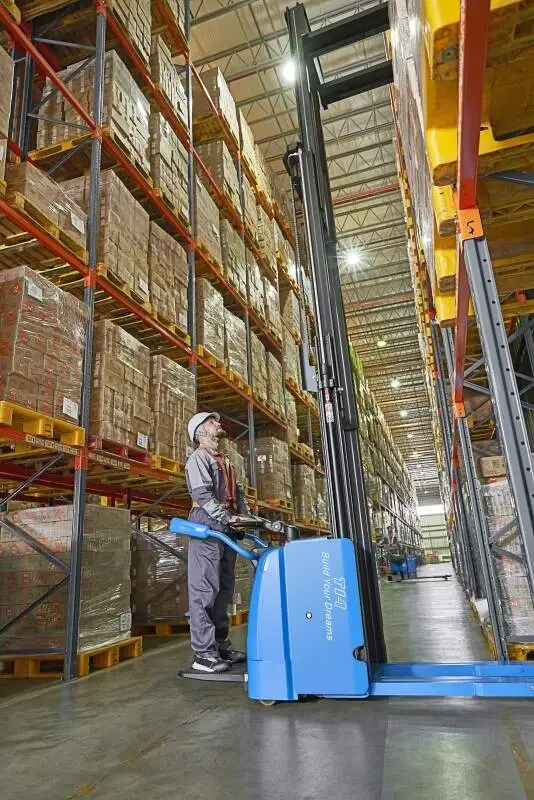
As a reliable electric forklift tailored for industrial material handling, the WR3000 supports streamlined warehouse and logistics operations. Grasping its core specifications and following standardized operation guidelines is key to boosting efficiency, extending equipment service life, and safeguarding workplace safety.
First, let’s review the basic specifications of the WR3000 forklift. It has a nominal load capacity of 3000 kilograms, making it suitable for transporting pallets, crates, and heavy goods in medium-duty scenarios. Its maximum lift height reaches up to 4 meters, enabling access to elevated storage racks common in warehouses. With a compact turning radius of 2.5 meters, it maneuvers easily in narrow aisles and confined spaces, reducing collision risks with racks or other equipment. Powered by a high-performance lead-acid battery, it offers approximately 8 hours of continuous operation on a full charge, with a full recharge taking around 12 hours. It also features a travel speed of up to 12 km/h when unloaded and 8 km/h under full load, balancing efficiency and control.
Before operating the WR3000, a thorough pre-operation inspection is mandatory. Start by checking the battery level to ensure sufficient power for the planned task. Inspect tires for wear, punctures, or improper inflation, as faulty tires can compromise stability and maneuverability. Examine the hydraulic system for leaks, and verify that lift forks, mast, and control levers are in good working order. Confirm brakes and horn function correctly—these are critical for safe operation in busy work environments.
Once the pre-operation check is complete, follow these steps to start and operate the forklift. Sit in the operator’s seat, fasten the seatbelt, and adjust mirrors for full visibility. Turn the ignition key to the on position, and ensure the parking brake is engaged before shifting the gear lever to the desired direction (forward or reverse). Gradually release the parking brake and use the accelerator pedal to control travel speed, maintaining a slow pace when navigating narrow areas or around pedestrians. Use lift and tilt levers carefully to raise or lower forks, and tilt the mast slightly backward when carrying loads to prevent slipping. Keep a safe distance from other vehicles, equipment, and personnel, and avoid sudden stops or turns that could shift the load.
Proper load handling is essential to prevent accidents and equipment damage. Ensure loads are evenly distributed on the forks, and never exceed the 3000 kg capacity limit. When lifting a load, raise it just 10-15 cm off the ground for short-distance travel, and lower it to a safe height for longer trips to maintain stability. Do not stack loads higher than recommended, as this increases the risk of tipping. When placing loads on racks, align forks properly with rack beams and lower the load slowly to avoid impact.
When operations end, follow the correct shutdown procedure. Park the forklift in a designated area, engage the parking brake, and lower forks to the ground. Turn off the ignition, remove the key, and disconnect the battery if the forklift will be unused for an extended period. Clean debris from forks and surrounding areas to keep the equipment in good condition.
Throughout all operations, prioritize safety by adhering to workplace regulations and operational guidelines. Only trained, authorized personnel should operate the forklift, and never use it under the influence of alcohol or drugs. Regular maintenance checks, alongside pre-operation inspections, will help identify potential issues early and keep the WR3000 running smoothly over time.