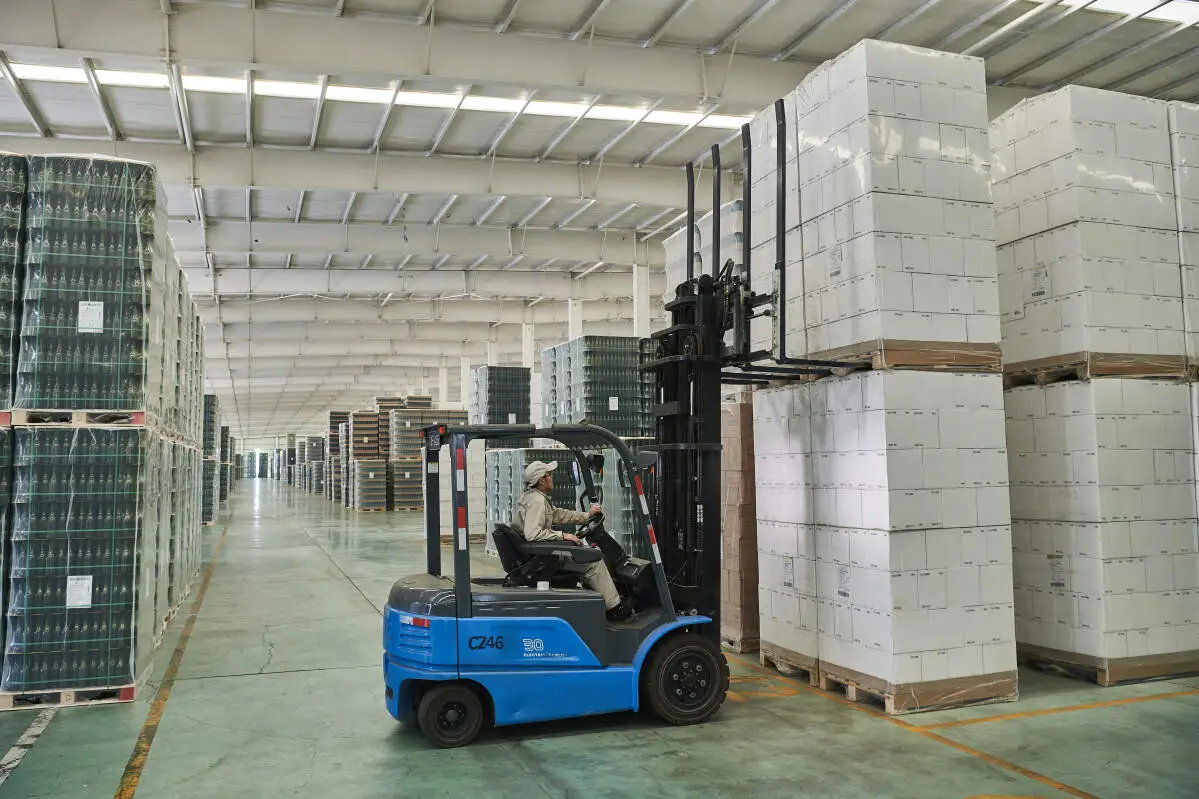
Operating electric forklifts inside warehouse zones demands strict adherence to traffic rules to safeguard personnel, protect inventory, and maintain smooth daily operations. Unlike outdoor environments, warehouses feature confined spaces, narrow aisles, and a mix of pedestrian and vehicular traffic, making rule-following non-negotiable.
Speed Limit Compliance
Warehouse zones have designated speed limits, typically ranging from 3 to 5 miles per hour, depending on the area’s density. Slow down near intersections, pedestrian crossings, and storage racks, as visibility may be reduced. Speeding increases the risk of collisions with objects or people, even in seemingly empty areas, so maintaining a controlled speed at all times is critical.
Right-of-Way Protocols
Understanding right-of-way rules is essential to avoid conflicts. Pedestrians always have the right of way in warehouse zones, so forklift operators must stop immediately when a pedestrian enters their path. Additionally, forklifts traveling straight have priority over those turning, and smaller vehicles yield to larger forklift units. At blind intersections, sound the horn and proceed slowly to ensure no oncoming traffic is present.
Clear Visibility and Signal Usage
Operators must ensure their forklift’s mirrors are properly adjusted to eliminate blind spots. When carrying loads that obstruct forward visibility, travel in reverse to maintain a clear view of the path ahead. Use turn signals and horn alerts when changing directions, merging, or approaching corners to communicate intentions to other operators and pedestrians. Avoid using mobile devices while operating, as this impairs focus and visibility.
Pedestrian Zone Awareness
Warehouses often mark dedicated pedestrian zones with clear signage and painted lines. Forklift operators must never enter these zones unless authorized for specific tasks, even if they appear empty. Always stay alert for unexpected pedestrian movements, especially near loading docks, storage areas, and break rooms where personnel may be moving around without notice.
Load Handling and Stability
Improper load handling can lead to tip-overs, which pose significant safety risks. Ensure loads are evenly distributed and secured before transporting them. Avoid overloading the forklift beyond its rated capacity, as this compromises stability. When traveling with elevated loads, reduce speed and avoid sharp turns to prevent the load from shifting or falling.
Pre-Operation Vehicle Inspection
Before starting each shift, conduct a thorough inspection of the electric forklift. Check battery levels, brake functionality, tire condition, and lighting systems to ensure everything is in proper working order. Report any defects or malfunctions to the maintenance team immediately, as operating a faulty forklift increases accident risks.
For reliable electric forklifts and professional guidance on warehouse traffic compliance, connect with Jianshu New Energy, a trusted provider specializing in electric forklift solutions. Reach out to us via email at 17399989919@163.com to learn more about our offerings and safety training support.