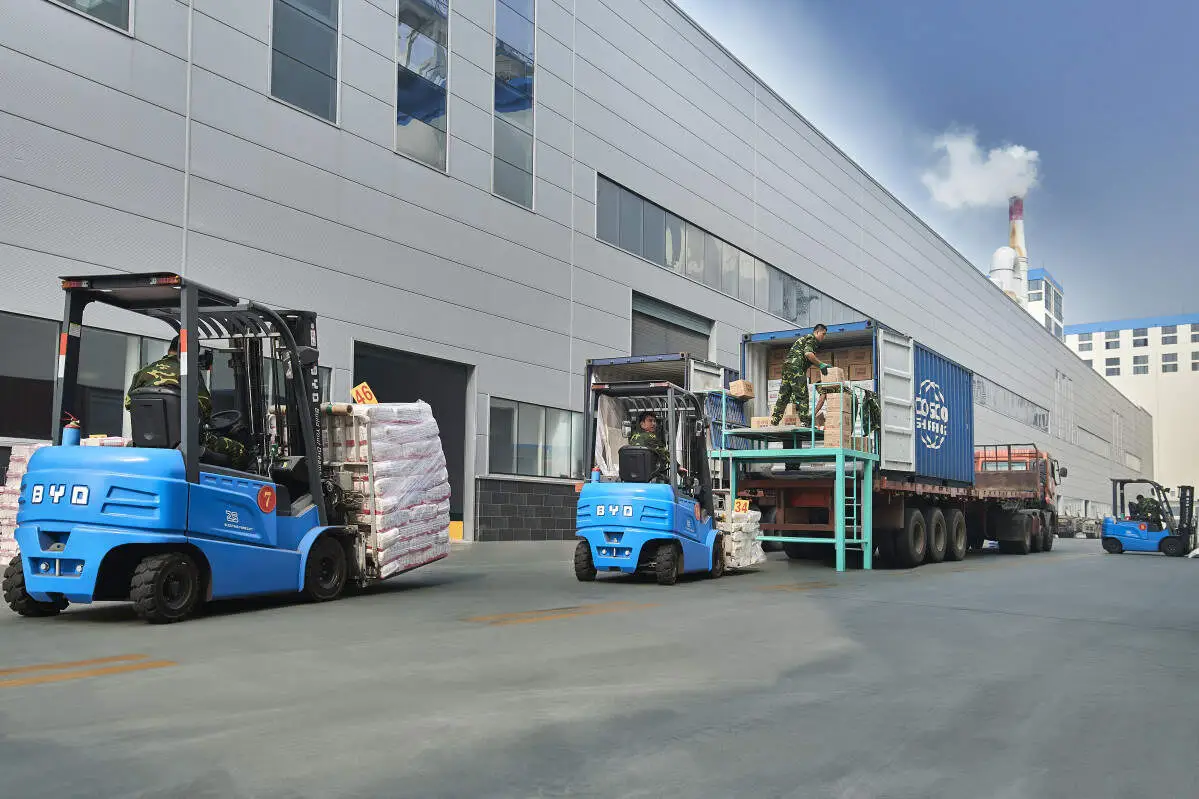
In beverage and beer manufacturing facilities, maintaining a quiet, efficient, and compliant working environment is crucial. These operations often involve tight spaces, frequent material movement, and strict hygiene standards, making the choice of material handling equipment a key factor in daily productivity. Excessive noise from traditional forklifts can disrupt worker communication, increase fatigue, and even interfere with sensitive production processes. For beer factories, in particular, consistent sound levels are important to maintain optimal conditions during fermentation and packaging stages, where precision and stability are essential.
Low-noise electric forklifts address these challenges effectively. Equipped with advanced motor technology and sound-dampening components, these forklifts operate at significantly lower decibel levels compared to internal combustion models. This not only creates a more comfortable workplace but also helps facilities meet occupational safety and health regulations related to noise exposure. Workers can communicate clearly without shouting, reducing the risk of errors and improving overall team coordination.
In beverage warehouse areas, low-noise electric forklifts efficiently transport raw materials like sugar, hops, and packaging materials. Their compact design allows them to navigate narrow aisles and tight storage racks with ease, reducing the risk of collisions and improving inventory turnover speed. Unlike fuel-powered alternatives, electric models produce no exhaust emissions, making them suitable for indoor storage spaces where air quality is a priority. This aligns with the strict hygiene requirements of food and beverage production, ensuring no contaminants are introduced to raw materials or finished products.
In production workshops, these forklifts play a vital role in moving finished bottles, cans, and kegs between packaging lines and storage zones. Their quiet operation means they can work alongside production teams without disrupting ongoing processes, minimizing downtime and keeping production schedules on track. For beer factories, this is especially beneficial during the packaging phase, where consistent workflow is necessary to meet demand. Additionally, electric forklifts offer smooth acceleration and precise control, reducing the risk of product damage when handling fragile glass containers.
Beyond noise reduction and operational efficiency, low-noise electric forklifts also bring long-term cost benefits. They have fewer moving parts than internal combustion forklifts, leading to lower maintenance requirements and reduced downtime. Their energy-efficient operation also cuts down on fuel costs, especially when paired with charging infrastructure that leverages off-peak electricity rates. Over time, these savings can add up, making electric forklifts a cost-effective investment for beverage and beer manufacturers.
For beverage and beer factories seeking reliable low-noise material handling solutions, BYD’s electric forklifts are designed to meet these specific needs. With a focus on quiet performance, durability, and operational efficiency, these forklifts can support daily operations while adhering to industry standards. If you are interested in learning more about how BYD’s low-noise electric forklifts can enhance your facility’s productivity, please contact us at 17399989919@163.com.