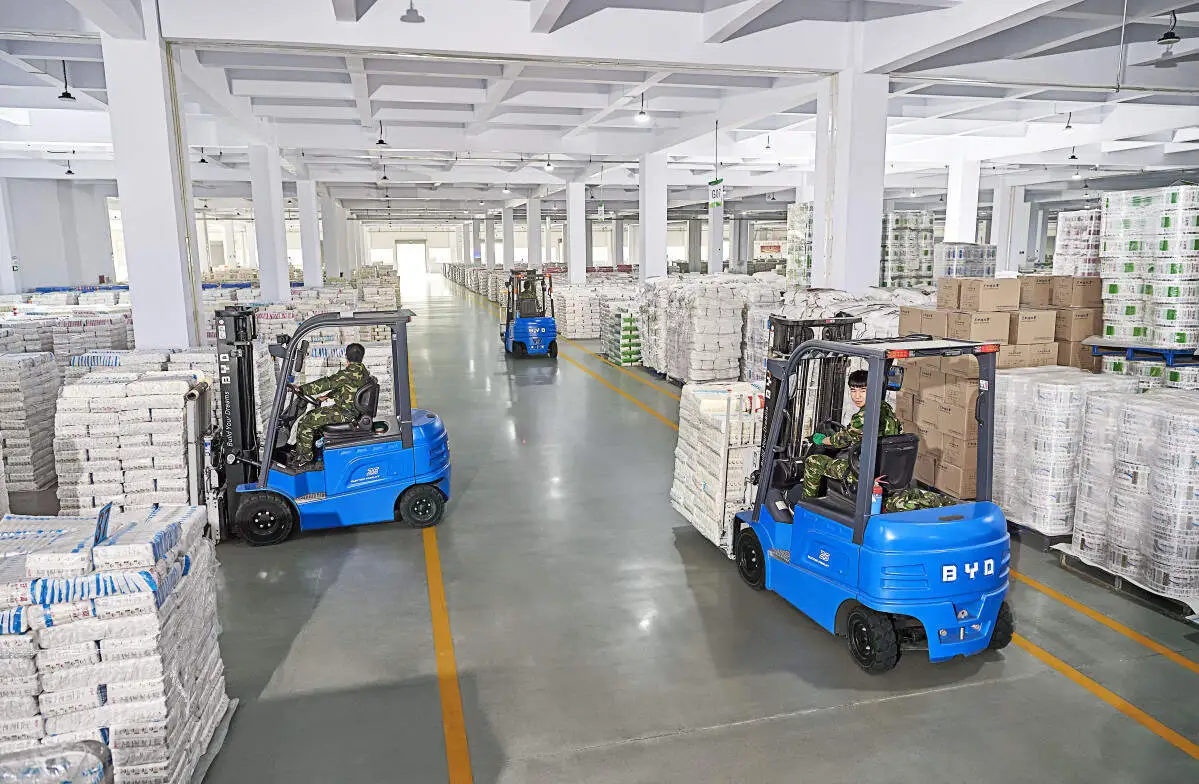
Compact storage facilities present unique challenges for material handling, where space efficiency and maneuverability take top priority. When selecting an electric forklift for a small-size warehouse, a strategic approach ensures you choose a unit that aligns with your operational needs without sacrificing productivity or safety.
Start by conducting a thorough assessment of your storage space and daily operations. Measure the width of narrow aisles, the height of storage racks, and the maximum weight of typical loads you’ll handle. Consider how often the forklift will be used—whether for intermittent tasks or continuous shifts—as this impacts battery life requirements. For warehouses with aisles under 2 meters wide, a model with a tight turning radius is non-negotiable to avoid collisions with racks or inventory.
Next, prioritize space-saving design features. Opt for electric forklifts with a compact, streamlined body that doesn’t compromise load capacity. Stand-up operator cabins are often a better fit for small warehouses than sit-down models, as they reduce the forklift’s overall length and allow operators to exit quickly for frequent loading/unloading tasks. Some models also feature telescopic forks or adjustable mast heights, enabling access to high storage racks without requiring extra space for maneuvering.
Evaluate performance attributes tailored to compact environments. Battery life is critical—look for lithium-ion battery options that offer consistent power throughout shifts and shorter charging times, minimizing downtime. Check the forklift’s lifting capacity and maximum lift height to ensure it matches your storage rack specifications. Smooth acceleration and precise steering are also essential for navigating tight spaces safely, reducing the risk of damage to inventory or warehouse infrastructure.
Calculate the total ownership cost rather than focusing solely on the upfront purchase price. Electric forklifts have lower maintenance costs compared to gas-powered alternatives, but you’ll need to factor in battery replacement, charging station installation, and routine servicing. Consider energy efficiency models that reduce electricity consumption, which can lead to long-term savings for small warehouse operations with limited budgets.
Finally, don’t overlook safety and ergonomic features. Look for forklifts equipped with proximity sensors to alert operators of obstacles in tight spaces, as well as anti-slip flooring in the operator area to prevent falls. Ergonomic controls that are easy to reach and operate reduce operator fatigue during long shifts, improving overall productivity and reducing the risk of human error.
By combining these considerations—space assessment, design features, performance, cost, and safety—you can select an electric forklift that enhances efficiency and safety in your compact small-size warehouse, ensuring seamless material handling operations day to day.