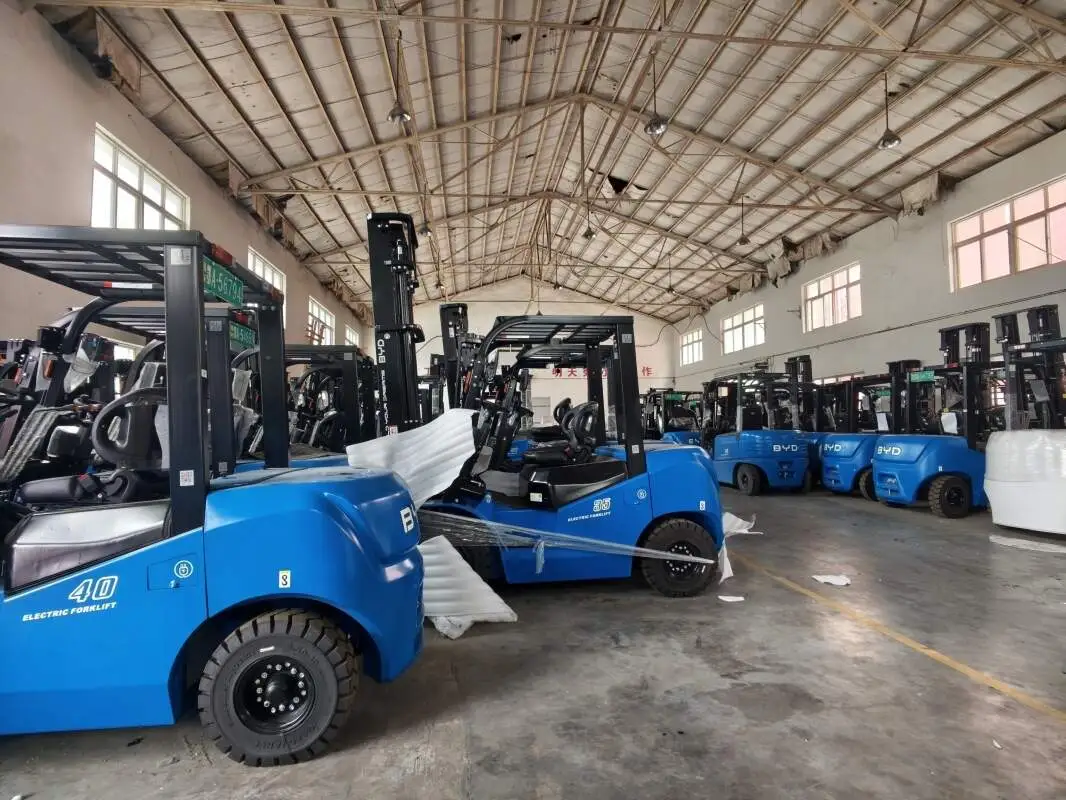
In the realm of industrial material handling, choosing the right equipment is critical for streamlining operations, ensuring safety, and maximizing productivity. Two commonly used vehicles are tow motors and forklifts, often confused due to their overlapping roles in moving loads. However, they serve distinct purposes with unique design features and operational strengths. This comparison breaks down their key differences to help businesses make informed decisions based on their specific needs.
Design and Core Functionality
Tow motors, also known as tow tractors, are engineered primarily to pull heavy loads rather than lift them. Their design focuses on providing high torque to tow multiple trailers or carts linked together, making them ideal for transporting long trains of materials across large facilities. Typically, they feature a compact chassis, a low-profile seating area, and a hitch mechanism at the rear to connect to load-bearing carts. In contrast, forklifts are equipped with a front-mounted mast and forks that enable them to lift, lower, and stack loads vertically. Their core functionality revolves around direct handling of pallets, crates, and other heavy items, allowing for efficient storage and retrieval in racked warehouse spaces.
Load Handling Capabilities
When it comes to load handling, the two vehicles differ significantly. Tow motors excel in moving large volumes of materials over extended distances, as they can pull combined loads weighing several tons by connecting multiple trailers. However, they lack the ability to lift loads off the ground, limiting their use to horizontal transport. Forklifts, on the other hand, are designed for vertical lift operations, with capacities ranging from a few hundred pounds to several tons depending on the model. They can stack loads up to high racking systems, making them indispensable for warehouse storage and order picking tasks. While some forklift models can tow small carts, this is not their primary function and may not match the efficiency of a dedicated tow motor.
Ideal Operational Environments
The choice between a tow motor and forklift often depends on the operating environment. Tow motors thrive in large, open spaces such as manufacturing plants, distribution centers, and airport tarmacs, where long-distance transport of multiple loads is required. Their compact size allows them to navigate narrow aisles, but their real value lies in moving bulk materials across expansive areas. Forklifts are more versatile in confined spaces like warehouses with high racking systems, retail stockrooms, and construction sites. Their ability to lift and stack makes them essential for optimizing vertical storage space, which is often limited in such environments. Additionally, forklifts can operate outdoors on paved surfaces, while tow motors are mostly used indoors or on flat, paved outdoor areas due to their focus on towing rather than rough-terrain handling.
Maneuverability and Space Requirements
Maneuverability is another key distinction. Tow motors, with their compact design and rear-wheel steering, can easily turn in tight spaces, making them suitable for navigating through narrow corridors and around obstacles. However, when towing multiple trailers, their turning radius increases, requiring more space to maneuver safely. Forklifts, depending on their type, have varying maneuverability. Counterbalance forklifts, the most common type, have a larger turning radius due to their heavy rear counterweight, while narrow-aisle forklifts are designed to operate in tight spaces with minimal turning room. Forklifts also require clear vertical space for their mast to extend, which is not a concern for tow motors that operate at ground level.
Operational Efficiency and Cost Considerations
From an efficiency standpoint, tow motors are highly efficient for long-distance transport of multiple loads, as they can move several tons of material in a single trip, reducing the number of trips needed. This makes them cost-effective for facilities with high-volume horizontal transport needs. Forklifts, while less efficient for long-distance transport, excel in tasks that require vertical handling, such as stacking and order picking. Their ability to access high storage areas optimizes space utilization, which can lead to long-term cost savings in warehouse operations. In terms of upfront costs, tow motors are generally more affordable than forklifts, especially high-capacity or specialized forklift models. Maintenance costs also vary, with forklifts requiring more frequent servicing due to their complex mast and lifting mechanisms compared to the simpler design of tow motors.
In conclusion, tow motors and forklifts are distinct material handling equipment with unique strengths. Tow motors are ideal for horizontal transport of bulk loads over long distances, while forklifts are essential for vertical lifting and stacking operations. Understanding these differences is crucial for businesses to select the right equipment that aligns with their operational needs, enhances productivity, and ensures a safe working environment.