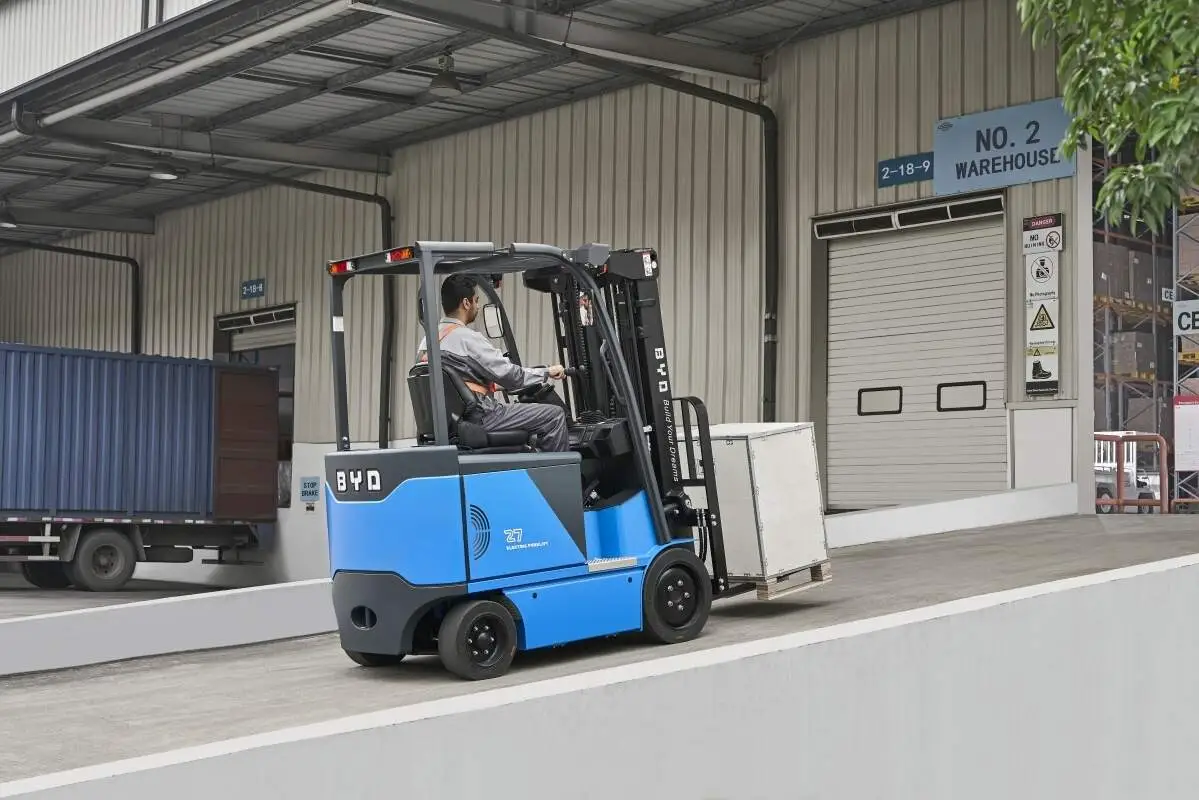
forklift tipping over is one of the most prevalent and dangerous accidents in warehouse and industrial settings, often leading to severe injuries, property damage, and operational downtime. Understanding the root causes of these incidents is crucial for implementing effective preventive strategies to protect both workers and assets.
One of the primary reasons for forklift tipping is improper load balancing. When a forklift carries a load that exceeds its rated capacity, is unevenly distributed, or positioned too far forward on the forks, it shifts the vehicle’s center of gravity beyond its stable range. This imbalance creates a tipping force, especially during turns or when navigating uneven surfaces. For example, stacking items too high without securing them can cause the load to shift abruptly, triggering an overturn even with minor maneuvers.
Incorrect operator behavior also plays a significant role in tipping accidents. Many incidents occur when operators drive at excessive speeds, especially around corners or on slippery floors. Rapid turns generate centrifugal force that pushes the forklift off balance. Additionally, operators may fail to lower the forks to a safe height when traveling, which raises the center of gravity and reduces overall stability. Some even attempt to use the forklift for unintended purposes, such as lifting personnel without proper safety attachments, further increasing tipping risks.
Poor ground conditions are another common contributing factor. Uneven surfaces, potholes, wet or icy floors, and loose gravel can compromise a forklift’s stability. When a forklift moves over such terrain, one or more wheels may lose contact with the ground, shifting the center of gravity and leading to a tip-over. Even minor slopes that are not accounted for can become hazardous if the forklift is loaded or traveling at speed.
Improper handling on ramps is a frequent cause of tipping incidents. Ascending or descending ramps with a load requires careful maneuvering. If an operator travels up a ramp with the load facing uphill, the weight shifts backward, reducing traction and increasing the risk of tipping backward. Conversely, descending with the load facing downhill can shift weight forward, causing the forklift to tip forward. Failing to reduce speed on ramps or stopping abruptly can also destabilize the vehicle.
To mitigate these risks, several key preventive measures should be implemented. First, prioritize proper load management. Operators must ensure loads are within the forklift’s rated capacity, evenly distributed, and securely fastened. Using load stabilizers or specialized attachments for irregular items can help maintain balance. Forks should be positioned under the load as far as possible, and the load should be lowered to a safe height (usually a few inches off the ground) when traveling.
Second, comprehensive operator training is essential. All forklift operators must undergo certified training that covers safe operation practices, load balancing principles, and hazard recognition. Regular refreshers and safety drills can reinforce good habits and ensure operators stay updated on best practices. Employers should also enforce strict policies against reckless behavior, such as speeding or unauthorized use of equipment.
Third, conduct regular ground inspections. Work areas should be checked for uneven surfaces, potholes, or slippery conditions, with repairs made promptly. Signage should be placed to warn of hazardous areas, such as slopes or wet floors, and operators should be instructed to avoid unstable terrain whenever possible.
Fourth, enforce speed limits and safe maneuvering rules. Operators should drive at speeds appropriate for the environment, reducing speed around corners and on ramps. Avoiding sudden turns or stops can minimize centrifugal force and maintain stability. When operating on ramps, follow proper procedures: travel uphill with the load facing forward and downhill with the load facing backward, keeping the forks low to the ground.
Finally, regular forklift maintenance is critical. Ensuring brakes, tires, and steering systems are in good working order can prevent mechanical failures that could lead to tipping. Pre-shift inspections should be conducted to identify any potential issues, such as worn tires or faulty brakes, before operating the vehicle.
By addressing these common causes and implementing these preventive measures, workplaces can significantly reduce the risk of forklift tipping accidents. A proactive approach to forklift safety not only protects workers and assets but also improves operational efficiency by minimizing downtime caused by incidents.