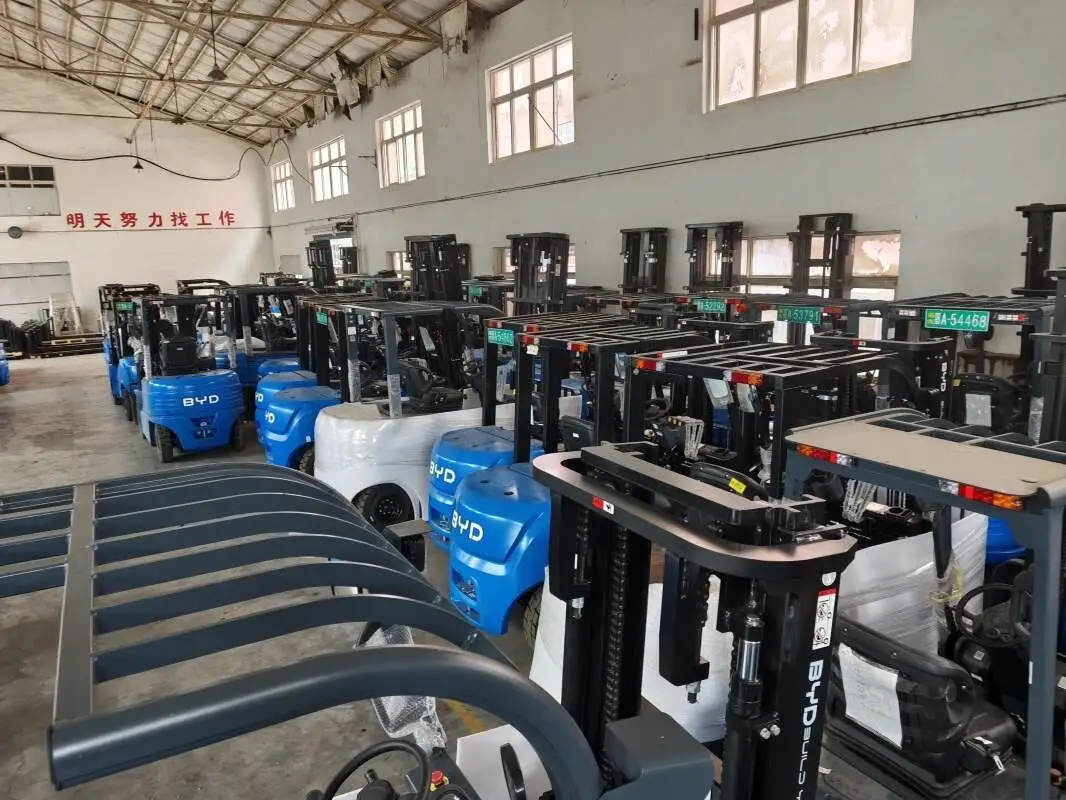
electric forklifts have become indispensable tools in warehouses, distribution centers, and manufacturing facilities, thanks to their zero emissions, quiet operation, and efficient performance. However, their widespread use also brings potential safety risks if operators fail to follow proper protocols. Understanding and avoiding common unsafe operating behaviors is crucial to protecting personnel, preventing equipment damage, and maintaining smooth daily operations.
Overloading is one of the most prevalent unsafe practices. Every electric forklift is designed with a specific load capacity, which is determined by its structural integrity, battery power, and stability features. Exceeding this limit not only strains the forklift’s components, such as the battery and lifting mechanism, but also significantly increases the risk of tipping over, especially when navigating turns or uneven surfaces. Even small amounts of excess weight can compromise the forklift’s center of gravity, leading to catastrophic accidents that result in injuries or property loss.
Speeding is another dangerous behavior that often goes overlooked. While electric forklifts offer smooth acceleration, operating them at excessive speeds reduces an operator’s reaction time and extends braking distances. This is particularly risky in narrow aisles, crowded work areas, or on wet or slippery floors, where sudden stops or evasive maneuvers may be necessary. Slow, controlled speeds should always be maintained, with adjustments made based on the environment and load being transported.
Neglecting pre-operation inspections is a critical mistake that can lead to unexpected failures during use. Before starting any shift, operators should conduct a thorough check of key components, including battery charge level, brake functionality, tire condition, fork alignment, and lights. Skipping these inspections means missing early signs of wear or damage, such as low battery power that could cause the forklift to stall mid-operation, or faulty brakes that fail when needed most. Regular pre-use checks are a simple yet effective way to mitigate potential hazards.
Improper fork usage also poses significant safety risks. Operators often make the mistake of not fully inserting the forks under a load, which can cause the load to shift or fall off during transport. Using only one fork to lift a load, or positioning the forks too far apart or too close together, can also disrupt the forklift’s balance. It’s essential to ensure the forks are properly aligned, fully inserted, and adjusted to match the width of the load to maintain stability and prevent accidents.
Incorrect operation on slopes is another common unsafe behavior. When driving on an incline, operators should always keep the load facing uphill to prevent it from sliding forward. Driving downhill with the load facing downhill increases the risk of tipping, as the weight shifts toward the front of the forklift. Additionally, operators should avoid turning on slopes, as this can further destabilize the vehicle and lead to a rollover.
By avoiding these common unsafe operating behaviors, operators can create a safer work environment and extend the lifespan of electric forklift equipment. For businesses looking to enhance their forklift safety standards and access reliable electric forklift solutions, Jianshu New Energy specializes in BYD electric forklifts. We provide comprehensive safety training and ongoing support to ensure your team operates equipment correctly and safely. For more information, please contact us at 17399989919@163.com.