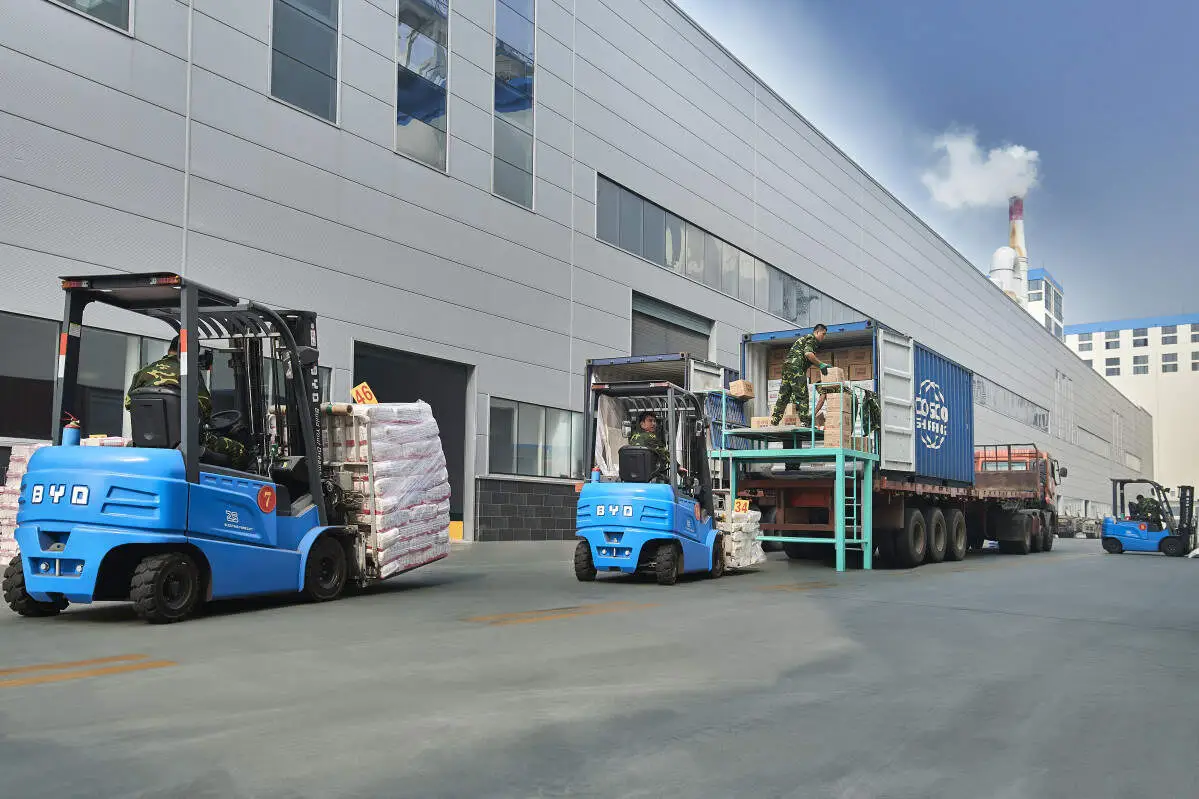
Industrial electric forklifts are core to modern warehouse and logistics operations, balancing efficiency with eco-friendly performance. Yet their safe daily deployment and operation rely on a structured safety management framework to mitigate risks, protect personnel, preserve assets, and uphold operational continuity. This framework integrates proactive checks, operational guidelines, training, maintenance, and emergency preparedness to foster a secure workplace.
Before each shift, operators must conduct a systematic pre-use inspection to verify the forklift’s functionality. This includes checking battery charge levels, brake responsiveness, tire condition, lighting and horn systems, and hydraulic fluid levels. Any irregularities—such as worn tires or faulty brakes—must be reported immediately, and the forklift taken out of service until repairs are finalized. This step prevents accidents stemming from equipment failure during operation.
During daily use, operators must follow strict safety protocols. They should maintain controlled speeds, especially in narrow aisles or high-traffic pedestrian zones, and avoid sudden turns or stops. Load stability is non-negotiable: operators must ensure loads are balanced, secured, and within the forklift’s rated capacity before lifting. Additionally, mandatory personal protective equipment (PPE) including safety shoes, helmets, and high-visibility vests must be worn to minimize injury risks in case of incidents.
A well-trained workforce is the backbone of effective forklift safety management. All operators must complete certified training programs covering theoretical knowledge (like load dynamics and safety regulations) and practical operation skills. Regular refresher courses update operators on new protocols or equipment features, while supervisors conduct spot checks to enforce compliance and provide constructive feedback.
Preventive maintenance is critical to extending forklift lifespan and reducing safety hazards. Scheduled tasks include battery maintenance, brake inspections, and hydraulic system checks, with detailed records kept of all services. Addressing minor issues early avoids costly downtime and accidents caused by equipment malfunctions.
Despite rigorous measures, incidents can occur. A clear emergency response plan outlines procedures for collisions, fires, or breakdowns. Operators are trained to respond quickly, including alerting emergency services when needed, and regular drills ensure all personnel know evacuation routes and protocols to minimize incident impact.
Implementing this complete framework is essential for a safe, efficient workplace. For professional guidance and high-quality electric forklift solutions, contact Jianshu New Energy, a specialist in BYD electric forklifts, at 17399989919@163.com.