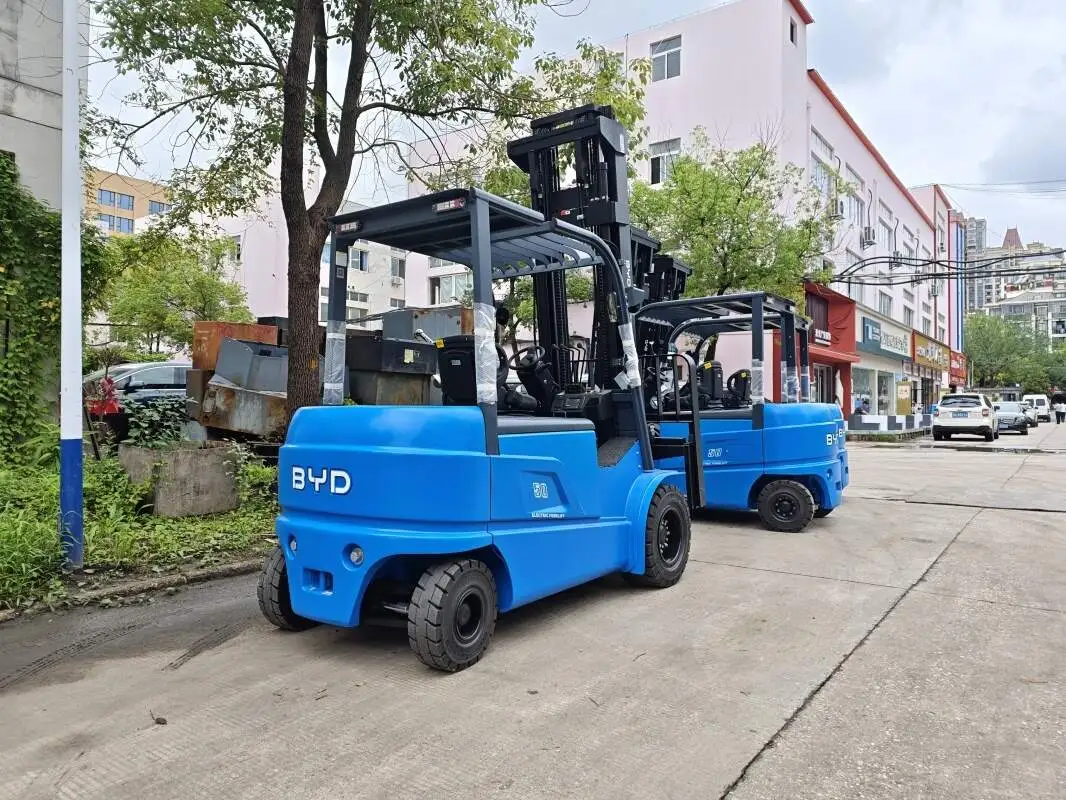
electric forklifts have become essential equipment in warehouses, distribution centers, and manufacturing facilities, offering efficient and eco-friendly material handling solutions. Understanding their core components and part names is crucial for proper operation, maintenance, and troubleshooting.
The mast is one of the most recognizable core components of a forklift. It is the vertical structure responsible for lifting and lowering loads. Composed of interlocking rails, the mast allows the carriage and forks to move upward and downward, enabling access to high storage racks. Its design ensures stability even when carrying heavy loads at height.
Attached to the mast is the carriage, a metal frame that holds the forks in place. The forks, long tines made of durable steel, are the primary parts used to slide under pallets and lift loads. Forks come in various lengths to accommodate different load sizes, and their robust construction ensures they can handle the weight requirements of daily operations.
For electric forklifts, the power source is a critical component. Typically a rechargeable battery, it supplies the energy needed to power the drive system and hydraulic operations. A well-maintained battery ensures consistent performance and extends the forklift’s operational hours between charges.
The drive system includes the motor, transmission, and axles, which work together to propel the forklift forward, backward, and enable turning. This system is designed for precise maneuverability, allowing operators to navigate tight spaces with ease. It plays a key role in the overall efficiency of the material handling process.
The hydraulic system is another vital core component, responsible for powering the mast’s lifting functions, tilting the carriage, and operating attachments if equipped. It uses hydraulic fluid and pumps to generate the pressure needed to move heavy loads smoothly and safely. Regular inspection of hydraulic lines and fluid levels is essential to prevent leaks and maintain optimal performance.
The control panel, located in the operator’s cabin, allows the driver to manage all forklift functions. It includes controls for acceleration, braking, lifting, tilting, and steering. Intuitive design of the control panel ensures operators can quickly and safely operate the forklift, reducing the risk of errors.
Wheels and tires are foundational parts that support the forklift’s weight and enable movement. Electric forklifts typically have solid tires for indoor use, providing stability and durability on smooth surfaces. The front wheels handle steering, while the rear wheels drive the forklift, contributing to its agile movement.
If you are in need of reliable electric forklifts, Jianshu New Energy specializes in BYD electric forklifts. For more details and inquiries, please reach out to us via email at 17399989919@163.com.