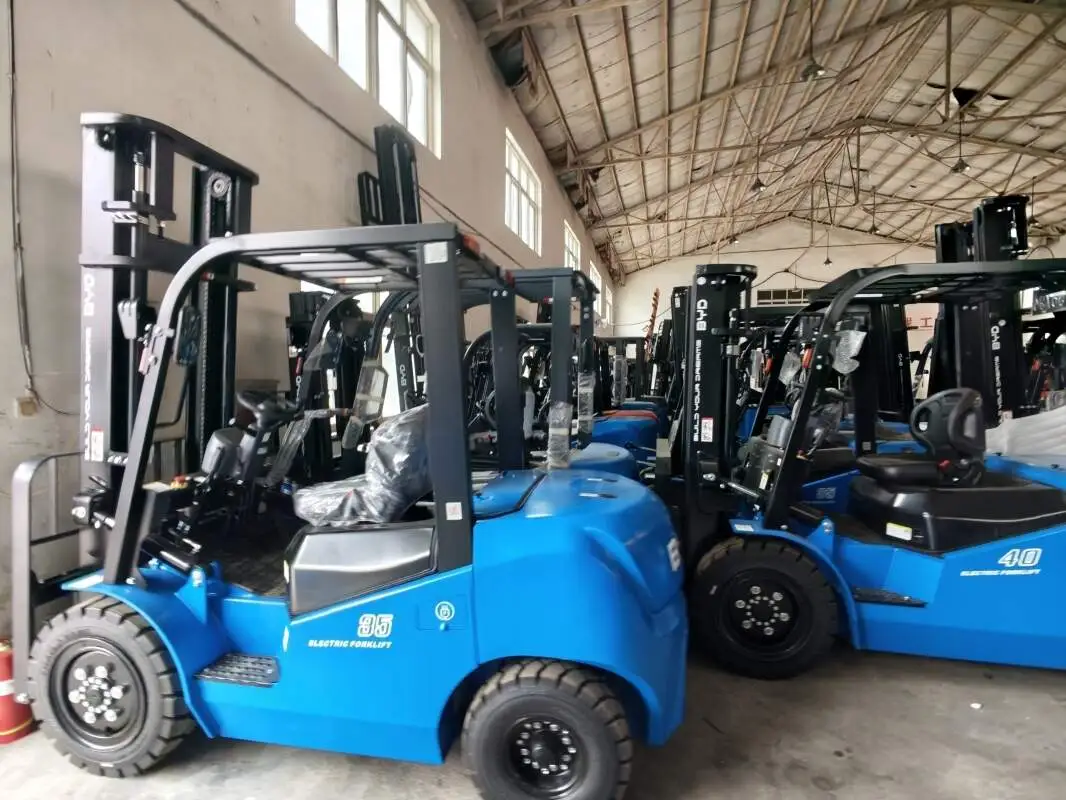
electric forklift truck forks are the foundational interface between the vehicle and the loads it handles, playing a critical role in safe and efficient material handling across warehouses, distribution centers, and industrial facilities. To maximize operational performance and longevity, it’s essential to understand their core components and underlying working principles.
The primary component of any forklift fork system is the fork blades. These elongated, steel structures are designed to slide under pallets or loads, distributing weight evenly to prevent deformation. Fabricated from high-strength steel, fork blades feature a tapered tip for easy insertion and a thickened heel area to bear the brunt of heavy loads. Their durability is key to resisting wear and tear from repeated use and varying load weights.
Mounted directly to the forklift’s mast, the carriage serves as the support structure for the fork blades. It connects the forks to the hydraulic system, enabling vertical movement. The carriage typically includes guide rails that align with the mast, ensuring smooth and stable lifting. This component must be robust enough to withstand the combined weight of the forks and the load, maintaining structural integrity during operation.
Lift cylinders are the hydraulic powerhouses behind vertical fork movement. These cylindrical devices use pressurized fluid to extend and retract, lifting or lowering the carriage and attached forks. The hydraulic system, powered by the electric forklift’s battery, delivers consistent force to handle loads of varying weights. Proper maintenance of lift cylinders, including regular fluid checks and seal inspections, is crucial to prevent leaks and ensure reliable performance.
For enhanced maneuverability, many electric forklifts are equipped with side shift attachments. This component allows the forks to move horizontally, enabling precise alignment with pallets without repositioning the entire vehicle. Side shift attachments are particularly useful in tight spaces, reducing the risk of load damage and improving operational efficiency.
The working principle of electric forklift forks revolves around a coordinated hydraulic and mechanical system. When the operator activates the lift control, the forklift’s electric motor powers a hydraulic pump, which pressurizes fluid and directs it to the lift cylinders. As the cylinders extend, they push the carriage upward, lifting the forks and the attached load. To lower the load, the hydraulic valve releases pressure, allowing fluid to flow back into the reservoir, and gravity assists in lowering the carriage gently. For side shift operations, a separate hydraulic cylinder engages, moving the fork assembly left or right as needed.
Proper understanding of these components and principles is vital for safe operation. Regular inspections of fork blades for cracks or wear, carriage alignment checks, and hydraulic system maintenance can prevent accidents and extend the lifespan of the fork system. Operators should also receive training on load capacity limits to avoid overloading, which can lead to component failure or tip-over incidents.
If you’re seeking reliable electric forklift solutions, we at Jianshu New Energy specialize in BYD electric forklifts, offering high-quality equipment designed for durability and efficiency. For more information, feel free to contact us at 17399989919@163.com.