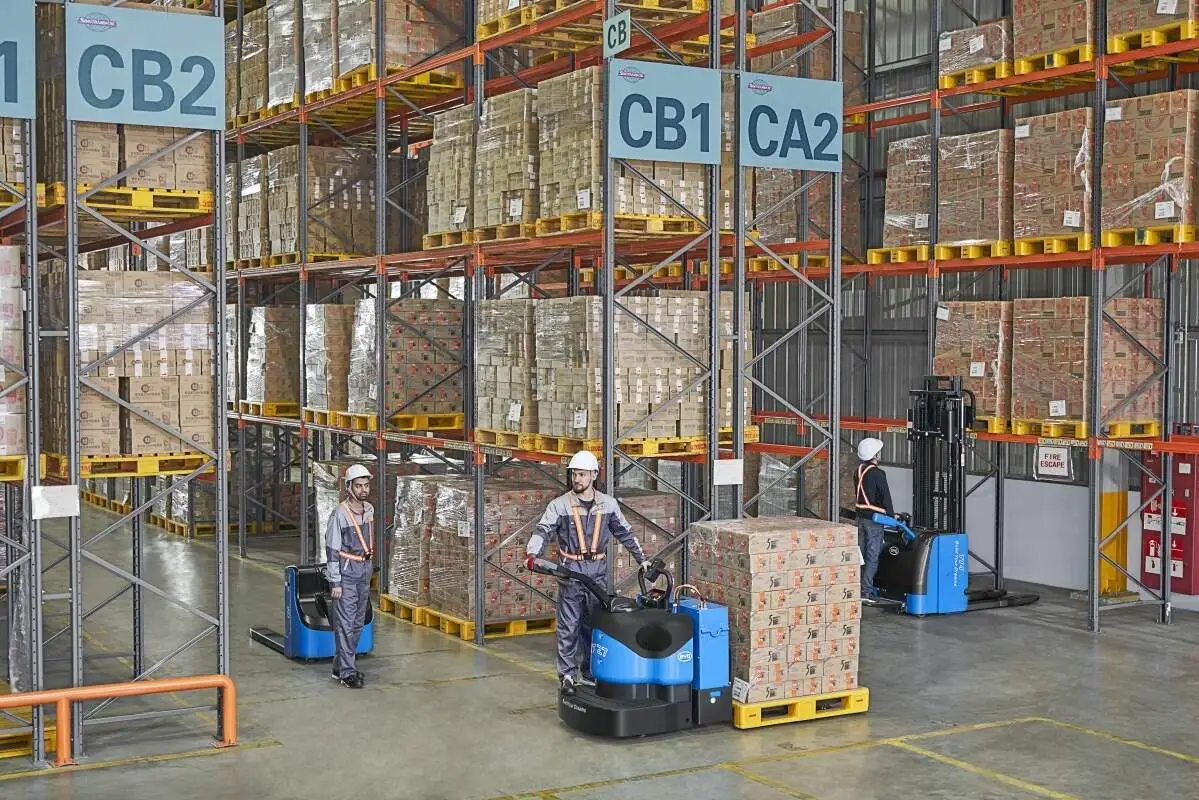
Operating Class 5 rated industrial electric forklifts is a critical task in warehouses, distribution centers, and manufacturing facilities, requiring specialized knowledge to ensure team safety and operational efficiency. Proper safety training is not just a regulatory requirement but a foundational measure to prevent workplace accidents. Below are the core focus points that should be emphasized in training programs for teams operating these heavy-duty electric forklifts.
Pre-operation equipment inspections are the first line of defense against potential hazards. Before starting any shift, operators must conduct a thorough walk-around check of the forklift. This includes verifying the battery’s state of charge and ensuring there are no leaks or damage to the battery compartment. Operators should test the braking system to confirm responsiveness, check that all lights (headlights, taillights, turn signals) are functional, and inspect tires for proper inflation and signs of wear. Any abnormalities identified during this check should be reported immediately, and the forklift should not be operated until repairs are completed.
Safe operation practices form the core of training for Class 5 electric forklift teams. Operators must be trained on load management principles, including never exceeding the forklift’s rated load capacity and ensuring loads are properly balanced and secured to prevent shifting during transport. When lifting loads, operators should keep the load as low as possible while traveling, especially when turning or navigating uneven surfaces. Speed control is crucial—operators must adhere to site-specific speed limits, reducing speed in congested areas, near pedestrians, and on slippery floors. Additionally, training should cover how to handle blind spots effectively, using mirrors and sounding the horn when approaching intersections or areas with limited visibility.
Awareness of the working environment is another key focus. Training should educate teams on identifying and adapting to different workplace conditions. This includes recognizing slippery surfaces caused by oil or water and adjusting driving behavior accordingly, maintaining clear access to emergency exits and fire extinguishers, and complying with pedestrian safety protocols, such as yielding to pedestrians in designated walkways. Operators should also be trained to avoid overhead obstacles, ensuring that loads are not lifted too high in areas with low ceilings or overhead piping.
Emergency response training is essential to prepare teams for unexpected situations. Operators should know the location and function of the emergency stop button, as well as how to safely shut down the forklift in case of a battery malfunction or electrical issue. Training should cover procedures for responding to forklift tip-overs—including staying inside the cabin and holding onto the steering wheel until the vehicle stabilizes—and how to use fire extinguishers appropriate for electric vehicle fires. Teams should also be trained to report accidents immediately and follow site-specific emergency protocols.
Regular refresher training is vital to reinforce safety knowledge and address any new operational procedures or equipment updates. As a specialist in BYD electric forklifts, Jianshu New Energy is committed to providing comprehensive safety training resources for teams operating Class 5 rated industrial electric forklifts. Our team of experts can tailor training programs to meet your site’s specific needs, ensuring your operators are equipped with the latest safety practices. For more information, please contact us at 17399989919@163.com.
By focusing on these core safety training points, teams can significantly reduce the risk of accidents, protect personnel and equipment, and maintain smooth, efficient operations in industrial settings.