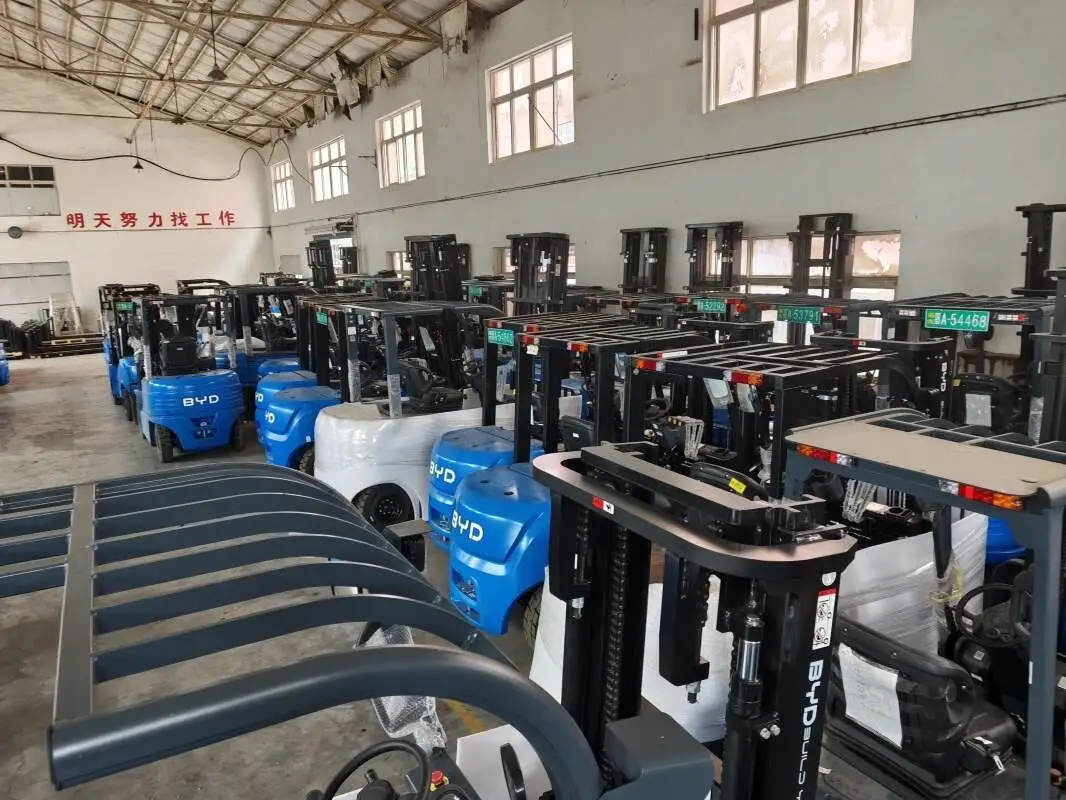
When managing a warehouse, selecting the right forklift goes beyond load capacity; understanding dimension reference data is critical for optimizing space, ensuring operational safety, and streamlining material handling workflows. Standard warehouse forklifts are designed to fit typical warehouse environments, but their specific measurements vary based on intended use, making it essential to reference accurate dimension data before making purchasing or operational decisions.
Core dimension parameters are the foundation of effective forklift selection and warehouse layout planning. The overall footprint of the forklift directly impacts aisle compatibility. For standard counterbalance forklifts, the most common type in general warehouse settings, overall length (from the rear of the vehicle to the tip of extended forks) typically ranges from 8 to 12 feet, depending on load capacity. Overall width, excluding attachments, usually falls between 4 to 6 feet, aligning with standard warehouse aisles that are 12 to 14 feet wide to allow safe maneuvering.
Overall height is another critical consideration, especially in warehouses with low ceiling heights or overhead storage infrastructure. When the mast is fully lowered, standard forklifts stand between 6 to 8 feet tall. When fully raised, mast height can reach 18 to 24 feet, enabling access to upper storage levels. It is essential to account for additional overhead clearances, such as sprinkler systems or lighting fixtures, to avoid collisions during operations.
Turning radius is a key metric for maneuverability in tight spaces. Standard counterbalance forklifts have a turning radius of 7 to 10 feet, suitable for warehouses with moderate aisle widths. This measurement determines how easily the forklift can navigate corners and U-turns, directly influencing operational efficiency in high-traffic areas.
Fork dimensions also play a vital role in safe load handling. Standard fork lengths range from 48 to 72 inches, matching common pallet sizes used in warehouse operations. The adjustable fork spread typically ranges from 20 to 48 inches, allowing compatibility with various pallet widths. Additionally, maximum lift height capacity varies by model, with standard forklifts capable of lifting loads up to 20 feet for most general-purpose applications.
By referencing standard warehouse forklift dimension data, warehouse managers can make informed decisions about aisle layout, rack placement, and equipment selection. For example, warehouses with limited aisle space can prioritize forklifts with smaller turning radii and narrower widths to improve maneuverability without sacrificing load capacity. Regularly reviewing dimension data also helps identify potential safety hazards, such as insufficient overhead clearance, and ensures compliance with workplace safety standards, supporting smooth and secure daily operations.