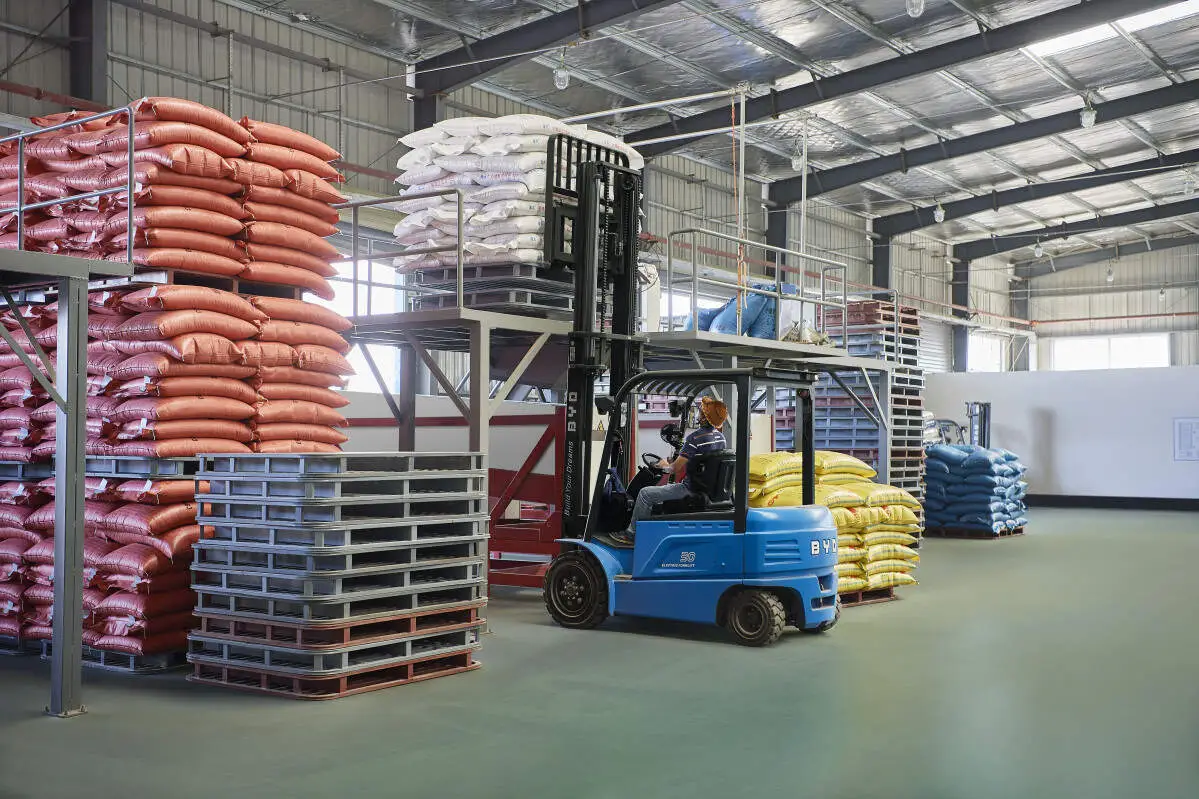
For overseas buyers navigating the global electric forklift market, understanding specialized terminology is critical to making informed purchasing decisions. Technical jargon can create barriers between buyers and suppliers, leading to misunderstandings about specifications, performance, and maintenance requirements. This guide breaks down key electric forklift terms into clear, easy-to-understand explanations tailored to international buyers.
Core Component Terminology
Battery Capacity & Voltage are foundational terms for electric forklifts. Battery capacity, measured in ampere-hours (Ah), refers to the total amount of energy the battery can store, directly impacting how long the forklift can operate on a single charge. Voltage, typically 24V, 48V, or 80V, determines the forklift’s power output; higher voltages generally support heavier lifting capacities and faster operation.
The Mast Assembly is the vertical structure that lifts and lowers loads. Key sub-terms include “free lift,” which describes how far the forks can rise without extending the mast, and “maximum lift height,” the highest point the forks can reach when the mast is fully extended. This is essential for buyers assessing compatibility with warehouse racking heights.
Counterweight is a heavy block located at the rear of the forklift designed to balance the weight of loads being lifted. Unlike internal combustion forklifts, some electric models use the battery itself as a counterweight, optimizing space and efficiency.
Performance-Related Terminology
Load Capacity refers to the maximum weight a forklift can safely lift at a specified load center. The load center is the distance from the face of the forks to the center of gravity of the load. Buyers must match this to their typical load sizes to ensure safe operation.
Turning Radius is the smallest circular space required for the forklift to make a full turn. This is critical for buyers operating in narrow warehouse aisles, as a smaller turning radius improves maneuverability in tight spaces.
Travel Speed & Lift Speed are key efficiency metrics. Travel speed refers to how fast the forklift moves across flat surfaces, while lift speed is the rate at which the forks raise loads. Both affect overall operational efficiency, with faster speeds suitable for larger facilities where quick material movement is prioritized.
Operational Safety Terminology
The Stability Triangle is the triangular area formed by the forklift’s two front wheels and the rear pivot point. Maintaining the load’s center of gravity within this triangle is essential to prevent tipping. Overseas buyers should ensure their teams understand this principle to avoid workplace accidents.
Overload Protection is a safety feature that prevents the forklift from lifting loads exceeding its rated capacity. This can be an electronic system that triggers an alert or mechanically limits lift movement, reducing the risk of equipment damage and injury.
Maintenance-Related Terminology
Opportunity Charging is a practice where the forklift’s battery is charged for short periods during breaks, rather than a full overnight charge. This is ideal for multi-shift operations, ensuring minimal downtime.
Battery Watering is the process of adding distilled water to lead-acid batteries to maintain optimal electrolyte levels. Proper watering extends battery life, a key consideration for buyers looking to reduce long-term maintenance costs.
By familiarizing yourself with these key electric forklift terms, you can communicate more effectively with suppliers, evaluate equipment specifications accurately, and select a forklift that aligns with your operational needs. For further guidance or to discuss your specific requirements, feel free to contact us at 17399989919@163.com.