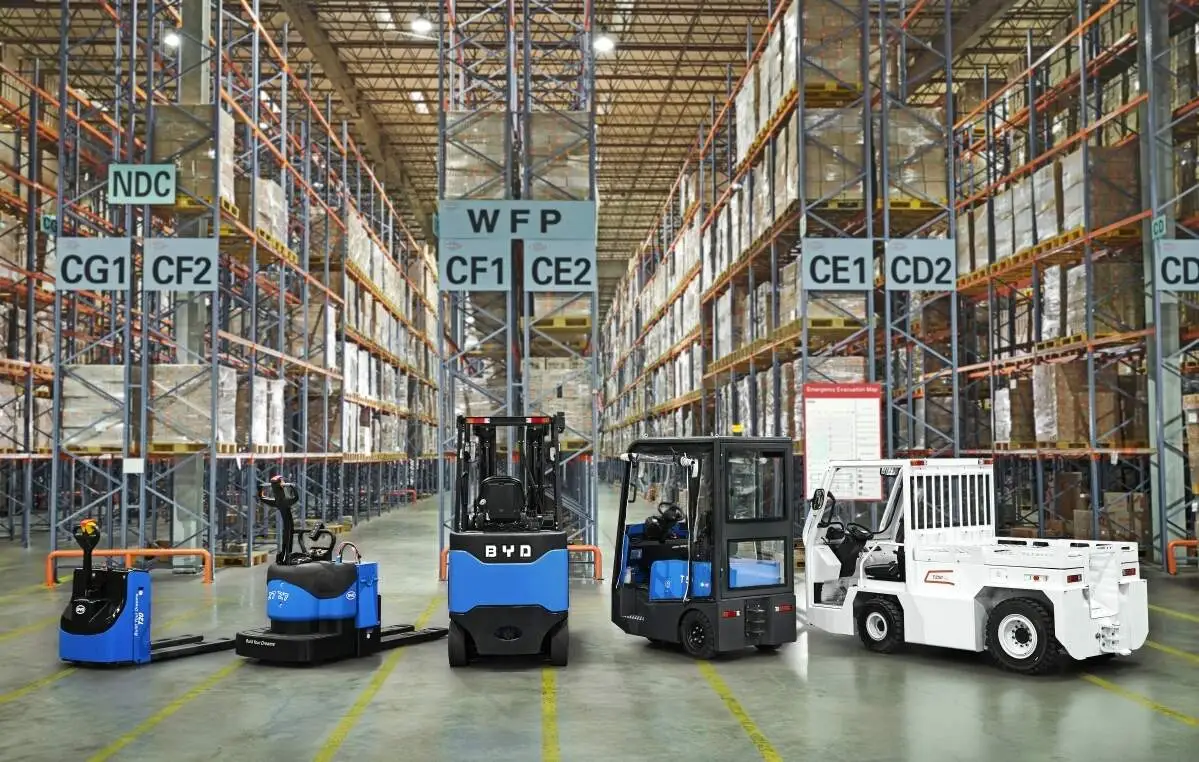
forklift control levers are the core interface between operators and electric forklifts, dictating every aspect of material handling operations from loading to stacking. Understanding their precise functions is not only key to operational efficiency but also critical for preventing workplace accidents.
The primary lift control lever is the most frequently used component, designed to raise and lower the forklift’s forks. When pushed forward, it engages hydraulic systems to lift the forks, allowing operators to stack pallets at desired heights. Pulling the lever backward lowers the forks, which is essential for approaching ground-level loads or positioning the forklift for travel. Operators must remember to adjust the lift speed based on load weight to avoid sudden movements that could destabilize the cargo.
Next is the tilt control lever, which regulates the angle of the fork carriage. Pushing this lever forward tilts the forks downward, a necessary action when sliding forks under pallets to ensure secure contact. Pulling it backward tilts the forks upward, helping to keep loads stable during transport, especially on uneven surfaces. It’s important to avoid over-tilting, as this can cause loads to slip or the forklift to tip forward under heavy weight.
Many electric forklifts also feature a side-shift control lever, which moves the entire fork carriage left or right. This function is invaluable in narrow warehouse spaces, allowing operators to align forks with pallet openings without repositioning the entire forklift. Small, deliberate movements are recommended when using side-shift to prevent damaging pallets or surrounding inventory.
Some models include additional control levers for specialized functions, such as fork width adjustment. This lever adjusts the distance between the two forks to accommodate different pallet sizes, eliminating the need for manual adjustments and saving time. Operators should ensure forks are evenly spaced before lifting loads to distribute weight properly.
Regardless of the lever type, safety should always be the top priority. Before operating an electric forklift, operators must inspect all control levers to ensure they move smoothly and return to neutral positions correctly. They should also familiarize themselves with the lever layout through proper training, as misoperation can lead to equipment damage or injury. During operations, avoid sudden jerks on levers and maintain a clear view of the load and surrounding area at all times. Mastering these control lever functions not only boosts productivity but also creates a safer work environment for everyone in the facility.