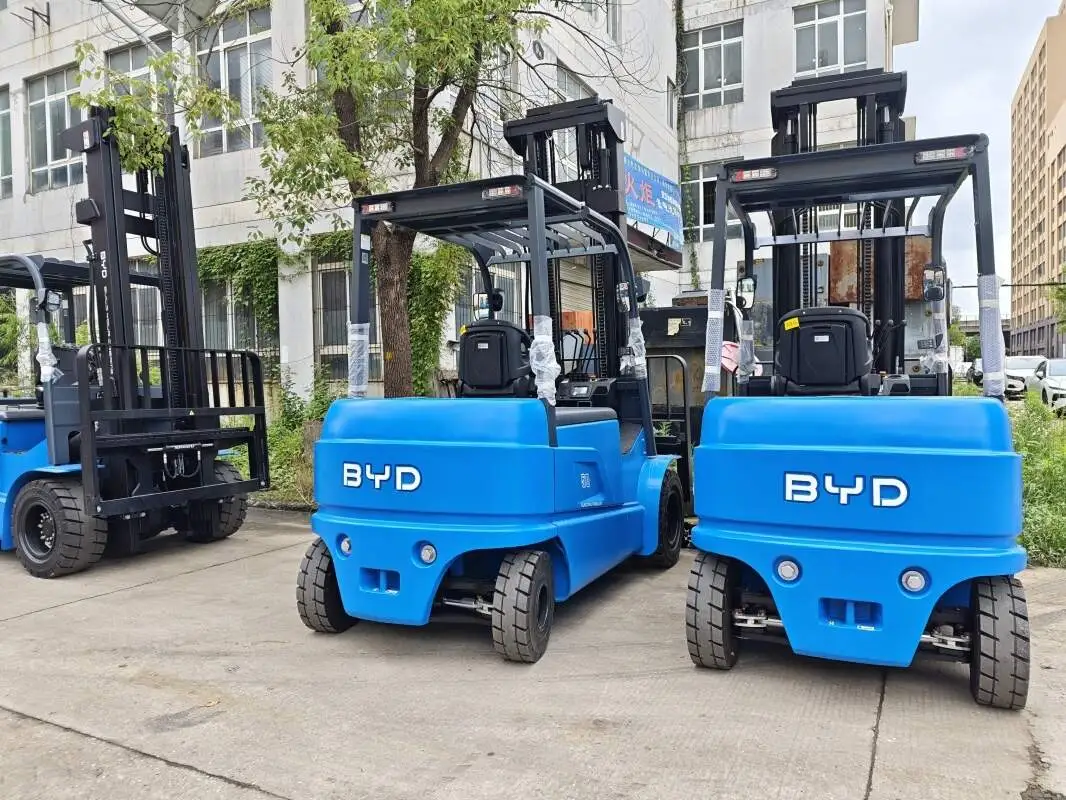
For heavy-duty operation scenarios such as large logistics warehousing, port cargo transshipment, and manufacturing factory material turnover, the performance of forklift fork steel is one of the core factors that directly determine operation safety and long-term use reliability.
Qualified heavy-duty forklift fork steel usually selects low-alloy high-strength structural steel as the base material, which maintains a balanced performance between surface hardness and overall toughness. This type of material can withstand long-term repeated impact loads and high-intensity load pressure, and will not easily produce permanent deformation or structural cracks under normal working conditions that conform to the rated load mark.
For conventional heavy-duty use, the yield strength of standard fork steel should meet the clear requirements of the current national industry specifications. Its surface hardness is controlled within a reasonable interval to avoid excessive brittleness that may cause breakage when encountering unexpected sharp hard objects. The interior of the finished fork steel should not have obvious defects such as interlayers, sundry inclusions or uneven grain distribution.
In the daily operation process, operators need to check the wear degree of the fork steel surface regularly. When the local wear thickness exceeds the allowable proportion of the original nominal thickness, users should replace the corresponding parts in time to eliminate potential safety hazards.
As a professional operator focusing on new energy electric forklift business, we specialize in BYD electric forklift supply, Jianshu New Energy can provide users with complete parameter consultation and equipment matching services for different heavy-duty operation scenarios. If you have related demands, you can send email to 17399989919@163.com for more detailed information.